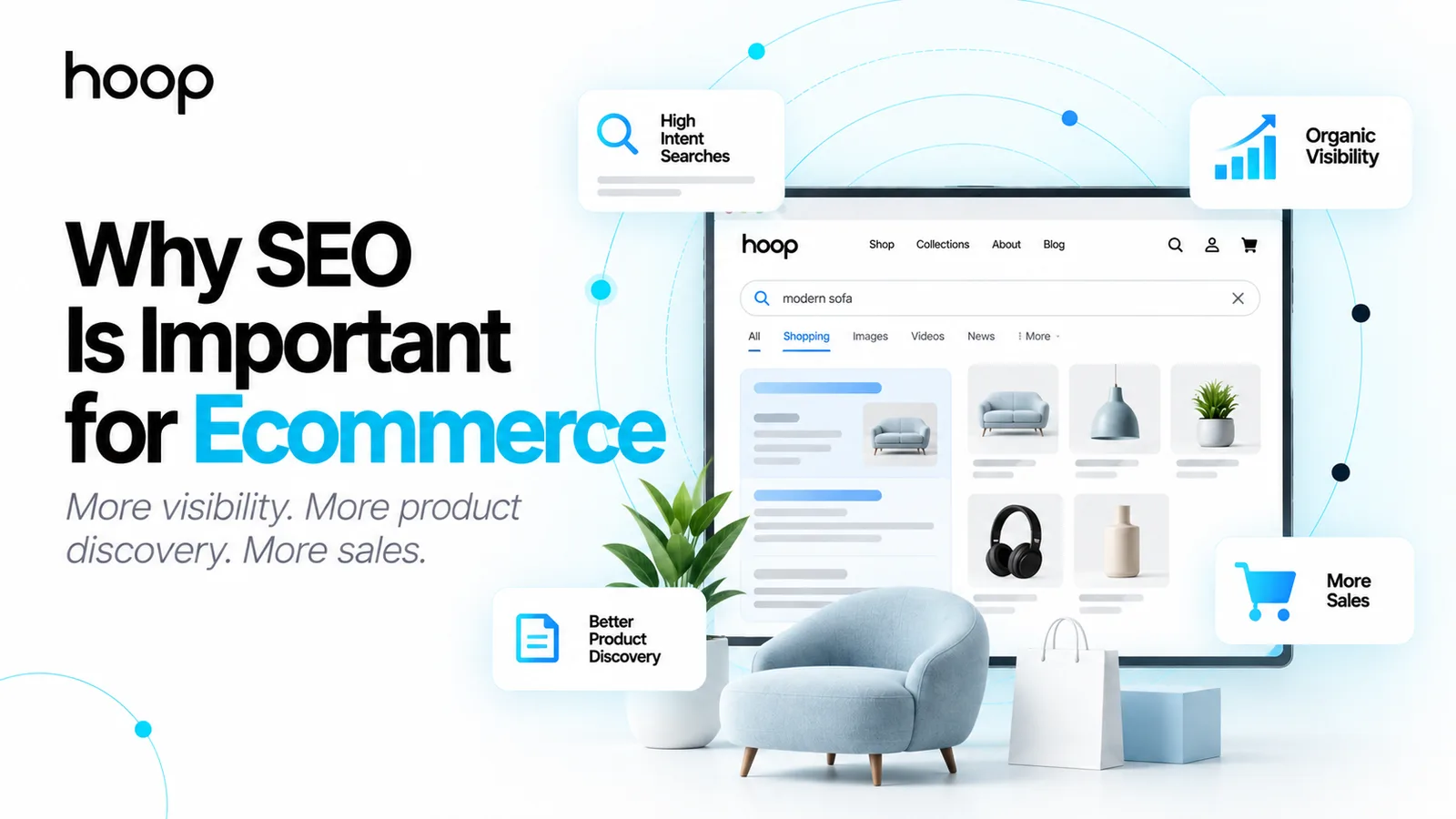
Why SEO Is Important for Ecommerce: A Growth Guide
Ecommerce SEO helps shoppers discover products through search, connects buying intent with category and product pages, and creates an organic acquisition channel that supports sales without charging for every click.
Sahar
Content Writer
If you are asking why SEO is important for ecommerce, the answer starts with product discovery and sustainable organic demand. Strong ecommerce SEO can increase qualified traffic, support sales, and reduce dependence on paid acquisition.
Search visibility matters because buyers often research products before choosing a store. Your website needs pages that match those searches clearly.
Why SEO Matters for Ecommerce Businesses
Ecommerce SEO connects existing search demand with pages designed to satisfy it. Product discovery becomes easier when search engines understand your catalog.
A store usually depends on 4 searchable page types: category pages, product pages, buying guides, and support content. Each page type serves a different stage of the buying journey.
Category pages target broader commercial searches, such as “men’s running shoes” or “wireless headphones.”
Product pages target specific models, colors, sizes, and use cases. Buying guides answer comparison questions before purchase. Support content answers questions about fit, care, setup, delivery, or returns.
Google also uses product data, internal links, and site structure to understand ecommerce websites. Clear architecture helps search engines discover important products and categories.
SEO does not guarantee sales from every visit. SEO creates more opportunities for qualified shoppers to reach relevant pages without paying for every click.
How Does Ecommerce SEO Turn Searches Into Sales?
Ecommerce SEO turns searches into sales by matching search intent with the right page and next action. The strongest journeys connect research queries with commercial pages naturally.
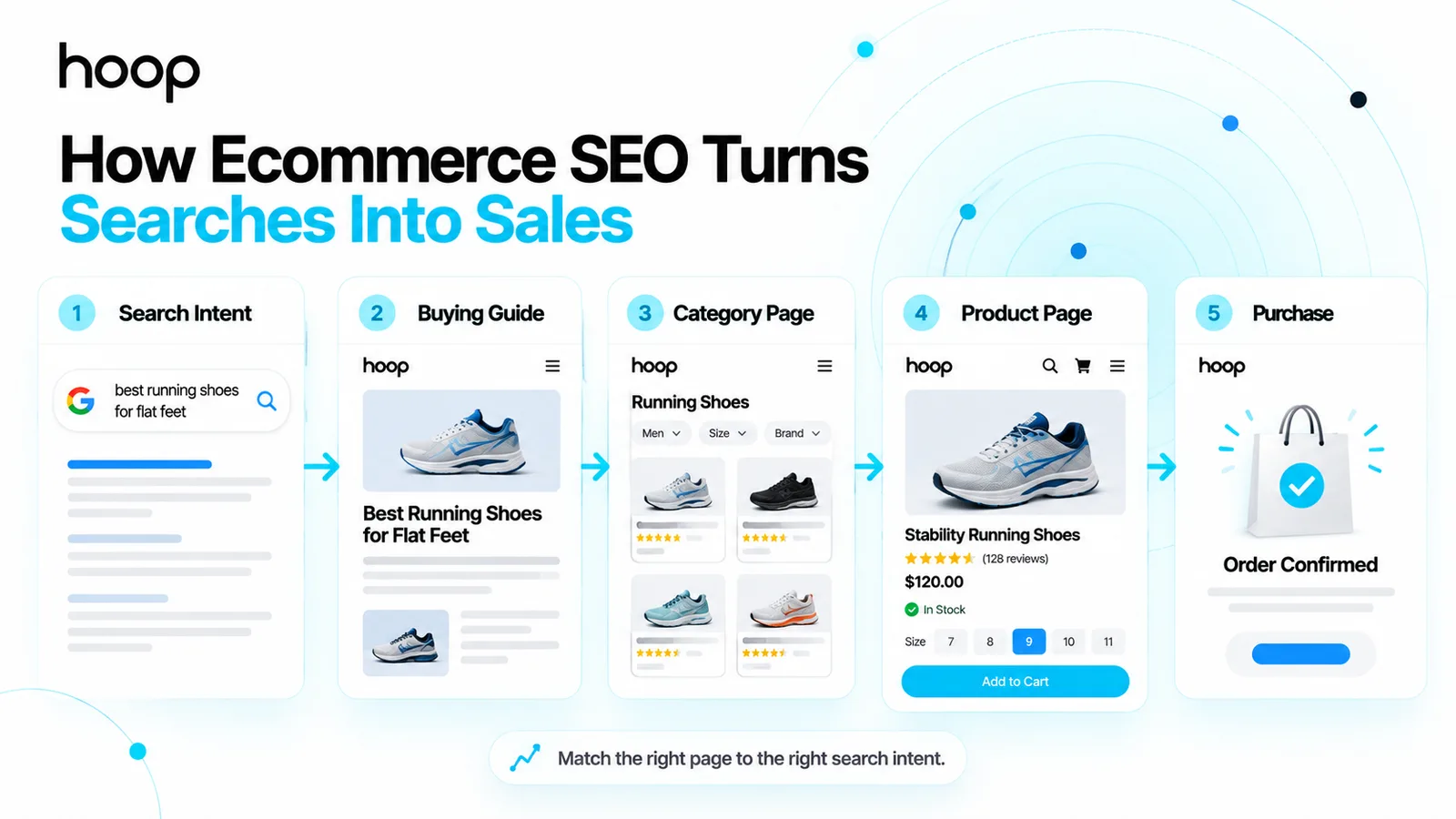
Informational searches introduce your products
Informational queries happen before a shopper chooses a product. Examples include “how to choose running shoes” and “best material for bath towels.”
Useful guides answer those questions and connect readers with relevant categories. The guide should help first and sell second.
A useful article can introduce products without forcing a purchase. Internal links can move interested readers toward categories, comparisons, and product pages.
Category searches capture commercial intent
Category queries show stronger buying intent. Examples include “noise cancelling headphones,” “organic cotton towels,” and “women’s trail running shoes.”
Category pages let shoppers compare related products in one place. Search engines also gain a clear page for broader product demand.
Strong category pages need useful copy, logical filters, internal links, and relevant products. Thin category pages often provide little context beyond a product grid.
Product searches support purchase decisions
Product queries sit closer to purchase. Shoppers search for exact models, features, sizes, materials, reviews, prices, or availability.
Product pages should answer those needs quickly. Clear titles, unique descriptions, specifications, reviews, shipping details, images, and availability support both search and conversion.
Google supports Product structured data for merchant listings. Structured data can help Google understand price, availability, reviews, shipping, and other product information.
Why SEO Matters Even When Paid Ads Work Faster
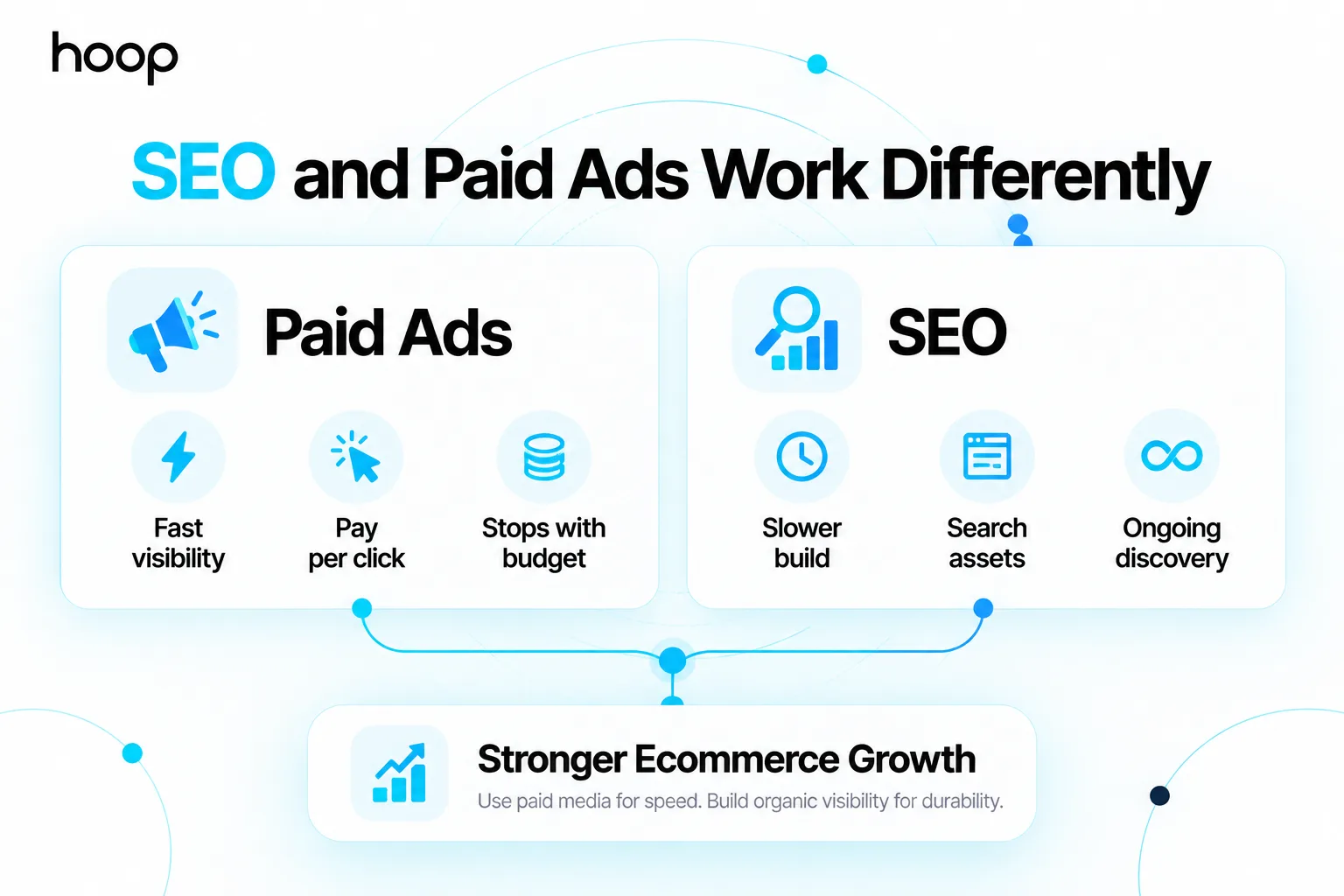
SEO matters beside paid advertising because the 2 channels solve different acquisition problems. Paid campaigns buy immediate visibility, while SEO builds searchable assets.
Paid advertising creates speed
Paid search can place products in front of shoppers quickly. Campaigns also support product launches, promotions, retargeting, and seasonal demand.
Paid traffic depends on active budget. Traffic usually declines when campaigns stop or bids become uncompetitive.
SEO builds durable discovery
SEO needs more time because search engines must crawl, understand, evaluate, and rank pages. The work creates assets that remain searchable after publication.
A well-optimized category page can rank for multiple related searches. A useful buying guide can attract readers long after its launch.
SEO still requires investment in strategy, content, development, and authority. Organic clicks simply avoid a direct charge for every visit.
Strong stores use both channels
Paid and organic channels work better when each channel handles the right job. Paid media supports speed, testing, and promotions.
SEO supports durable discovery, long-tail demand, category visibility, and product research. A balanced acquisition mix also reduces dependence on one platform.
Hoop’s ecommerce marketing services combine SEO, paid media, conversion optimization, email, and retention around the same revenue goals.
Can Small Stores Compete With Bigger Brands?
Yes. Small ecommerce stores can compete by targeting specific demand that large retailers do not cover deeply.
Broad searches create difficult competition. A new store rarely wins quickly for terms such as “shoes,” “furniture,” or “skincare.”
Long-tail searches create narrower opportunities. Examples include “wide toe box trail shoes for women” and “solid oak bedside table with drawer.”
Smaller stores can also compete through specialist knowledge. Detailed comparison pages, fit guides, compatibility charts, care instructions, and niche categories create stronger relevance.
The goal is not to outrank every marketplace for every term. The goal is to win profitable searches where your products genuinely fit the query.
How Does SEO Lower Customer Acquisition Costs?
SEO can lower blended customer acquisition cost by adding organic traffic to a store’s paid and direct channels. The benefit grows when useful pages keep attracting qualified visitors.
SEO is not free. Costs include research, content, technical work, development, tools, digital PR, and ongoing optimization.
The economic difference appears after successful pages start generating traffic without a charge for each click. A mature organic channel can reduce paid dependence.
Store owners should measure organic revenue against total SEO investment. Revenue matters more than keyword counts alone.
A simple evaluation uses 4 metrics: organic revenue, SEO spend, new organic customers, and assisted conversions. These metrics show whether visibility creates commercial value.
Why Are Product and Category Pages So Important?
Product and category pages matter because these pages capture the searches closest to a purchase. Blog traffic alone cannot replace optimized commercial pages.
Category pages target product groups
Category pages should match broader buying terms. Examples include “linen bedding,” “gaming monitors,” and “men’s waterproof jackets.”
Clear category structures also improve internal linking. Google recommends linking from menus to categories, subcategories, and product pages.
Product pages target specific choices
Product pages answer detailed purchase questions. Useful information includes material, dimensions, compatibility, price, stock status, delivery, returns, and reviews.
Product structured data can make product information eligible for richer search experiences. Google supports fields such as price, availability, ratings, shipping, and returns.
Internal links connect demand to inventory
Internal links help shoppers move between guides, categories, and products. Internal links also help search engines understand page relationships.
A buying guide about trail running shoes can link to trail categories and relevant models. A category page can link to best-selling products.
Does Content Marketing Matter for Ecommerce SEO?
Yes. Ecommerce content matters when each piece supports a real customer question or buying decision.
Random blogging creates pages without a clear commercial role. Search-led content connects informational demand with product discovery.
Useful content formats include buying guides, comparisons, size guides, care guides, compatibility guides, and problem-solving articles. Each format needs a clear target query.
A cookware store can publish “stainless steel vs cast iron” for comparison intent. The guide can link to both relevant categories.
A skincare store can publish “how to choose sunscreen for oily skin.” The guide can connect readers with suitable product ranges.
Content also creates internal-link opportunities for category and product pages. Strong content supports authority when other sites reference useful resources.
How Does Technical SEO Help Ecommerce Stores?
Technical SEO helps search engines crawl, understand, and index the right ecommerce pages. Large catalogs create technical issues faster than simple websites.
Common ecommerce problems include duplicate filter URLs, product variants, broken links, weak canonicals, slow templates, and orphaned products. Each problem can waste crawl attention or hide valuable pages.
Google’s ecommerce guidance recommends clear site structure, crawlable links, product data, and suitable structured data. Google also provides specific guidance for product variants and ecommerce URLs.
Faceted navigation needs careful control. Filters for size, color, brand, price, or material can generate many URL combinations.
Stores should decide which filtered pages deserve search visibility. Canonical tags, internal links, crawl controls, and indexation rules should follow that decision.
Page speed also affects shopping experience. Heavy themes, oversized images, excessive scripts, and third-party apps can slow product and category pages.
Hoop’s ecommerce development services build catalog structure, schema, canonicals, and performance into the store architecture from the start.
When Should an Ecommerce Business Start SEO?
An ecommerce business should start SEO planning before launch whenever possible. Architecture decisions become harder to change after a large catalog goes live.
Before launch, plan the search structure
Start with keyword research, category architecture, URL planning, product templates, analytics, and structured data requirements. Build search demand into the store structure.
Google recommends making new ecommerce websites discoverable through indexing, sitemaps, and Merchant Center setup. Launch planning should include those steps.
After launch, improve real performance
Use search data to find pages with impressions, weak click-through rates, indexing problems, and missing commercial coverage. Improve pages using real demand signals.
Store teams should also monitor product availability, redirects, broken links, and structured data errors. Catalog changes create SEO maintenance work.
During growth, scale systems instead of isolated fixes
Growing stores need repeatable templates and rules. Product launches, collections, filters, and content should follow the same SEO framework.
A scalable system protects quality as the catalog expands. Manual fixes become expensive when thousands of URLs need the same correction.
What Happens If a Store Ignores SEO?
A store without SEO relies more heavily on paid media, marketplaces, social platforms, brand demand, or repeat customers. That mix can still generate revenue.
The risk comes from channel dependence. A change in ad costs, marketplace rules, or social reach can affect acquisition quickly.
Poor SEO also leaves product demand uncaptured. Competitors can rank for searches that already describe your products and categories.
Technical neglect creates another cost. Duplicate pages, weak navigation, missing structured data, and slow templates can grow with the catalog.
SEO gives the store another acquisition path. A diversified channel mix creates more options for sustainable growth.
Does Ecommerce SEO Still Matter With AI Search?
Yes. Ecommerce discovery now spans traditional search, shopping surfaces, image search, and AI-assisted research.
Clear product information still matters across those environments. Search systems need accurate names, attributes, categories, prices, availability, and supporting content.
Google can use product structured data and Merchant Center feeds to understand products across search experiences. Clean commerce data therefore supports more than classic blue links.
AI-assisted discovery also increases the value of clear entities and useful explanations. Product pages should state exactly what a product is and who it suits.
Brands should still focus on useful pages, accurate data, crawlable architecture, and trusted information. Those foundations remain valuable as discovery interfaces change.
How Should You Measure Ecommerce SEO Success?
Measure ecommerce SEO with revenue and customer outcomes first. Rankings and traffic remain diagnostic metrics, not the final business result.
Track organic revenue, transactions, conversion rate, new customers, assisted conversions, and revenue per organic session. Track non-branded traffic for new-customer discovery.
Google Search Console helps measure queries, pages, clicks, impressions, and indexing. Google Analytics 4 helps connect organic sessions with ecommerce events and revenue.
Merchant Center and structured data reports help identify product-data problems. Local rank trackers or generic visibility scores do not replace revenue reporting.
The most useful dashboard connects 3 layers: search visibility, shopper behavior, and revenue. That structure shows where growth stalls.
Ecommerce SEO Priorities: Quick Reference
| Task | Timing | Method | Difficulty |
|---|---|---|---|
| Map category demand | Before launch or expansion | Keyword research and search intent | Medium |
| Optimize product templates | During build and catalog updates | Titles, copy, schema, reviews | Medium |
| Control duplicate URLs | During technical setup | Canonicals, indexation rules, crawl controls | High |
| Build useful buying content | Monthly | Guides, comparisons, FAQs | Medium |
| Measure organic revenue | Weekly and monthly | Search Console, GA4, Merchant Center | Medium |
Is Ecommerce SEO Worth the Investment?
Ecommerce SEO is worth investment when people already search for the products, categories, and problems your store serves. The channel works best with clear demand.
SEO becomes especially valuable when paid acquisition carries too much of the growth burden. Organic visibility gives your store another path to qualified shoppers.
The strongest strategy connects technical foundations, product pages, category pages, content, authority, and measurement. Each part supports a different search opportunity.
Need a search strategy tied to product discovery and revenue? Explore Hoop’s ecommerce SEO services and start with a focused audit.
Build Ecommerce Growth Around Search Demand
SEO gives ecommerce stores a durable way to capture product demand across research, comparison, and purchase searches. Strong execution connects search visibility with useful shopping experiences and measurable revenue.
Start with the pages closest to revenue, then strengthen the technical and content systems around them. That approach keeps SEO connected to business growth. Our ecommerce SEO guide covers the execution detail.
“The goal is not to outrank every marketplace for every term. The goal is to win profitable searches where your products genuinely fit the query.”
Key takeaways
- 01Four page types carry the work: categories, products, buying guides, and support content.
- 02Paid media buys speed; SEO builds assets that keep working after publication.
- 03Small stores win on long-tail and specialist depth, not on head terms.
- 04Measure organic revenue and new customers — rankings are a diagnostic, not the result.
Written by
Sahar
Content Writer
Frequently Asked
Questions
Everything you need to know before booking a strategy call. Can't find your answer? Contact us directly.
SEO helps shoppers discover products and categories without paying for every click. Strong SEO also supports product research and organic revenue.
Yes, SEO can support sales when rankings attract relevant shoppers to strong commercial pages. Traffic quality, product fit, pricing, and conversion experience still matter.
No. SEO and paid ads solve different problems. Paid media creates speed, while SEO builds longer-term organic discovery and searchable assets.
Use a 6-month review window instead of a 30-day test. Competitive stores need sustained technical, content, and authority work before gains stabilize.
Yes. Pre-launch SEO planning protects site architecture, URLs, categories, templates, tracking, and product data before the catalog grows.