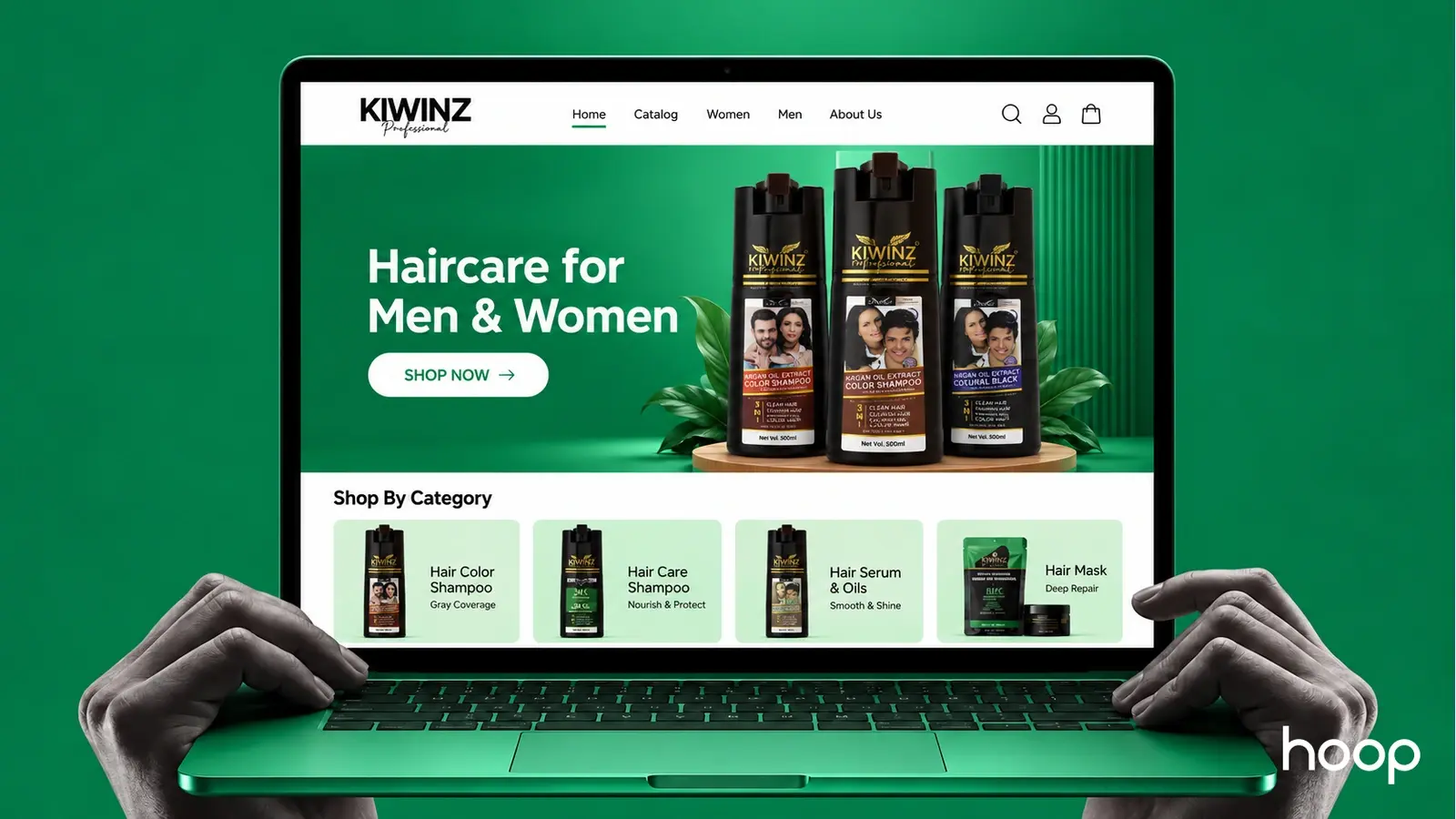
“Our business went from local to national thanks to Hoop. They completely transformed our e-commerce platform and helped us expand our customer base 5x. The results speak for themselves.”
SEO — rank on Google, get cited by AI.
We deliver technical SEO, on-page optimisation, link building, content strategy, GEO, and AEO — so your business gets found on Google and cited by ChatGPT, Perplexity, and Google AI Overviews.
Visible on Google. Cited by AI. Both required in 2026.
Organic search drives over 52% of B2B revenue. The first three organic results capture 54% of all clicks. Page 2 of Google receives 0.63% of clicks. If your business isn’t visible on page 1 for the searches your buyers make, you don’t exist in their discovery process.
Search has split into two channels. Google still dominates — used 50× more than AI tools. But a growing share of buying decisions now happen inside ChatGPT, Perplexity, and AI Overviews before any result is clicked, and AI search traffic is projected to surpass traditional search by 2028. The SEO strategy that worked in 2022 doesn’t capture this second channel. GEO and AEO are now required alongside traditional SEO.
We build the full three-layer search strategy: technical SEO (crawlable, fast, properly structured), content authority (topical depth and E-E-A-T that ranks), and AI search visibility (structured content, entity authority, and citation signals). One integrated strategy, one team, results tied to organic traffic and leads — not just rankings.
- Technical SEO
- Site architecture, Core Web Vitals, crawlability, and indexation.
- On-page & content
- Keyword strategy, E-E-A-T content, topical authority clusters.
- Link building
- High-authority backlinks, digital PR, and entity mentions.
- GEO & AEO
- Get cited by ChatGPT, Perplexity, and Google AI Overviews.
4 SEO pillars we build for every client.
Each pillar addresses a different ranking or visibility factor — all four working together determine total search presence.
Technical SEO
Technical SEO covers the infrastructure that determines whether Google can crawl, index, and rank your pages. A technically broken site produces no organic traffic regardless of content quality. Six core areas: crawlability (robots.txt, XML sitemaps, crawl budget), indexation (canonicals, noindex, duplicate content), page speed (Core Web Vitals — LCP ≤ 2.5s, INP ≤ 200ms, CLS < 0.1), mobile-first design, structured data, and internal link architecture. We audit every signal, fix critical issues first, and track Core Web Vitals monthly.
On-Page Optimisation & Content
On-page optimisation aligns each page with the search intent and ranking factors Google uses to assess relevance: keyword research and intent mapping, title and meta optimisation, heading hierarchy, content depth that covers a topic comprehensively, internal linking, image optimisation, and E-E-A-T signals via author attribution and factual sourcing. Content follows a pillar-cluster architecture, which builds topical authority faster than scattered individual pages.
Link Building & Digital PR
Backlinks remain one of Google’s top three ranking factors, and quality beats quantity: 10 links from topically relevant, high-DR sites outperform 500 from irrelevant directories. We build links through four channels — digital PR, broken link building, content-led acquisition (original research and definitive guides that attract links naturally), and strategic outreach. We track referring domains, DR distribution, and anchor profile monthly. Link schemes, PBNs, and paid links are not part of our practice.
GEO & AEO — AI Search Visibility
GEO structures content so AI systems — ChatGPT, Perplexity, Gemini, and AI Overviews — cite your brand in generated answers. AEO structures content to appear in featured snippets, voice results, and answer boxes. Both require four signals: entity authority (brand, products, and founders recognised as named entities with consistent schema), direct-answer structure, topical depth, and third-party co-mentions on sources LLMs retrieve from. Both build on strong technical foundations and genuine topical authority.
9 SEO services we deliver.
Every SEO discipline — from technical foundation to AI search visibility.
Technical SEO audit & implementation
Full crawl audit (Screaming Frog, Ahrefs, Search Console), Core Web Vitals analysis, duplicate content identification, canonical setup, sitemap structure, robots.txt review, and structured data — with developer-ready fixes prioritised by ranking impact.
Keyword research & intent mapping
Primary, secondary, and LSI keyword research using Ahrefs, Semrush, and Keyword Planner — mapped by search intent (informational, commercial, navigational, transactional) and assigned to specific pages or content briefs in a keyword matrix.
Content strategy & SEO writing
Pillar-cluster architecture, content gap analysis against competitors, SEO-optimised briefs, and long-form articles written to rank — with E-E-A-T signals, structured heading hierarchies, and Koray semantic SEO methodology applied to every piece.
Link building & digital PR
High-DR backlink acquisition through editorial outreach, original data assets that attract natural links, and digital PR campaigns securing coverage on industry publications — tracked in a live portfolio showing DR, anchor text, referring domains, and growth.
Local SEO
Google Business Profile optimisation, NAP consistency across 50+ directories, local keyword targeting, review strategy, local schema markup, and citation building — for businesses targeting customers in specific geographic areas.
GEO & AEO optimisation
Structured content for AI citation — answer-first heading structure, bold-the-answer formatting, FAQPage and HowTo schema, entity markup for brand and authors, and topical depth AI engines treat as authoritative. Tracked via AI visibility monitoring.
Ecommerce SEO
Category and product page optimisation, faceted navigation crawl management, structured data for products (Product, Review, Price markup), site architecture for large catalogues, and Shopping feed alignment — for Shopify, WooCommerce, and custom platforms.
SEO reporting & analytics
Monthly reporting on organic traffic (GA4), keyword ranking changes, Core Web Vitals scores, backlink portfolio growth, and organic-attributed leads and revenue — tied to business outcomes, not just ranking positions.
SEO migration & site redesign
Pre-migration audit, URL mapping and 301 redirect strategy, content inventory, hreflang setup for international sites, and post-migration monitoring — preventing the 20–50% organic traffic loss that redesigns without SEO oversight typically cause.
GEO & AEO — how we get you cited by AI.
6 concrete signals that determine whether AI answer engines cite your content or a competitor’s.
Answer-first content structure
Every section answers its heading question in the first 1–2 sentences. AI models extract the first clear, direct answer they find — buried answers are never cited. We bold the answer, then elaborate with specifics, named entities, and numeric values.
Bold answer → elaborationEntity SEO & schema markup
Your brand, products, services, founders, and location are modelled as named entities using Organization, Person, Product, and Service schema — cross-referenced to Wikidata, LinkedIn, and Google’s Knowledge Graph. AI models prefer citing verified entities.
Schema.org · Knowledge GraphTopical authority depth
AI systems cite sources that cover a topic comprehensively across a pillar-cluster architecture — not single pages with shallow overviews. Thin content is never cited. We build semantic clusters covering every subtopic, question, and entity relationship.
Cluster depth · Semantic coverageThird-party co-mentions
AI models are trained on and retrieve from high-authority third-party sites — industry publications, review platforms, forums, and news. We build a footprint of brand co-mentions on the sources LLMs weight most heavily, earning editorial coverage rather than just backlinks.
LLM sources · Digital PROriginal data & research
AI systems actively seek and cite unique data — proprietary statistics, original research, and insights found nowhere else. We develop original assets: surveys, industry benchmarks, and proprietary analysis that become citation magnets across both channels.
Citable assets · First-party dataFAQPage & structured data
FAQPage, HowTo, Speakable, and Article schema make content machine-readable for AI extraction. FAQPage schema with direct Q&A pairs is the most effective format for appearing in AI Overviews and voice answers — implemented on every eligible page.
FAQPage · HowTo · SpeakableProof, not promises.
SEO and digital visibility built into every product and service page Hoop delivers.
SEO · Ecommerce · Content Strategy · Digital Marketing · Shopify
Khayest: an SEO-first ecommerce platform and national campaign expanded the customer base 5× from a single city
Khayest had a locally-known fashion brand with no organic search presence. We rebuilt the ecommerce platform with SEO-first site architecture — keyword-mapped category pages, schema-rich product pages, optimised internal linking, and Core Web Vitals performance — then ran a national content and digital marketing campaign that established topical authority in fashion ecommerce. The result: 5× growth in customer base from a single city to buyers nationally, with organic search as the primary acquisition channel.
Read the case studySEO that reports on revenue, not rankings.
Rankings are an input, not an outcome. We tie every SEO activity to organic traffic, leads, and revenue — so the monthly report tells your CFO something actionable, not just which keywords moved up three positions.
- 01
Traditional SEO + GEO + AEO together
Most agencies optimise for Google rankings only. We build all three search channels simultaneously — Google organic, AI Overview citations, and AI chatbot references. A rising share of your buyers’ research now happens in ChatGPT and Perplexity; a strategy that misses those channels misses those buyers.
- 02
Technical SEO backed by software engineers
We’re a software development firm with SEO capability — technical recommendations are implemented by the same team that identifies them. No gap between the audit report and the developer who fixes it. Schema markup, Core Web Vitals, crawl fixes, and structured data are all implemented in-house.
- 03
Content built on Koray SEO methodology
We apply the Koray Tuğberk GÜBÜR semantic SEO framework to every piece: answer-first structure, bold the answer, cut fluff, use numeric values, maintain entity density, and match heading structure. This is the methodology behind pages that rank and get cited by AI simultaneously.
- 04
Monthly reporting tied to business outcomes
Organic traffic, leads from organic, ranking distribution across keyword clusters, Core Web Vitals scores, and backlink portfolio growth — reported monthly in a format that connects SEO work to revenue, not just position tracking.
How we run your SEO campaign.
A 5-phase process from audit to compounding organic growth — with GEO/AEO built in from phase one.
Audit & competitor analysis
Full technical audit, keyword gap analysis, backlink profile review, Core Web Vitals baseline, and content quality assessment vs your top 5 organic competitors. Opportunities ranked by traffic and revenue potential.
Priority roadmap producedTechnical fixes & architecture
Implement critical fixes — crawl errors, duplicate content, canonical setup, page speed — and restructure site architecture for topical authority and internal link distribution.
Foundation before contentContent & GEO/AEO strategy
Keyword-mapped content calendar, pillar-cluster architecture, on-page optimisation of existing pages, and new GEO/AEO-structured content built for both ranking and AI citation.
Ranks + gets citedLink building & entity authority
Monthly link acquisition targeting high-DR, topically relevant sites — plus digital PR for brand co-mentions on sources LLMs train on. Entity schema deployed across all key pages.
Authority compoundsReporting & iteration
Monthly organic traffic, ranking, backlink, Core Web Vitals, and AI visibility report — tied to leads and revenue. Quarterly content decay audits refresh underperforming pages before rankings drop.
Revenue-tied reportingTools we run SEO with.
Every keyword research, technical audit, link analysis, and AI visibility tracking tool in our SEO stack.
Ways to work with us.
4 SEO engagement structures that fit your growth stage and goals.
SEO audit & strategy
One-time comprehensive audit — technical, on-page, competitor, backlink, and GEO/AEO gap analysis — with a prioritised 6-month roadmap your team can execute.
Best for planning & directionFull-service SEO retainer
Ongoing technical SEO, content production, link building, GEO/AEO optimisation, and monthly reporting — with clear KPIs tied to organic traffic and qualified leads.
Best for sustained growthContent-led SEO
Monthly SEO content production — pillar pages, cluster articles, GEO/AEO-structured service pages — built to rank on Google and get cited by AI answer engines simultaneously.
Best for topical authorityGEO & AEO only
Focused AI search visibility — schema audit, entity optimisation, content restructuring for AI citation, and AI mention tracking across ChatGPT, Perplexity, and AI Overviews.
Best for existing SEO teamsGrowing businesses have
already made the move
End-to-End
From Idea to Revenue
5-Star
Client-Rated
Two Divisions
Software + Marketing
“Our business went from local to national thanks to Hoop. They completely transformed our e-commerce platform and helped us expand our customer base 5x. The results speak for themselves.”
Every SEO retainer comes complete.
No ranking reports without revenue context. Every retainer delivers measurable organic growth with full transparency on what drives it.
- Full technical SEO audit
- 300+ point crawl and analysis.
- Keyword matrix & intent map
- Primary, secondary, LSI by intent.
- Technical fixes implemented
- Not just reported — actually fixed.
- On-page optimisation
- Every target page audited and updated.
- Monthly SEO content
- Pillar pages and cluster articles.
- Link building (monthly)
- DR-focused, topically relevant backlinks.
- Schema markup & entity SEO
- Structured data on all key pages.
- GEO & AEO optimisation
- AI citation tracking and structure.
- Core Web Vitals monitoring
- LCP, INP, CLS tracked monthly.
- Revenue-tied reporting
- Organic traffic to leads and sales.
SEO for every sector.
Industries we’ve grown through organic search and AI visibility.
SaaS & Tech
B2B SaaS SEO, product-led SEO, developer content strategy.
Ecommerce & Retail
Category SEO, product schema, faceted navigation, Shopping.
Fintech & Finance
YMYL content strategy, E-E-A-T compliance, financial keywords.
Healthcare
Medical SEO, YMYL E-E-A-T, local healthcare content.
Local Services
Google Business Profile, local pack rankings, local schema.
Logistics & B2B
Commercial-intent keywords, industry publication link building.
Education & EdTech
Informational content strategy, LMS SEO, course page optimisation.
Professional Services
B2B agency SEO, entity strategy, thought-leadership content.
Understanding SEO in 2026.
Direct answers to the most important SEO questions — structured for citation by ChatGPT, Perplexity, and Google AI Overviews.
What is SEO (Search Engine Optimisation)?
SEO is the process of improving a website’s visibility in organic (non-paid) search results by optimising technical infrastructure, content quality, and external authority signals so search engines rank the site for relevant queries. It covers three interconnected disciplines: technical SEO (crawlability, indexation, page speed, structured data), on-page SEO (keyword targeting, content quality, E-E-A-T, heading hierarchy), and off-page SEO (backlinks, brand mentions, external authority).
Organic search drives 53% of all website traffic and over 52% of B2B revenue. A site ranking #1 receives 27.6% of clicks; #2 receives 15.8%; #10 receives 2.5%. SEO is a compounding investment — authority built over 6–12 months generates traffic indefinitely without per-click cost. The average time to reach page 1 for a new domain is 3–6 months for low-competition keywords and 9–18 months for competitive terms, making early investment far more valuable than a delayed start.
What is E-E-A-T and how does it affect Google rankings?
E-E-A-T stands for Experience, Expertise, Authoritativeness, and Trustworthiness — Google’s framework for evaluating content quality, used in quality-rater guidelines and reflected in algorithmic signals. It is not a direct ranking factor with a numerical score, but it influences ranking indirectly through signals Google measures algorithmically.
Experience rewards content written by someone who demonstrably used the product or lived the topic. Expertise requires demonstrable subject-matter accuracy. Authoritativeness is built through external recognition — backlinks from industry publications and presence on reference sites. Trustworthiness covers HTTPS, transparent editorial policies, verifiable author credentials, and factual accuracy. E-E-A-T matters most for YMYL content — health, finance, legal, safety — where Google applies higher scrutiny.
What is topical authority and how does it differ from domain authority?
Topical authority is the degree to which a website is recognised as a comprehensive, trusted source on a specific subject — measured by content depth, coverage breadth, and semantic relationships between pages; domain authority (DA) is a third-party metric estimating a domain’s overall link strength.
A site with 200 deep articles on SaaS development builds higher topical authority than one with 2,000 articles across 50 unrelated topics. Pillar-cluster architecture builds it by pairing a central pillar page with 15–30 internally-linked cluster articles. Sites with high topical authority rank new pages faster, rank for more keyword variations, and are more likely to be cited in AI Overviews. A high-DA site with shallow coverage loses to a lower-DA site with deep, comprehensive coverage.
What is GEO and how is it different from AEO?
GEO (Generative Engine Optimisation) structures content and builds brand authority so AI systems — ChatGPT, Perplexity, Gemini — cite and recommend your brand in AI-generated answers; AEO (Answer Engine Optimisation) structures content to appear in direct answer formats — featured snippets, AI Overviews, and voice search responses.
AEO focuses on structured extraction — question-as-heading, bold direct answers, FAQPage schema. GEO focuses on becoming a trusted source AI models cite by default — requiring topical depth, cross-web entity mentions on sites LLMs retrieve from, and original data. The key difference: AEO targets visible citation (a linked snippet), while GEO often operates invisibly — your expertise is woven into an AI answer without a URL, influencing buyers before any result is clicked. Both need strong traditional SEO foundations.
How long does SEO take to work?
SEO produces measurable organic traffic improvements in 3–6 months for technical fixes and low-competition keywords, and 9–18 months for competitive keywords and new domains reaching page 1. Actual timeline depends on domain age and authority, technical health, keyword competition, content cadence, and link velocity.
Months 1–3: technical fixes (fastest ROI), existing pages optimised, initial content published — crawl improvements can show impact within 4–8 weeks. Months 3–6: content authority builds, long-tail keywords rank, organic traffic grows measurably. Months 6–18: primary keywords reach page 1, topical authority compounds, backlinks accumulate. A site with 18 months of consistent SEO typically generates 5–10× the organic traffic of month 3 at roughly the same monthly cost.
Related services.
Digital marketing and development services that amplify SEO results.
Content Marketing
SEO content creation — pillar pages, cluster articles, and guides.
ExplorePaid Advertising
PPC for immediate traffic while SEO builds long-term organic.
ExploreWeb Design
Core Web Vitals-optimised design that supports SEO rankings.
ExploreEcommerce Development
SEO-first Shopify and WooCommerce builds from architecture up.
ExploreSocial Media Marketing
Brand signals and entity mentions that support GEO authority.
ExploreWeb Applications
Technical architecture decisions that determine the SEO ceiling.
ExploreCloud & DevOps
Site speed, uptime, and Core Web Vitals — all infrastructure-driven.
ExploreLead Generation
Organic is the lowest-CPL inbound channel at 51% MQL-to-SQL.
ExploreSEO Questions
8 questions asked before every SEO engagement — answered directly.
Technical SEO fixes infrastructure issues that prevent Google from crawling and indexing pages; on-page SEO optimises content and structure for relevance; off-page SEO builds authority through backlinks and external mentions. All three are required — a site with great content and backlinks but crawl issues won’t rank because Google can’t index it; a technically perfect site with thin content won’t rank because Google can’t find relevance signals; and a perfect site with no backlinks won’t rank in competitive categories. We audit and address all three simultaneously, prioritising by fastest ranking impact.
Yes. Google is still used roughly 50× more than all AI tools combined, making traditional SEO the highest-ROI digital channel for most businesses. But intent is shifting — informational queries increasingly resolve inside AI Overviews without a click, while commercial and transactional queries still drive clicks to organic results. That makes strategy more important than ever: optimise for commercial-intent keywords where clicks still happen, and structure informational content for AI citation. The businesses that win run both simultaneously.
SEO retainers for small to medium businesses typically range from $1,500–$5,000 per month; enterprise SEO in highly competitive industries ranges from $5,000–$30,000+ per month. A one-time technical SEO audit costs $1,000–$5,000 depending on site size. The cost variable is scope: number of target keywords, content production volume, link-building intensity, and whether GEO/AEO work is included. We price engagements against your competitive landscape and growth targets.
A backlink is a link from another website to yours — one of Google’s top three ranking signals. The number needed depends on keyword competition: low-competition local keywords may rank with 5–20 referring domains; competitive national keywords typically require 50–200+ from relevant, high-DR sites. Quality matters far more than quantity — 10 links from DR 60+ industry publications outperform 500 from low-quality directories. Over-optimised exact-match anchor text can trigger link-spam algorithms, so we build with natural anchor variation.
Zero-click search occurs when a Google results page answers a query directly — via featured snippets, AI Overviews, Knowledge Panels, or local packs — without the user clicking any organic result. Zero-click accounts for roughly 60% of all Google searches. The response is three-part: target commercial and transactional keywords more aggressively (where Google rarely answers completely), optimise informational content for AI citation (the brand still earns visibility without a click), and build brand awareness through digital PR so users search directly for you when ready to buy.
Content decay is the gradual decline in organic traffic a page experiences as competing content improves, user intent shifts, or facts become outdated. Without updates, even well-ranked pages lose 15–30% of traffic per year. We run quarterly decay audits in Google Search Console and Ahrefs — flagging pages where impressions or clicks fell more than 20% over 90 days — and treat each with refresh, consolidate, or prune. AI Overviews typically cite sources updated within 6 months, so freshness affects both rankings and citation eligibility.
SEO success is measured by six metrics beyond rankings: organic traffic volume (GA4), organic-attributed leads and conversions, organic revenue (for ecommerce), backlink portfolio growth (referring domains and DR distribution), Core Web Vitals scores, and AI citation frequency. Rankings are a lagging input — a keyword moving from position 11 to 4 only matters if it correlates with traffic. We set baselines for all six at campaign start and connect every metric to the business outcome it drives.
Yes — and this eliminates the most common point of failure in SEO engagements: the gap between recommendations and developer implementation. When separate teams handle SEO and development, technical fixes sit in a backlog while rankings stagnate. We identify the technical issue and fix it in the same sprint — schema markup, canonical tags, Core Web Vitals, and site architecture are implemented by our own development team. We also build websites with SEO-first architecture from day one, so no technical debt accumulates.