Education & EdTech

Education software development services students use and schools approve.

Hoop Interactive builds learning apps, eLearning platforms, AI tutors and LMS integrations for edtech startups, schools, course creators and training teams. Student privacy, accessibility and the tools teachers already use are designed in from day one.

Student Privacy
Trusted by businesses worldwide
Privacy-firstStudent and child data protected
LTI · SSOWorks with your LMS and Classroom
WCAG 2.2AA accessibility from the first design
Build + GrowEnrolment marketing in-house
Why EdTech Is Different

Great learning apps fail at the school gate.

Plenty of edtech products look great in a demo and never get adopted. Schools say no to tools that don’t pass privacy review, don’t work with their LMS or add work for teachers. We design for those gatekeepers from the start.

Our approach: privacy, LMS integration, accessibility and teacher time designed into the first version.

01
Failed privacy reviews
Trackers, unclear data use or no data agreement stop school sales cold.
02
Another login to manage
Teachers won’t juggle separate accounts and class lists outside their LMS.
03
More work for teachers
Tools that don’t pass grades back or show who needs help get abandoned.
04
Excluded learners
Inaccessible apps fail students with disabilities and public procurement rules.

Custom LMS or a tool that plugs into one?

Many vendors rebuild an LMS every time. Often the faster route to adoption is fitting into the one schools already use.

Your situationPlug into existing LMSCustom LMS or platformOur usual advice
Selling to schools or universitiesLaunch with LTI, grade passback, SSOHard to get adoptedIntegrate first
Course creator or online academyLimited branding and monetisationYour brand, pricing and communityCustom platform
Corporate trainingWorks if HR already runs an LMSTailored onboarding and compliance pathsDepends on existing systems
Consumer learning appNot relevantMobile-first app with subscriptionsCustom app

Privacy, safety and access schools look for.

The checks that decide whether a school, district or parent says yes. We build to these requirements; for legal interpretation, please confirm with your counsel or district.

Student data privacy

FERPA & GDPR: minimum data collected, clear purposes, data agreements with schools and easy deletion.

FERPAGDPRData agreements
Children’s privacy

COPPA & app stores: parental or school consent for under-13s, no behavioural ads and app store family policies followed.

COPPAParental consentNo ad tracking
Access control

Right people, right data: roles for students, teachers, parents and admins, enforced in the database itself.

Row-level securityRoles
Rostering & SSO

No extra logins: classes and accounts synced from school systems, with single sign-on.

Google WorkspaceCleverClassLink
LMS standards

Fits the classroom: tool launch and grade passback through LTI 1.3, plus course content standards where needed.

LTI 1.3SCORMxAPI
Accessibility

For every learner: WCAG 2.2 AA, captions, screen readers and keyboard navigation.

WCAG 2.2Section 508Captions
Case Study

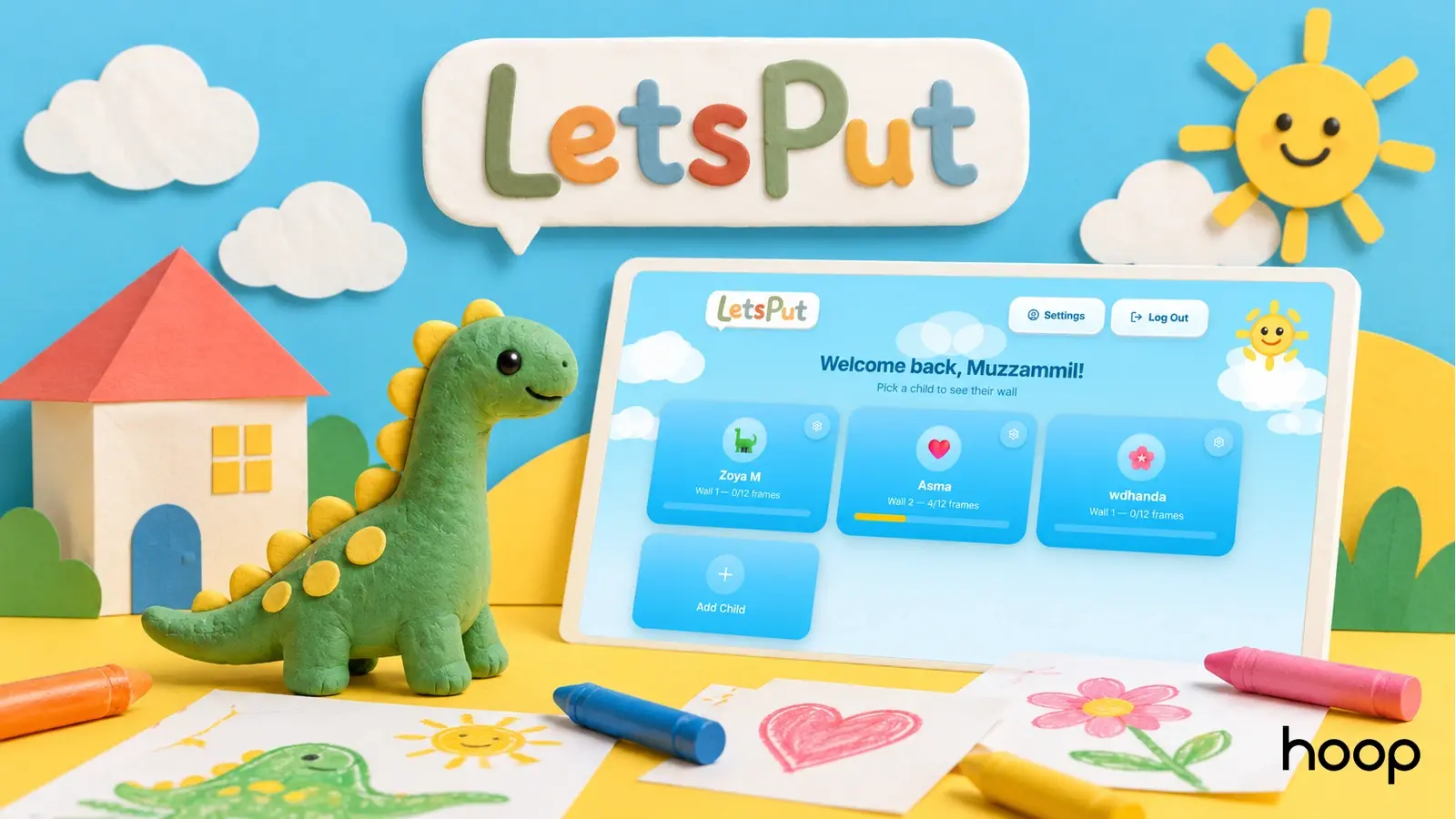
LetsPut: a creative platform built safe for children.

LetsPut bridges physical and digital creativity for children. We built it on Next.js 16, React 19 and Supabase with privacy enforced at the database layer, private viewer access for families, Stripe subscriptions, onboarding, localisation and a calm, non-competitive interface with Unity WebGL 3D galleries.

  • Development
  • AI / ML
  • 3D Integration
  • UI/UX Design
Client
LetsPut
Industry
Kids’ Creative Tech
Timeline
2025, Ongoing
Status
In Progress

8

Technologies In The Stack

LetsPut is a children’s platform that bridges physical and digital creativity, and it needed to be safe by design. We built it as a full-stack Next.js 16 and React 19 application on Supabase, with privacy enforced at the database layer and an interface designed to stay calm and non-competitive, with a Unity WebGL layer being integrated for 3D galleries.

12

Frames Per Wall

0

Social Comparison

1

Design System
LetsPut 3D AI creative web app concept: turning physical crafts into 3D assets, with an asset library, AI generation panel, and WebGL, AR and VR ready export

How we differ from a typical education software development company.

Many edtech vendors lead with VR, AR and buzzwords. We lead with adoption.

What mattersTypical edtech vendorHoop Interactive
Starting pointBuild another LMS.Fit into the LMS schools already use, or build when it’s right.
Privacy“Secure” in the brochure.FERPA and COPPA-aware design, no ad tracking, database-level access rules.
TeachersExtra dashboards to check.Grade passback and “who needs help” insights.
AIAnswers on demand.Hints grounded in your curriculum, with teacher-visible logs.
AccessibilityChecked at the end, if at all.WCAG 2.2 AA from the first design.
GrowthSoftware only.Enrolment marketing, SEO and ASO in-house.

From idea to classroom adoption.

Planned around real learners, teachers and the school calendar.

01

Blueprint

Learners, buyers, learning model, privacy requirements and integrations.

2 weeks · Product plan & fixed quote
02

Learning design & UX

Flows tested with students and teachers, accessibility built in.

2–4 weeks · Tested prototype
03

Build

App or platform, content tools, integrations and analytics in sprints.

8–12 weeks · Working builds
04

Privacy & accessibility review

Data flows, consent and accessibility checked before any pilot.

Before pilot · Review documentation
05

Pilot

A class, cohort or school pilot with feedback and learning data.

2–6 weeks · Pilot report
06

Launch & grow

Wider rollout, enrolment marketing and continuous improvement.

Ongoing · Monthly report
Our Stack

Education technology we work with.

Classroom standards plus our application stack.

Classroom & LMS
LTI 1.3CanvasMoodleBlackboardGoogle ClassroomCleverClassLink
Content & learning
SCORMxAPIVideo streamingCaptionsAI tutors
Build stack
Next.jsReactFlutterSupabasePostgreSQLFastAPIStripeUnity WebGL

What education software development costs with Hoop.

Fixed quotes after the blueprint. Prices are in USD. Hosting, video, AI usage and app store fees are billed to your own accounts.

EdTech BlueprintBest for: shaping the product
Investment
from $4,000
Timeline
2 weeks
Scope
Learner and buyer research
Included
Privacy and compliance scope
Integrations
LMS and integration plan
Output
Prototype of key screens
Fee
Credited on build
Learning App or Platform MVPBest for: a first learning product · Most chosen
Investment
from $20,000
Timeline
10–16 weeks
Build
Web or mobile learning app
Scope
Courses, lessons and quizzes
Included
Progress and teacher views
Compliance
Accessibility and privacy built in
Integrations
Payments or school accounts
EdTech PlatformBest for: schools and scale
Investment
from $40,000
Timeline
Phased
Integrations
LTI and LMS integration
Included
Rostering and SSO
Build
AI tutor with guardrails
Scope
Learning analytics
Support
School pilot support

Education organisations we build for.

From course creators to schools and edtech startups.

EdTech startups

MVPs built for school sales and investor demos.

Schools & districts

Portals, parent apps and tools that fit your LMS.

Universities

Student apps, LTI tools and learning analytics.

Course creators & academies

Branded course platforms with subscriptions.

Corporate training

Onboarding, compliance and skills academies.

Kids’ learning brands

Safe, engaging learning apps for young children.

FAQ

Education software questions

About our education software development services. Ask us anything else.

An edtech blueprint starts from $4,000. A learning app or course platform MVP starts from $20,000, and platforms with LMS integration, school rostering, AI tutoring and analytics from $40,000. Hosting, video and AI usage are billed to your own accounts.

Schools and universities already run LMS platforms such as Canvas, Moodle, Blackboard or Google Classroom, so most edtech products should plug into them through LTI and APIs rather than replace them. A custom LMS makes sense for course businesses, corporate academies or products with a very specific learning model.

We design for student privacy laws such as FERPA for education records and COPPA for children under 13 in the US, and GDPR in the UK and EU. That means collecting the minimum data, parental or school consent where required, access rules enforced in the database, no third-party ad tracking and clear data deletion. We recommend confirming obligations with counsel.

Yes. We use LTI 1.3 for launching tools and passing grades back to the LMS, Google Classroom APIs, and rostering and single sign-on through providers such as Clever and ClassLink where schools use them.

Yes. AI tutors give hints rather than answers, stick to your curriculum through retrieval from approved content, filter unsafe topics, keep logs teachers can review and use AI providers whose terms allow educational use with student data protections.

Yes. We built LetsPut, a creative platform for children with privacy enforced at the database layer, private viewer access for families and a calm, non-competitive design. Kids’ apps also need to follow app store family policies, which we plan for from the start.

We design to WCAG 2.2 AA, with keyboard navigation, screen reader support, captions and readable contrast, because schools and public institutions often require it.

A learning app or course platform MVP usually takes 10 to 16 weeks. Products with LMS integrations, rostering and school pilots take 4 to 6 months, phased around the school calendar.

Yes. Our marketing team runs SEO, content, paid ads and app store optimization for course creators and edtech startups, so the product and its growth come from one team.