Best AI Marketing Tools in 2026: Free and Paid Options
The right AI marketing stack is the smallest one that clears your most expensive bottleneck. Score every tool on fit, data quality, total cost, and review burden — then run a 14-day test against a measured baseline before committing to an annual plan.
Sahar
Content Writer
The best AI marketing tools in 2026 solve one defined bottleneck, connect with your current systems, and produce measurable value.
You should choose AI marketing tools by task fit, data quality, review effort, integration depth, and total monthly cost.
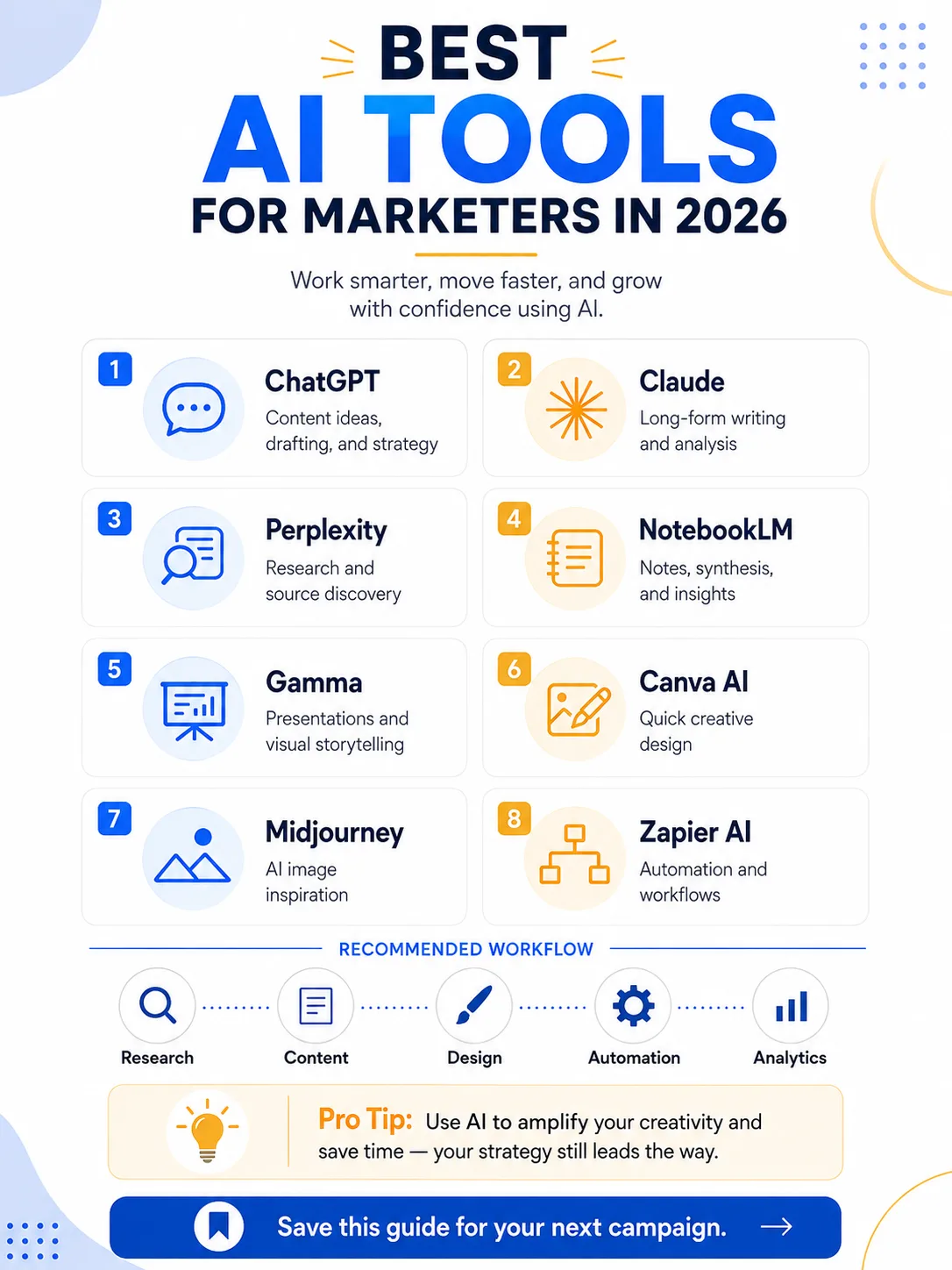
Strong AI marketing tools include ChatGPT for general work, Perplexity for research, Canva for design, and Semrush for search data. Buffer supports social publishing, OpusClip repurposes video, Zapier connects workflows, and HubSpot manages customer relationships.
Public plan pages showed the prices listed here on July 31, 2026. Check checkout pages before purchasing because vendors change limits.
What Are the Best AI Marketing Tools in 2026?
The best AI marketing tools cover 12 distinct marketing jobs without forcing you to buy overlapping subscriptions.
ChatGPT ranks first for flexible research, planning, drafting, file analysis, and campaign ideation. The Free plan supports testing. ChatGPT Plus costs $20 monthly.
Claude works well for long documents, brand guidelines, strategic editing, and detailed content reviews. Claude offers Free access and Pro at $20 monthly.
Perplexity suits current market research because each answer can include web sources. Perplexity offers Free access and Pro from $17 monthly annually.
Canva remains the easiest visual production choice for small teams. Canva offers a useful Free plan and Pro near $15 monthly in the United States.
Semrush delivers keyword, competitor, technical, backlink, advertising, and AI visibility data. Semrush offers free tools and paid SEO plans from $139 monthly.
Surfer guides on-page content optimization and coverage. Surfer Discovery costs $49 monthly with annual billing, while Standard costs $99 monthly annually.
Jasper supports brand-controlled campaign production across teams. Jasper offers a trial, while Pro costs $69 monthly or $59 monthly annually.
Buffer combines AI assistance, publishing, engagement, and analytics. Buffer Free supports 3 channels, while Essentials starts at $5 per channel annually.
OpusClip turns long videos into short clips with captions and social exports. Starter costs $15 monthly, while Pro costs $29 monthly.
Descript edits video and audio through text. Descript offers Free access, while paid plans start near $16 monthly.
Zapier connects marketing systems and AI actions across more than 9,000 apps. Free includes 100 tasks, while Professional starts at $19.99 monthly.
HubSpot combines customer relationship management, email, forms, automation, reporting, and AI. Free supports 2 users, while Starter begins at $7 per seat annually.
How Did We Evaluate AI Marketing Tools?
We scored the AI marketing tools against a 20-point FITR framework: Fit, Information, Total cost, and Review burden.
Each FITR factor receives 0 to 5 points. A tool needs at least 14 points before a paid trial deserves serious attention. The framework exposes AI marketing tools with weak data, difficult setup, duplicate functions, or expensive human editing.
Score Task Fit Before Features
Choose one measurable bottleneck before comparing products.
Name the task, current time, current cost, output standard, and owner. Examples include keyword research, ad variations, clip creation, or lead routing.
A general assistant scores highly for flexible work. A specialist platform scores higher when the task needs live data or platform controls.
Check Data Quality and Integrations
Give 5 points only when the tool uses relevant data and connects with your working systems.
Large language models can draft quickly, but general model knowledge cannot replace live keyword, advertising, analytics, or customer data.
Check integrations with platforms such as WordPress, Shopify, Google Analytics, HubSpot, Slack, and your advertising accounts.
Measure Review Burden and Total Cost
Count subscription fees, setup hours, editing hours, credits, seats, and required integrations.
A $20 assistant can become expensive when employees spend 10 hours correcting weak output. A $139 data platform can save money through better decisions.
Calculate monthly value with one formula. Multiply saved hours by loaded hourly cost, then add gross profit and subtract total costs.
Which Free AI Marketing Tools Deliver Real Value?
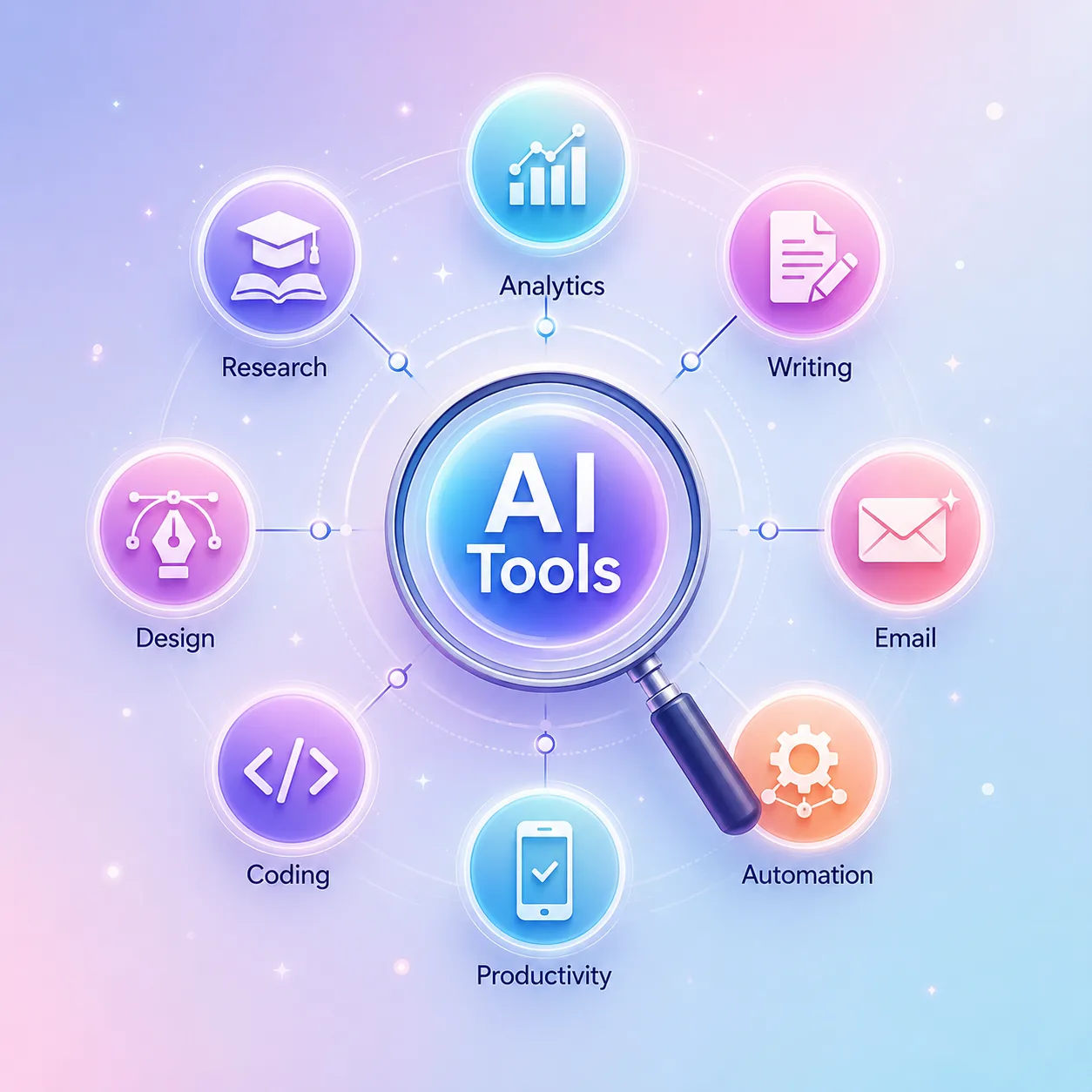
Free AI marketing tools work best for testing workflows, supporting light production, and proving value before upgrades.
Free AI marketing tools rarely support large teams, heavy automation, advanced governance, or unlimited production. Free access still supports meaningful experiments.
ChatGPT for General Marketing Work
ChatGPT Free provides the broadest starting point for research, drafts, analysis, and campaign planning.
Use ChatGPT for interview summaries, idea organization, draft variants, file analysis, and reusable workflow instructions. Keep final positioning, claims, customer promises, budgets, and publishing approval under human control.
The official ChatGPT pricing page lists Plus at $20 monthly. Plus adds higher limits and expanded research, image, file, and project features.
Claude for Long Documents and Brand Context
Claude Free suits long briefs, editorial reviews, messaging systems, and document-heavy work.
Claude handles detailed context well and supports files, web search, projects, and content creation on the Free plan.
Choose Claude Pro at $20 monthly when regular usage limits interrupt production. Avoid paying for both Claude and ChatGPT without distinct workflows.
Perplexity for Current Research
Perplexity Free works best when current sources matter more than pure drafting speed.
Use Perplexity for market scans, competitor discovery, product comparisons, source collection, and early fact checks.
Open each cited source before publishing a factual claim. A citation does not guarantee correct interpretation or complete context.
Canva, Buffer, and HubSpot for Daily Execution
Canva, Buffer, and HubSpot offer the strongest free execution stack for visuals, social publishing, and lead management.
Canva Free supports templates and selected AI features. Buffer Free supports 3 channels and 10 queued posts per channel. HubSpot Free supports 2 users, forms, email, contact management, and basic reporting without an expiration date.
Choose free plans when brand needs stay simple. Upgrade after usage limits block a proven campaign process.
Which Paid AI Marketing Tools Justify Their Cost?
Paid AI marketing tools justify their cost when proprietary data, automation depth, brand control, or production volume creates measurable savings.
Paid AI marketing tools should remove a recurring bottleneck. Do not upgrade because a vendor places one useful feature behind a paywall.
Semrush and Surfer for Search Work
Semrush supplies research data, while Surfer converts search findings into page-level writing guidance.
The official Semrush pricing page lists SEO at $139 monthly. Semrush suits teams needing keywords, competitor gaps, backlinks, audits, and rankings.
Surfer suits teams that already know their target topics and need structured briefs, coverage analysis, and optimization checks.
Buy Semrush first when strategy lacks data. Buy Surfer first when production lacks consistent on-page standards.
Jasper for Brand-Controlled Production
Jasper earns its price when multiple marketers need shared brand voice, campaign context, and approval consistency.
Solo marketers often receive enough value from general assistants. Larger content teams gain more from reusable brand controls and shared campaign workflows.
Choose Jasper after documenting tone, claims, product facts, audience segments, and review rules. Weak inputs still produce weak branded content.
OpusClip and Descript for Video Work
OpusClip accelerates clipping, while Descript provides deeper text-based editing for video and audio.
Choose OpusClip for webinars, interviews, podcasts, demos, and educational videos that need short social versions.
Choose Descript for recordings that need transcript editing, filler removal, sound improvement, captions, screen recording, or polished exports. Use both only when long-form editing and high-volume repurposing create separate weekly workloads.
Zapier and HubSpot for Connected Workflows
Zapier connects separate apps, while HubSpot manages customer data and lifecycle actions inside one platform.
Use Zapier to move leads, trigger messages, update records, create tasks, and connect specialized tools without custom code. Use HubSpot when customer data, forms, email, sales activity, and reporting need one shared system.
Teams needing private integrations or custom agents can review Hoop Interactive’s AI development services before adding fragile workarounds.
Which AI Marketing Tools Work Best for Content, SEO, and Research?
Use ChatGPT or Claude for thinking, Perplexity for current sources, Semrush for search data, and Surfer for page optimization.
AI marketing tools for content should start with customer questions, search intent, competitor evidence, and company knowledge.
ChatGPT provides flexible ideation, analysis, outlines, drafts, repurposing, and file work. Claude supports long context and detailed editorial refinement.
Perplexity finds current sources, but your reviewer must open sources and confirm claims. Semrush provides live keyword and competitor datasets.
Surfer creates optimization guidance from ranking pages and topical coverage. Surfer scores do not replace expertise, originality, or accurate information.
Jasper adds value when a team produces many campaign assets under one brand system. Solo operators should prove volume before paying $69 monthly.
Use a 3-stage review: verify facts, add first-hand knowledge, and edit every promise. Search engines and customers reward useful answers over output volume.
Which AI Marketing Tools Work Best for Design, Video, and Social Media?
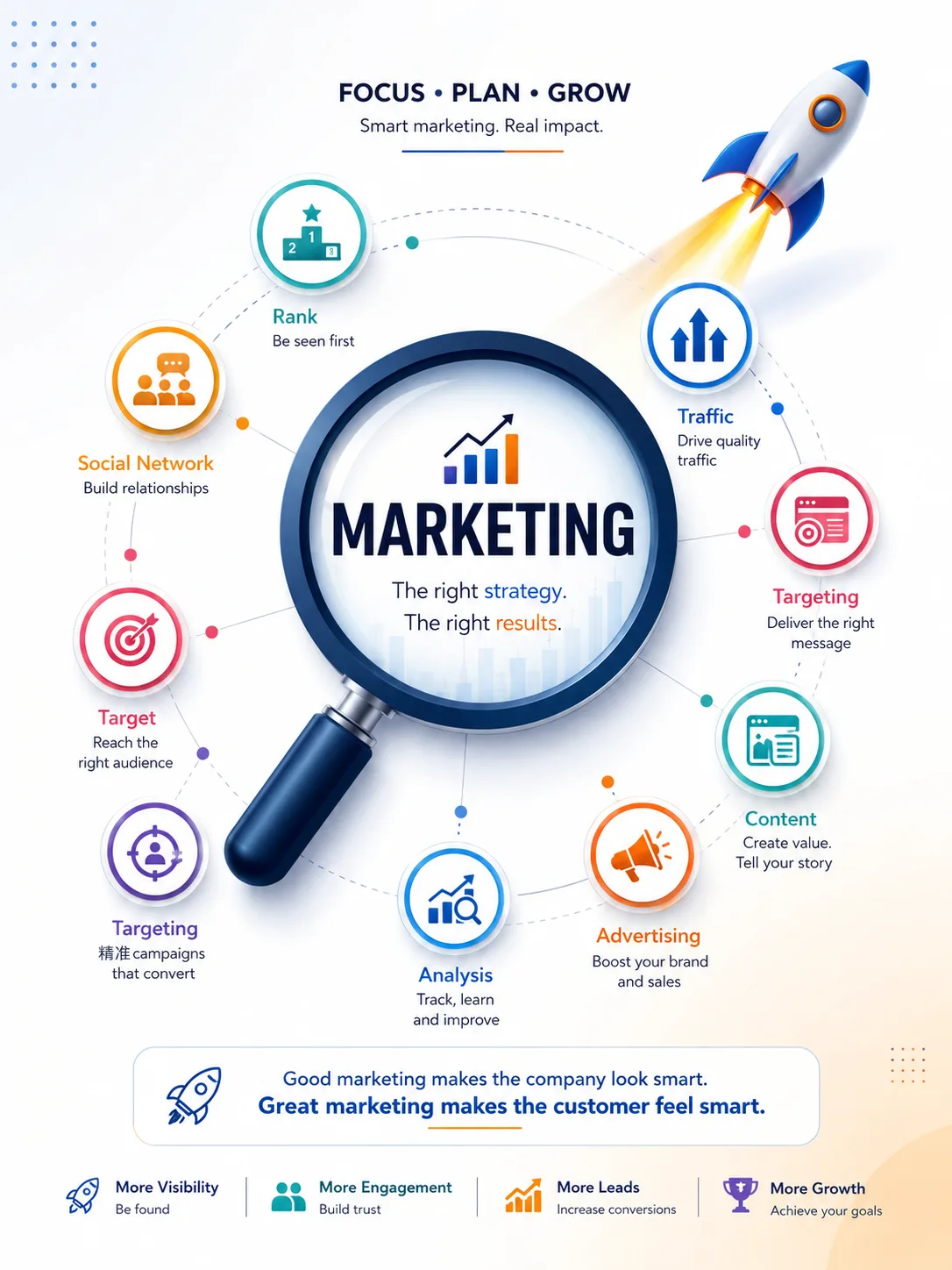
Use Canva for fast branded graphics, Descript for editing, OpusClip for repurposing, and Buffer for publishing.
These AI marketing tools give teams templates, resizing, image generation, video editing, clipping, scheduling, and social publishing. Human review protects quality.
Descript suits teams producing podcasts, interviews, screen recordings, tutorials, and sales videos. Text editing reduces time spent searching video timelines.
OpusClip suits marketers turning long recordings into vertical clips. Review every selected moment because automated virality scores cannot understand every brand risk.
Buffer schedules content across channels such as Instagram, LinkedIn, TikTok, YouTube, Facebook, and Google Business Profile. Buffer Free covers 3 channels. Essentials costs $5 per channel monthly with annual billing and adds unlimited scheduling and advanced analytics.
Avoid producing 30 generic posts because AI makes production cheap. Publish fewer assets that connect audience questions with a defined conversion path.
Which AI Marketing Tools Work Best for Email, CRM, and Automation?
Use HubSpot for customer records and lifecycle marketing, then use Zapier for actions that cross separate applications.
HubSpot Free supports contact management, forms, email, and basic reporting. Starter starts at $7 per seat monthly with annual billing.
HubSpot Professional starts at $800 monthly annually and includes deeper automation. Professional also requires a $3,000 onboarding fee.
Zapier Free includes 100 tasks monthly and two-step workflows. The official Zapier pricing page lists Professional at $19.99 monthly.
Connect a form submission to qualification, routing, follow-up, and reporting. Keep customer consent, exclusions, and sensitive decisions under human supervision.
Use Hoop Interactive’s email automation guide to plan welcome, lead-nurture, cart-recovery, reactivation, and post-purchase sequences before adding software.
Automation should reduce response time and missed follow-up. Automation should not send unverified claims or repetitive messages to every contact.
Which AI Marketing Stack Should You Choose?
Choose the smallest stack that covers your highest-value tasks without paying twice for similar capabilities.
Each stack of AI marketing tools uses public July 2026 prices. Taxes, regions, annual commitments, credits, contacts, and channels can change totals.
Choose a $0 Starter Stack
Start with ChatGPT Free, Canva Free, Buffer Free, and HubSpot Free.
The $0 stack covers planning, basic copy, graphics, 3 social channels, contact management, forms, and light email work. The starter stack suits freelancers, local services, early startups, and small shops testing a consistent marketing routine.
Choose a $59.99 Growth Stack
Combine ChatGPT Plus, Canva Pro, Buffer Essentials, and Zapier Professional for approximately $59.99 monthly.
The estimate uses $20 for ChatGPT Plus, $15 for Canva Pro, $5 for 1 Buffer channel, and $19.99 for Zapier. Add $5 monthly for each additional Buffer channel under annual billing. Choose the growth stack after one channel produces dependable results.
Choose a $208 Search Stack
Combine ChatGPT Plus, Semrush SEO, and Surfer Discovery for approximately $208 monthly.
The estimate uses $20 for ChatGPT Plus, $139 for Semrush monthly billing, and $49 for Surfer with annual billing. The search stack suits publishers, software companies, agencies, and service businesses that produce content every month.
Choose a $66 Video Stack
Combine ChatGPT Plus, Canva Pro, OpusClip Starter, and Descript for approximately $66 monthly.
The estimate uses $20, $15, $15, and $16. The stack supports scripts, visuals, clipping, captions, editing, and distribution assets. Choose the video stack when your team records at least 2 useful long-form videos monthly.
How to Test AI Marketing Tools Before Paying
To test AI marketing tools before paying, run one controlled 14-day workflow against a measured baseline.
Do not test 5 products at once. Choose one task and one output standard, then compare the paid tool against your current method.
Use the quick-reference process below. Record errors and editing time because polished demonstrations hide daily review costs.
| Task | Timing | Method | Difficulty |
|---|---|---|---|
| Record a baseline | Day 1 | Measure current hours, cost, quality, and conversions | Easy |
| Configure one workflow | Days 2–4 | Load approved data, rules, templates, and integrations | Moderate |
| Run controlled production | Days 5–10 | Complete 10 comparable outputs with human review | Moderate |
| Audit quality and risk | Days 11–12 | Check facts, brand voice, privacy, errors, and rework | Moderate |
| Calculate financial value | Day 13 | Compare savings and gross profit against total cost | Easy |
| Keep, revise, or cancel | Day 14 | Set a decision using evidence, not feature excitement | Easy |
Which Risks Should You Check Before Connecting Business Data?
Check privacy, permissions, data retention, model training, copyright, accuracy, security, and approval controls before connecting business systems.
Before connecting AI marketing tools, never upload passwords, payment data, health records, private contracts, or customer identifiers into unapproved accounts.
Read vendor terms for training settings, retention periods, deletion options, regional processing, administrator controls, and incident response.
Confirm who owns generated copy, images, voices, and video. Stock assets, uploaded material, and generated outputs can carry different rights.
Require human approval for prices, legal claims, medical claims, guarantees, campaign budgets, exclusions, and public responses.
Test integrations with sample records before using live customer data. Document rollback steps when automations update contacts or trigger messages.
Custom workflows need clear governance, logs, permissions, and monitoring. Hoop Interactive can connect strategy and execution through its digital marketing services.
Build a Smaller Stack That Produces Better Results
The best stack uses fewer tools, cleaner data, clear owners, and measurable workflows.
Start with one general assistant, one execution tool, and one system of record. Add specialist software after a 14-day test proves value.
Choose the tool that removes your most expensive repeated bottleneck. Cancel subscriptions that duplicate features or create more review work.
Contact Hoop Interactive for a tailored stack, workflow audit, or implementation plan. Its digital marketing services connect software with revenue goals.
“Do not upgrade because a vendor placed one useful feature behind a paywall. Upgrade because a bottleneck keeps costing you more than the subscription.”
Key takeaways
- 01Most small businesses need 3 to 5 tools, not a subscription for every new capability.
- 02A $20 assistant costs more than a $139 data platform if staff spend 10 hours fixing its output.
- 03Four stacks by budget: $0 starter, $59.99 growth, $208 search, and $66 video.
- 04Prices listed were verified on public plan pages on 31 July 2026 — always check checkout.
Written by
Sahar
Content Writer
Frequently Asked
Questions
Everything you need to know before booking a strategy call. Can't find your answer? Contact us directly.
Yes. Free plans support testing, light content, basic design, social scheduling, contact management, and early workflow validation.
ChatGPT offers the broadest beginner value. Add Canva for visuals and Buffer for publishing after establishing a repeatable process.
No. Paid plans become better only when limits, team controls, data depth, integrations, or production volume justify the cost.
No. Software accelerates research and execution, while people control positioning, judgment, accountability, relationships, and final approval.
Most small businesses need 3 to 5 tools. Add another subscription only after one documented bottleneck blocks measurable growth.
Keep reading
All articles →
AI in Digital Marketing in 2026: What Small Businesses Need to Know
Aug 6, 2026 · 11 min read
Digital Marketing Statistics 2026: 500+ Facts and Trends
Aug 6, 2026 · 10 min read