
AI in Digital Marketing in 2026: What Small Businesses Need to Know
AI in digital marketing earns its place when it removes one measurable bottleneck under human control — not when it produces more output. Start with one workflow, one owner, and one baseline, then judge it on hours saved, qualified leads, and gross profit rather than volume.
Sahar
Content Writer

AI in digital marketing helps small businesses research customers, create campaigns, personalize messages, automate workflows, and measure performance faster.
You gain value from AI in digital marketing when human reviewers control strategy, accuracy, privacy, budgets, and final communication.
A useful system starts with 1 measurable problem, 1 approved workflow, and 1 accountable owner.
Small businesses should not buy every new tool or publish every generated draft. Small businesses should connect AI activity to time saved, qualified leads, conversion rates, customer acquisition cost, and gross profit.
What Does AI in Digital Marketing Mean for a Small Business?
AI in digital marketing combines artificial intelligence, customer data, marketing platforms, and human judgment to improve specific business outcomes.
Artificial intelligence includes systems that recognize patterns, generate content, predict behavior, and automate repeated decisions. AI in digital marketing usually appears through 3 forms: generative AI, predictive AI, and workflow automation.
Generative AI Creates Marketing Assets
Generative artificial intelligence creates new text, images, audio, video, or code from a prompt and supporting context.
You can draft email subject lines, advertisement variations, social posts, video scripts, landing-page sections, and content outlines. Tools such as ChatGPT, Gemini, Claude, Canva, and Adobe Firefly support different creative production tasks.
Your team must add customer evidence, brand knowledge, factual verification, and a clear conversion objective before publication.
Predictive AI Improves Marketing Decisions
Predictive AI estimates likely outcomes from historical behavior, campaign data, and customer attributes.
Marketing platforms use predictive models for audience scoring, product recommendations, churn risk, send times, and advertising bids. Google Smart Bidding uses auction-time signals to optimize conversions or conversion value for stated campaign goals.
You still need accurate conversion tracking, realistic targets, and enough data for meaningful optimization.
Automation Connects Repeated Marketing Steps
Automation moves approved information between tools and triggers actions after defined customer events.
A workflow can route a new lead, draft a follow-up, assign an owner, update a CRM, and schedule a reminder. AI in digital marketing creates value when every automated step has clear inputs, approvals, alerts, and measurable outputs.
How Can Small Businesses Use AI in Digital Marketing?
Small businesses should use AI in digital marketing for research, production, personalization, testing, follow-up, and reporting.
Start with repeatable tasks that consume time and produce consistent inputs. Avoid automating tasks that require legal judgment, sensitive negotiations, or final accountability.
Use AI for Customer Research
Use approved customer data to identify recurring questions, objections, purchase triggers, and language patterns.
Useful sources include sales-call notes, support tickets, reviews, survey responses, search queries, and chat transcripts. Before using AI in digital marketing for research, remove personal identifiers from every external data transfer.
Ask the model to group evidence, quote recurring phrases, flag contradictions, and separate facts from assumptions. A human researcher should confirm every theme against the original source material.
Use AI for Content and Search
Use AI to speed research and structure, then add original expertise before publishing.
AI in digital marketing can cluster keywords, map intent, outline pages, compare coverage, draft summaries, and repurpose content. Your final page needs first-hand examples, named processes, trustworthy sources, and answers competitors omit.
A professional content system can connect AI research with SEO and GEO services for wider search visibility.
Use AI for Advertising and Email
Use AI to create controlled variations, not uncontrolled campaign decisions.
Generate 3 message angles, 5 headlines, and 2 calls to action from verified customer language. Run equal-budget tests, review conversion quality, and keep budget changes under human approval.
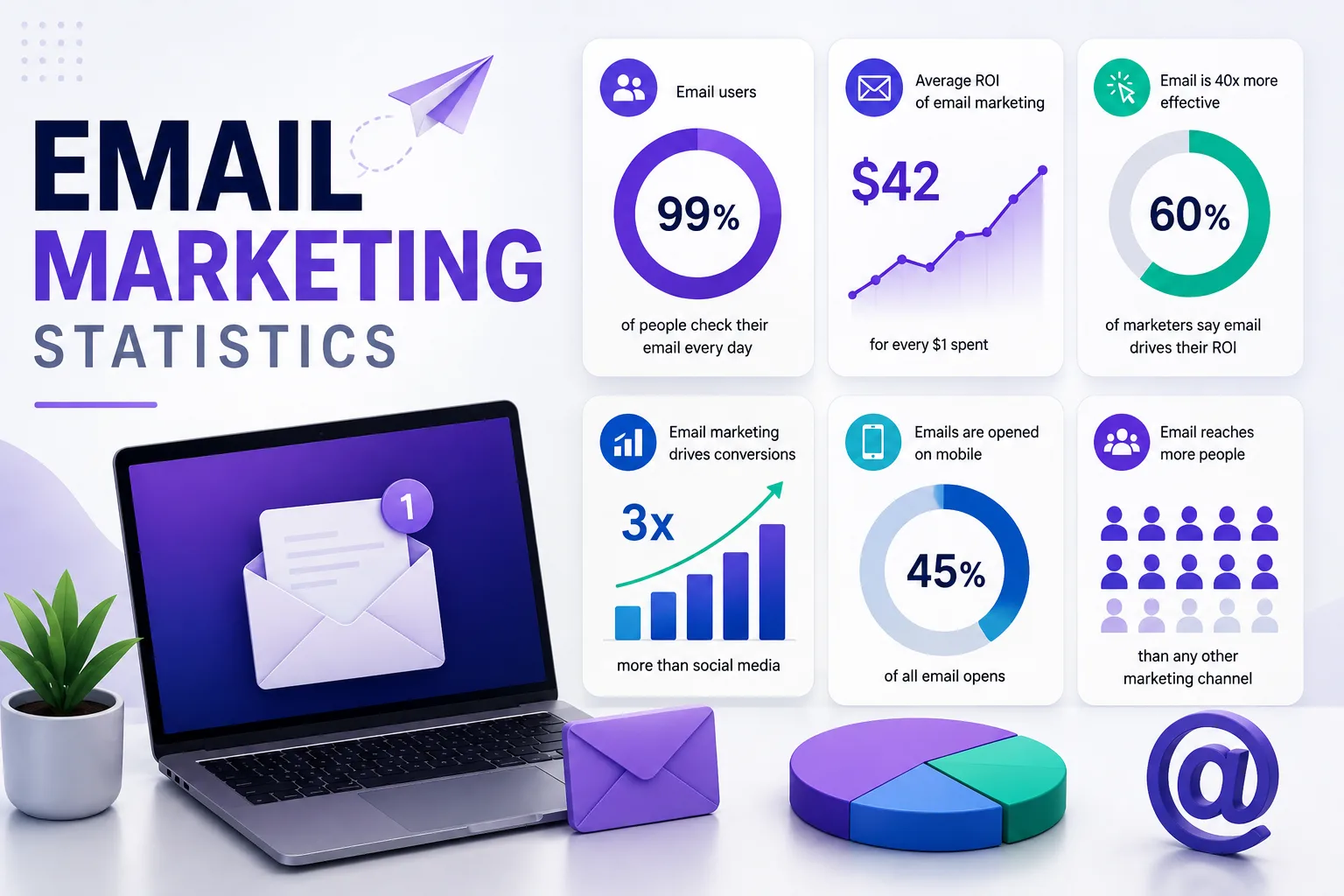
For email, segment audiences by behavior, purchase stage, engagement, or product interest. A focused email automation plan should cover welcome, abandonment, post-purchase, and win-back campaigns.
Which Marketing Tasks Should AI Handle?

AI should automate low-risk repetition, assist high-impact work, and avoid final control over accountable decisions.
Use a 3-lane responsibility model before assigning AI in digital marketing to any task.
Automate Low-Risk Production Tasks
Automate tasks with stable inputs, reversible outputs, and easy quality checks.
Suitable tasks include transcription, formatting, tagging, report summaries, content resizing, meeting notes, and lead routing. Set error alerts and keep a manual fallback for every customer-facing workflow.
Assist High-Impact Marketing Tasks
Use AI as a copilot when the task affects revenue, reputation, or customer trust.
Assisted tasks include advertisement drafts, content briefs, audience hypotheses, email sequences, offers, and performance analysis. A named reviewer should approve claims, tone, targeting, timing, and final publication.
Keep Accountable Decisions Human
Keep strategy, pricing, major budget changes, legal claims, crisis communication, and sensitive customer responses human-led.
AI systems do not accept responsibility for inaccurate promises, discriminatory targeting, wasted spend, or privacy failures. Your business owner or appointed manager must own every material decision.
Which AI Marketing Tools Does a Small Business Need?
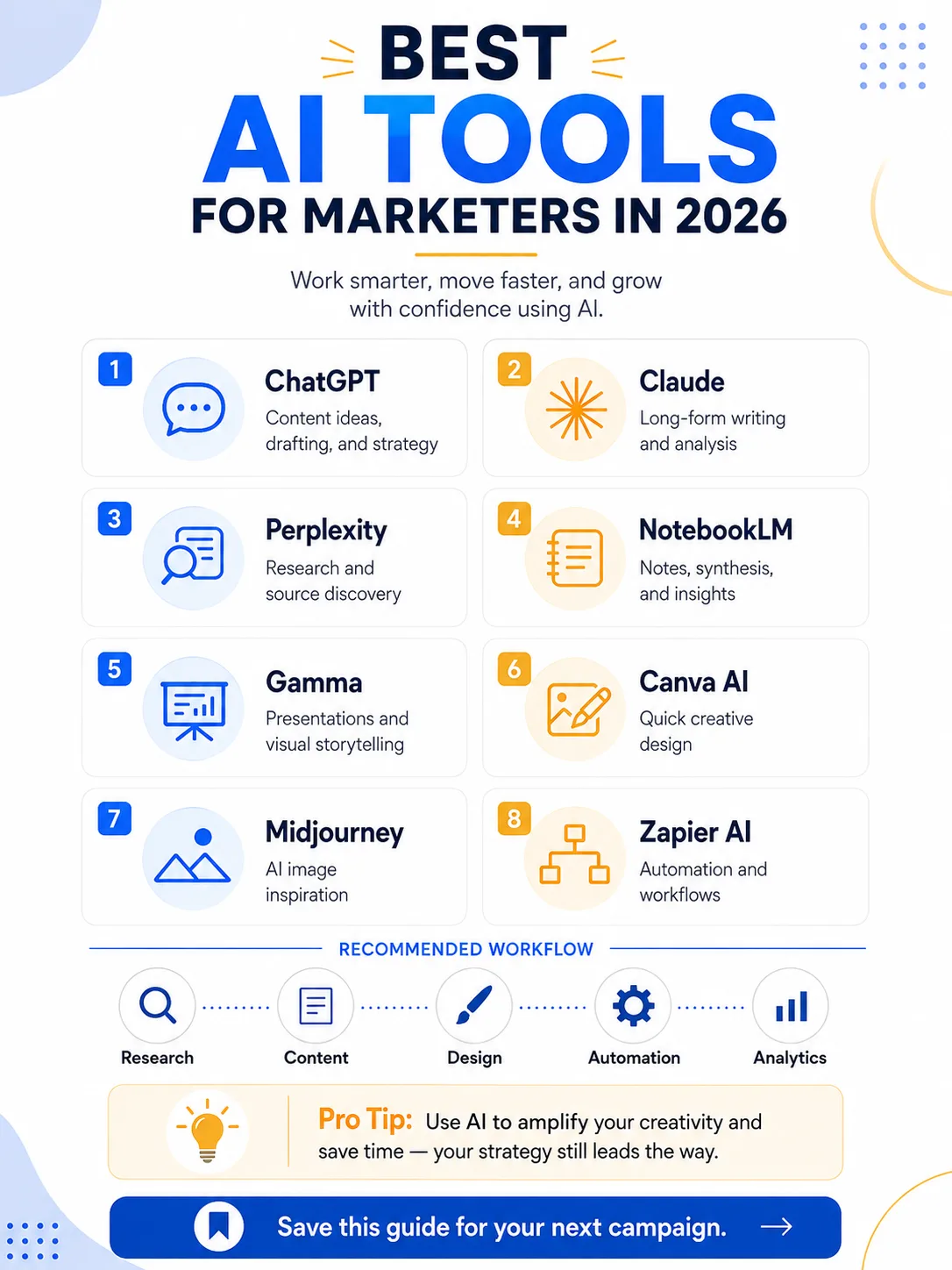
Most small businesses need only 3 starting capabilities: a general assistant, a creative tool, and an automation platform.
Your existing AI in digital marketing stack often includes CRM, email, advertising, and design features. Check existing subscriptions before adding another monthly cost.
Start With a 3-Tool Stack
Choose 1 tool for thinking, 1 tool for production, and 1 tool for workflow connections.
A general assistant can support research, drafts, analysis, and documentation. A creative platform can support images, video variations, resizing, and brand templates. An automation platform can connect forms, email, calendars, spreadsheets, and customer relationship management systems.
Custom requirements need custom AI systems when off-the-shelf tools cannot protect data or match complex workflows.
Score Every Tool Before Purchase
Score each tool across 5 criteria: business fit, data controls, integration, review effort, and measurable value.
Reject any tool without clear ownership terms, security controls, export options, or reliable support. Run a 30-day pilot before buying annual plans or migrating important customer data.
Keep the tool when the pilot improves a defined metric without increasing risk or review time.
How Much Does AI in Digital Marketing Cost?
AI in digital marketing costs include software, setup, integration, training, review time, and correction work.
AI in digital marketing becomes expensive when employees spend hours fixing weak outputs from cheap subscriptions. A higher-priced platform creates value when better automation reduces labor and improves conversions.
Budget for 3 Adoption Levels
Use 3 budget levels: assisted work, connected automation, and custom systems.
Assisted work uses existing tools and requires limited setup. Connected automation combines marketing platforms, customer data, approval steps, and reporting. Custom systems require development, testing, monitoring, access controls, and ongoing maintenance.
Choose the lowest level that solves the current problem reliably.
Calculate Time and Revenue Value
Calculate value before comparing subscription prices.
Use the formula: Monthly AI ROI = (labor savings + added gross profit − total AI cost) ÷ total AI cost × 100.
Labor savings equal hours removed multiplied by the employee’s loaded hourly cost. Added gross profit equals incremental revenue multiplied by gross margin. Total AI cost includes subscriptions, implementation, training, reviews, corrections, and specialist support.
Can AI-Generated Content Rank in Google and AI Search?
Yes. AI-assisted content can rank when the page provides original value, accurate information, and a satisfying answer.
Google’s AI-content guidance permits useful assistance and warns against scaled content without added value. AI in digital marketing content succeeds through quality, purpose, evidence, originality, and user benefit.
Build People-First Content for SEO
Build every page around a real query, complete intent coverage, credible expertise, and strong technical accessibility.
Use descriptive headings, crawlable links, fast pages, clear authorship, updated evidence, and useful internal connections. Avoid thin pages that repeat common knowledge or target minor keyword variations without new information.
Original checklists, calculations, examples, and decision rules create information gain.
Make Answers Easy to Extract for AEO
Answer Engine Optimization (AEO) requires concise answers that remain accurate outside the surrounding paragraph.
Start each major section with a direct answer, then explain evidence, conditions, steps, and examples. Define abbreviations once, use consistent terminology, and answer common follow-up questions inside the main page.
Tables, ordered steps, short definitions, and comparison criteria help answer systems identify useful passages.
Build Authority for GEO
Generative Engine Optimization (GEO) improves citation potential through expert-led content, entity clarity, and trustworthy corroboration.
Google’s 2026 AI search guide prioritizes foundational SEO and unique, non-commodity content. Google also states that llms.txt files do not create special eligibility for Google AI features.
Build clear relationships among your brand, services, authors, evidence, customer problems, and proven outcomes. Earn genuine mentions through useful research, customer results, industry participation, and authoritative partnerships.
What Risks Must Small Businesses Control?
Small businesses must control privacy, accuracy, bias, copyright, access, brand voice, and excessive automation.
AI in digital marketing without controls can create financial, reputational, and legal exposure. Use written rules before employees upload data or publish generated material.
Protect Customer Data
Share only approved information and remove personal identifiers before external processing.
Review vendor terms, retention settings, training policies, administrator controls, deletion options, and access logs. The Federal Trade Commission advises businesses to collect only needed personal data and protect retained information.
Never paste payment details, health information, passwords, private contracts, or confidential customer records into unapproved tools.
Verify Accuracy and Advertising Claims
Verify every statistic, quotation, product claim, comparison, and legal statement against a reliable source.
The FTC advertising guidance requires truthful, evidence-based, and non-deceptive claims. AI systems can invent sources, merge facts, or present outdated details confidently.
Assign named reviewers and keep source records for important public claims.
Prevent Bias and Brand Drift
Test outputs across customer groups and compare generated language with approved brand standards.
The NIST AI risk framework organizes responsible work through Govern, Map, Measure, and Manage. Review targeting, exclusions, recommendations, and automated responses for unfair patterns.
Pause any workflow that repeatedly creates inaccurate, insensitive, or inconsistent communication.
How Do You Measure ROI From AI in Digital Marketing?
Measure AI in digital marketing through operational gains and commercial outcomes, not output volume.
Ten additional posts create no value when qualified traffic, leads, or revenue remain unchanged. Compare every AI in digital marketing pilot against a documented baseline.
Establish a Baseline
Record current time, cost, quality, and business results before introducing AI.
Track task hours, revision rounds, production cost, response time, conversion rate, customer acquisition cost, and gross profit. Use the same measurement window before and after the pilot.
Keep seasonality, budget changes, and campaign mix consistent where possible.
Track Operational and Commercial Metrics
Track 5 core metrics: hours saved, cost per asset, qualified leads, conversion rate, and added gross profit.
Advertising teams should also track return on ad spend, cost per acquisition, and lead quality. Content teams should track qualified organic visits, assisted conversions, branded searches, and AI-search visibility.
Email teams should track replies, unsubscribes, revenue per recipient, and conversion rate.
Set Stop, Revise, and Scale Thresholds
Stop a workflow after 2 failed review cycles or repeated privacy and accuracy problems.
Revise a workflow when time savings appear but quality or conversion performance declines. Scale a workflow after 30 days of stable quality and measurable financial improvement.
Document the winning process before expanding the workflow across channels or teams.
How Does AI Help 4 Small-Business Models?
AI in digital marketing creates different value for local services, ecommerce stores, professional firms, and business-to-business companies.
Each business model needs different data, workflows, offers, and success metrics.
Local Service Businesses
Local businesses can use AI for review analysis, service-page briefs, call summaries, appointment follow-up, and advertisement testing.
Examples include plumbers, dentists, cleaning companies, electricians, and home-repair contractors. Track booked appointments, qualified calls, cost per lead, local visibility, and close rate.
Ecommerce Stores
Ecommerce stores can use AI for product categorization, recommendations, support drafts, creative variations, and lifecycle email.
Examples include clothing stores, beauty brands, electronics retailers, and specialty food sellers. Track conversion rate, average order value, repeat purchase rate, return rate, and gross margin.
Professional Services and B2B Companies
Professional and B2B firms can use AI for research, proposal drafts, lead scoring, meeting summaries, and account follow-up.
Examples include consultants, accountants, software companies, agencies, and legal-service providers. Track sales-qualified leads, proposal acceptance, sales-cycle length, pipeline value, and client retention.
How to Start AI in Digital Marketing in 30 Days
To start AI in digital marketing in 30 days, select 1 workflow, protect data, test output, and measure business impact.
Avoid launching 5 tools or 10 workflows during the first month.
Week 1: Define the Problem and Baseline
Choose 1 repetitive task with clear inputs, outputs, costs, and an accountable owner.
Document current hours, quality checks, conversion results, data sensitivity, and failure consequences. Select a low-risk workflow with enough volume for a fair test.
Week 2: Build the Workflow and Controls
Create prompts, templates, approval rules, source requirements, and error alerts.
Test 10 sample outputs before using the workflow with live customers. Reject the workflow when output quality remains inconsistent after 2 revisions.
Weeks 3 and 4: Run, Measure, and Decide
Run the pilot with controlled volume and compare results against the baseline.
Review data weekly and record every correction, failure, saved hour, lead, and sale. Keep, revise, or stop the workflow after the 30-day review.
| Task | Timing | Method | Difficulty |
|---|---|---|---|
| Customer research | 2 hours weekly | Group 50 approved comments or reviews | Easy |
| Content brief | 60 minutes per page | Map intent, entities, evidence, and gaps | Easy |
| Ad creative test | 14 days | Compare 3 angles with equal budgets | Medium |
| Email sequence | 30 days | Segment, draft, approve, and track sales | Medium |
| ROI review | Monthly | Compare baseline costs and gross profit | Hard |
Build an AI Marketing System That Produces Measurable Growth
AI in digital marketing works when technology supports a clear offer, reliable data, controlled execution, and accountable human decisions.
Start with 1 business problem, prove value, document the process, and expand only after stable results.
Explore Hoop Interactive’s digital marketing services to connect AI, content, advertising, automation, tracking, and conversion strategy.
“AI systems do not accept responsibility for inaccurate promises, discriminatory targeting, wasted spend, or privacy failures. A named human must own every material decision.”
Key takeaways
- 01Three forms matter: generative AI for assets, predictive AI for decisions, automation for repeated steps.
- 02Automate low-risk repetition, assist high-impact work, keep accountable decisions human.
- 03Most small businesses need only 3 tools: an assistant, a creative platform, and an automation layer.
- 04AI-assisted content can rank, but only with original value that scaled content cannot reproduce.
Written by
Sahar
Content Writer
Frequently Asked
Questions
Everything you need to know before booking a strategy call. Can't find your answer? Contact us directly.
No. AI accelerates production and analysis, while people retain strategy, judgment, accountability, relationships, and final approval.
Yes. Google can rank helpful AI-assisted content that adds original value and follows search quality policies.
Only approved data is safe to share. Review vendor controls and remove personal information before external processing.
Choose 1 general assistant tied to 1 measurable workflow. Add more tools after the first pilot produces verified value.
Use a 30-day pilot for one repeated workflow. Longer sales cycles need additional time for revenue measurement.