Voice Search Optimization: How Businesses Rank in 2026
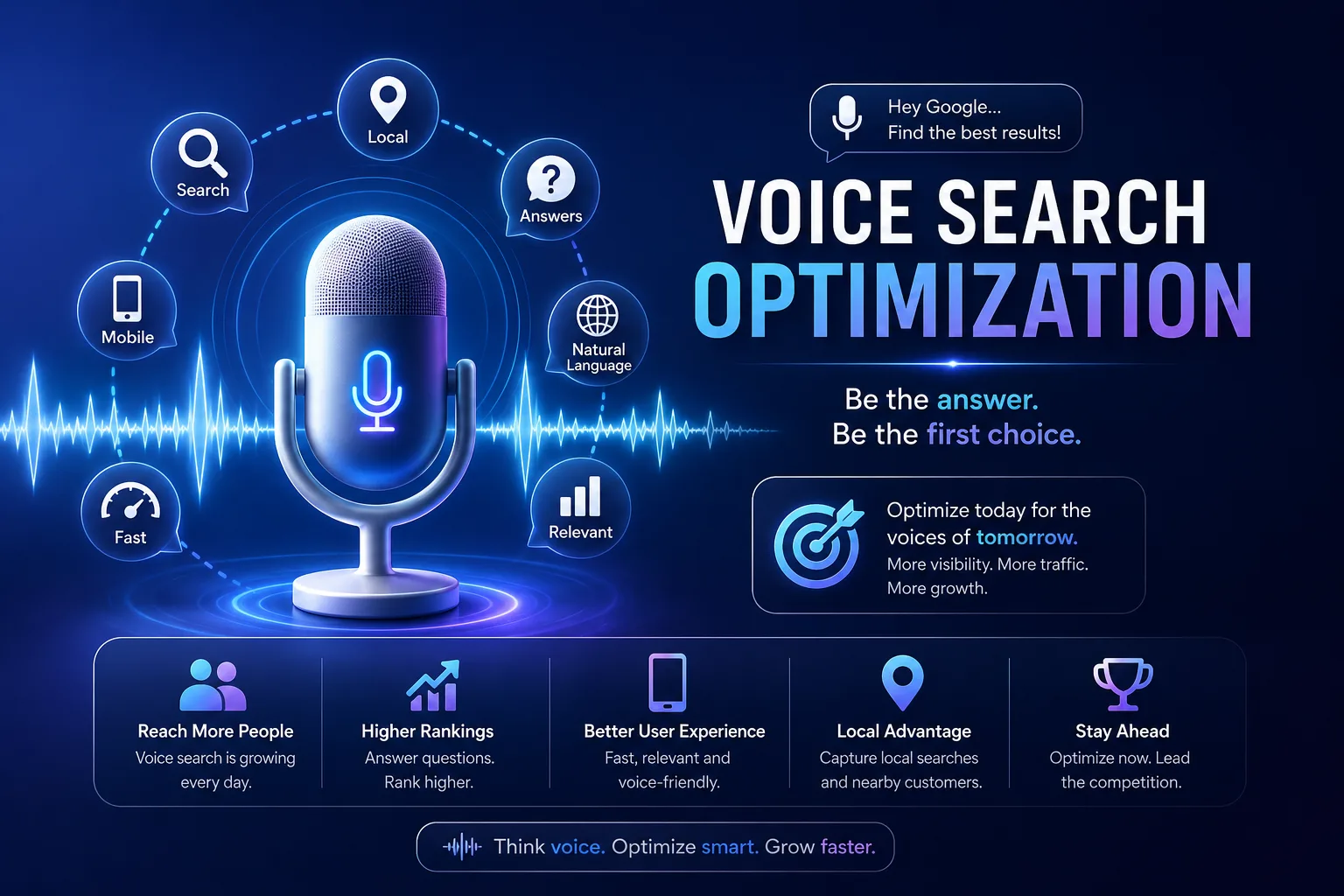
Voice search optimization is standard SEO with four extra priorities: conversational phrasing, answer-ready passages, local accuracy, and action-focused measurement. You do not need voice-only pages — you need complete facts a system can state aloud without inferring the missing parts.
Sahar
Content Writer
Voice search optimization in 2026 makes your content and business data easy for search systems to understand and state aloud. You rank by strengthening standard SEO, then improving conversational answers, local accuracy, technical clarity, and conversion paths.
Voice searches now happen through smartphones, map applications, smart speakers, vehicles, and conversational assistants. Most businesses do not need a separate collection of voice-only pages. Businesses need accurate information, clear answers, strong local signals, and pages that satisfy complete spoken questions.
What Is Voice Search Optimization in 2026?
Voice search optimization improves your visibility when a person speaks a query instead of typing one. Voice search optimization covers content, local listings, technical performance, structured data, and conversion tracking.
Voice search includes 2 different events. Voice input occurs when a person speaks a query into a device. Spoken output occurs when an assistant reads or summarizes an answer. A search system can accept voice input and display normal results. An assistant can create a spoken answer from several indexed sources.
Voice Input Changes Query Language
Spoken queries usually contain more context than short typed queries. A user can include a service, location, time, condition, and desired action in one sentence.
A typed query might read “emergency plumber Bristol.” A spoken query might ask, “Which emergency plumber near Bristol can repair a burst pipe tonight?” The second query reveals urgency, location, service type, and availability.
Spoken Output Raises the Accuracy Standard
Spoken answers need complete facts that make sense without surrounding page content. Search systems need reliable names, prices, hours, qualifications, locations, and service conditions.
Vague writing forces the system to infer missing details. Precise writing gives the system a complete statement and helps readers decide faster.
Is Voice Search Optimization Different From Traditional SEO?
Voice search optimization uses the same foundation as traditional SEO, with greater emphasis on natural questions and direct answers. Search systems still need crawlable pages, relevant content, authority, and a strong user experience.
Do not create duplicate voice pages for existing services. Duplicate pages divide authority and create maintenance problems. Improve the strongest page instead.
Standard SEO Provides the Foundation
Traditional ranking work supports voice visibility first. Search engines must discover, index, understand, and trust a page before selecting the page for an answer.
Voice search optimization needs search intent, descriptive headings, internal links, mobile performance, topical depth, and trustworthy sourcing. Professional SEO services address those foundations across content, technical structure, and authority.
Voice Search Optimization Adds 4 Practical Priorities
Voice work adds conversational phrasing, answer-ready passages, local accuracy, and action-focused measurement. Those priorities improve standard search performance too.
Conversational phrasing matches questions. Direct passages reduce ambiguity. Local accuracy supports recommendations. Measurement connects visibility with calls, bookings, leads, and revenue.
How Do People Phrase Voice Searches?
People phrase voice searches as complete requests with context and a desired outcome. The strongest queries often contain question words, local modifiers, urgency, or comparison language.
Complete Questions Reveal Search Intent
Question structures reveal what the searcher wants to do next. “What,” “how,” and “why” often signal research. “Where,” “which,” and “near me” often signal evaluation or action.
A buyer might ask, “Which CRM fits a 10-person sales team?” A patient might ask, “Which dentist accepts Sunday emergencies?” Each question needs a different answer.
Local Modifiers Carry Commercial Value
Local voice queries frequently include proximity, opening hours, availability, and service-area conditions. Searchers often expect an immediate call, visit, booking, or direction.
Useful modifiers include “near me,” “open now,” “today,” “tonight,” and named neighbourhoods. Do not stuff those phrases into every paragraph.
Follow-Up Questions Expand the Topic
Conversational systems let users refine a question without restarting the search. Your page should answer the first question and the next 2 logical questions.
A roof-repair user can next ask about timing and insurance. A complete page should cover pricing, scheduling, materials, warranties, and quotes.
How to Find Voice Search Keywords
To find voice search keywords, collect complete customer questions and map each question to a business outcome. Keyword tools can support research, but customer language provides the strongest starting point.
Collect Questions From Real Conversations
Use support tickets, sales calls, live chat, reviews, and onsite searches to capture natural wording. Those sources reveal vocabulary, objections, urgency, and purchase conditions.
Record the exact question, customer type, required answer, and next action. Remove private information before analysing transcripts.
Search Console also shows question-based queries that already trigger your pages. Google lists queries, pages, countries, devices, search appearance, and dates as reporting dimensions. The report does not provide a dedicated voice-search dimension. Review the official Search Console performance report before building measurement rules.
Map Each Question to One Page
Assign every useful question to the page that can answer the question most completely. Service questions belong on service pages. Product questions belong on product or category pages. Educational questions belong on guides.
Avoid new pages for every wording variation. Group questions by intent, entity, and action. One strong page can answer multiple natural phrasings.
Prioritize Questions by Business Value
Score each question across demand, relevance, urgency, and conversion potential. Use a 1-to-5 score for each factor, creating a maximum score of 20.
High demand cannot replace service relevance. Lower-volume questions can produce more revenue when queries show immediate purchase intent. Start at 15 points.
How to Optimize Content for Voice Search

To optimize content for voice search, answer the main question immediately, then support the answer with evidence and useful conditions. Clear writing helps both spoken answers and human readers.
Lead With a Complete Direct Answer
Place a 1-to-3 sentence answer directly below each important question heading. Name the subject, define the action, and include the deciding condition.
Do not begin with a history lesson or broad market statement. A visitor asking about cost needs a price range and the factors that change the price. A visitor asking about eligibility needs a direct rule and any exceptions.
Cover the Next Decision Questions
Build each section around the reader’s next 2 or 3 decisions. A complete answer reduces the need for another search and demonstrates practical expertise.
A solar-cost page should cover property size, roof condition, payback period, incentives, and quotation steps. Named examples make the answer more useful than generic advice.
Add Evidence and Entity Clarity
Use precise names, dates, locations, specifications, and sources where accuracy matters. Clear entities help search systems connect a business, service, person, product, and location.
Add an author name, reviewer details, publication date, update date, and relevant experience. Support legal, medical, financial, technical, or policy claims with primary sources.
Strong expert content marketing combines clear answers with research, brand expertise, and a useful conversion path. Voice search optimization should offer information that generic summaries cannot reproduce.
How to Rank for Local Voice Searches
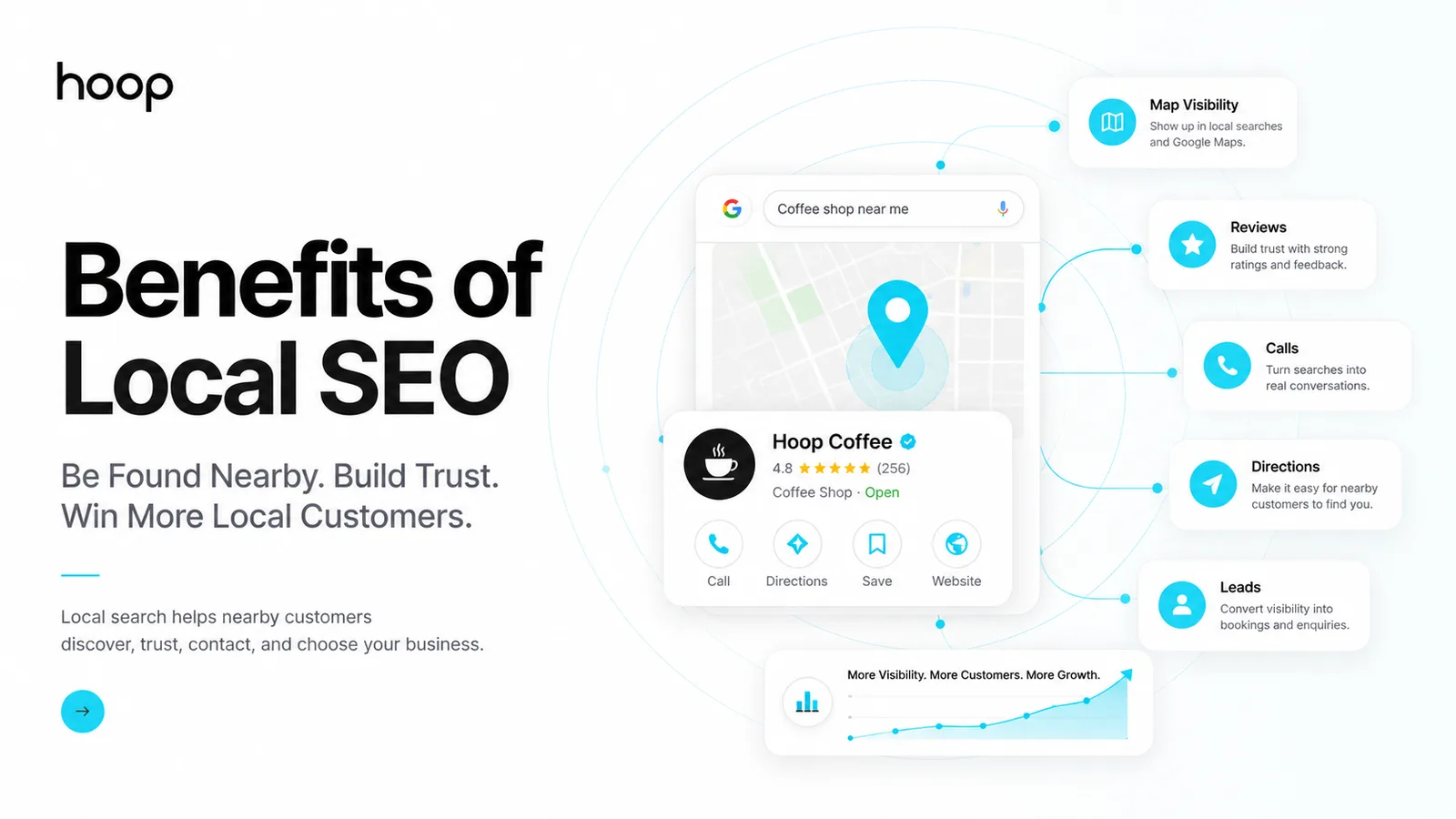
To rank locally, apply voice search optimization across maps, directories, profiles, and location pages. Local accuracy matters most when users request nearby or immediate services.
Complete and Verify Your Business Profile
Claim and verify every eligible Google Business Profile before expanding local content. Add the correct name, category, address, service area, phone number, hours, appointment link, and services.
Update holiday hours before closures. Add real photographs and service descriptions. Remove duplicate profiles and outdated listings.
Match Location Pages to Real Service Areas
Create a location page only when your business genuinely serves that area. Each page should include local service details, travel limits, response times, proof of work, and contact options.
Do not swap city names across hundreds of pages. Build fewer location pages with real operational detail.
Earn Reviews That Describe the Service
Ask verified customers for honest reviews after completed work. Useful reviews naturally mention services, neighbourhoods, staff, timing, and outcomes.
Never script positive claims or reward favourable ratings. Answer reviews respectfully and explain service standards through specific details.
Which Technical Factors Support Voice Search Optimization?
Voice search optimization depends on crawlable content, mobile usability, fast responses, and clear page structure. Technical failures can block voice search optimization results and frustrate users after a click.
Improve Mobile Experience and Speed
Design for mobile users who need answers and actions quickly. Keep text readable, controls large, forms short, and phone links tappable.
Track Largest Contentful Paint, Interaction to Next Paint, and Cumulative Layout Shift. Compress images and reduce unused scripts. Hoop’s conversion-focused web design combines mobile performance with clear calls to action.
Keep Important Content Crawlable
Place essential answers inside indexable page content. Do not hide critical service information behind logins, unsupported scripts, or images containing text.
Use descriptive headings, logical navigation, canonical URLs, and working internal links. Confirm indexing through Search Console and inspect important pages after major changes.
Use Semantic HTML Clearly
Use headings, paragraphs, lists, tables, addresses, and buttons for their intended purposes. Semantic structure supports browsers, assistive technology, and search processing.
Do not split every sentence into separate blocks. Write readable sections for people and machines.
How Should You Use Schema for Voice Search?
Use structured data to support voice search optimization, not to force a ranking. Schema can clarify entities and page content, but markup does not guarantee selection.
Add LocalBusiness Markup Where Relevant
LocalBusiness markup can describe hours, departments, location details, and other business facts. Match every structured value with visible page content and current business records.
Google’s LocalBusiness documentation explains required properties, validation, testing, and release steps. Test JSON-LD with the Rich Results Test before deployment.
Publish Useful FAQs Without Depending on Rich Results
Write FAQs because customers need the answers, not because markup promises extra visibility. Google limits FAQ rich results mainly to authoritative government and health websites.
Businesses can still publish useful FAQs. Place each answer near the relevant product, service, or policy.
Treat Speakable Markup as a Limited Beta
Most commercial websites should not treat Speakable markup as a primary tactic. Google’s Speakable documentation describes a beta for English news content on U.S. Google Home devices.
Speakable remains unsuitable as a universal requirement. Focus first on content quality, local facts, crawlability, and user experience.
How to Measure Voice Search Optimization
To measure voice search optimization, track question visibility and resulting business actions. No single report captures every spoken query across devices and assistant platforms.
| Task | Timing | Method | Difficulty |
|---|---|---|---|
| Track question queries | Weekly | Search Console query filters | Easy |
| Review local actions | Monthly | Calls, directions, bookings, messages | Medium |
| Test assistant answers | Monthly | Fixed devices, locations, and query scripts | Medium |
| Audit business details | Monthly | Maps, profiles, directories, location pages | Easy |
| Compare conversion quality | Every 30 days | Leads, revenue, and qualified-call review | Hard |
Use Proxy Metrics Consistently
Track complete-question impressions, featured answer ownership, local visibility, profile actions, and mobile conversions. Use the same query groups and reporting window each month.
Filter “who,” “what,” “where,” “which,” “when,” “why,” and “how.” Add local modifiers. Query growth provides directional evidence.
Track Outcomes Beyond Rankings
Measure calls, bookings, directions, quote requests, purchases, and qualified leads. A spoken answer creates little business value when the customer cannot complete the next action.
Tag appointment links, phone numbers, and forms. Compare lead quality and conversion rates against site averages.
Run Controlled Assistant Tests
Test a fixed set of queries from the same location, device, account state, and date window. Record the answer, named businesses, source links, and available actions.
Assistant results change across contexts. Treat one result as an observation. Look for patterns across 3 monthly test rounds.
Which Voice Search Tactics Waste Time?
Voice search optimization wastes time when teams create duplicate content, fake local relevance, or unsupported promises. Voice visibility grows from useful pages and accurate business data.
Avoid separate voice-only versions of existing pages. Avoid stuffing “near me” into headings. Avoid hundreds of thin FAQ entries. Avoid irrelevant schema. Avoid claims that one tool can reveal a private assistant algorithm.
Do not report impressions as revenue. Do not give every question a new article. Define a measurable problem before buying software.
How to Build a 30-Day Voice Search Optimization Plan

To build a 30-day voice search optimization plan, improve one valuable topic and one local conversion path. A narrow pilot creates cleaner evidence than a sitewide rewrite.
Days 1–7: Audit Questions and Business Facts
Collect 30 customer questions and select the 5 highest-value queries. Audit business names, categories, addresses, hours, phone numbers, services, and location pages.
Record baseline impressions, profile actions, calls, and conversions. Choose one service page and one location page.
Days 8–14: Rewrite Direct Answers
Add concise answers beneath the 5 selected question headings. Expand each answer with conditions, evidence, examples, and clear next actions.
Remove slow introductions and unsupported statements. Add author details, dates, and primary sources.
Days 15–21: Fix Local and Technical Signals
Update business profiles, location details, mobile actions, internal links, and structured data. Test forms, phone links, bookings, and directions on mobile devices.
Validate LocalBusiness markup and inspect both pages in Search Console. Fix indexing problems before measurement.
Days 22–30: Test and Compare Results
Run the fixed query set and compare early performance against the baseline. Review question impressions, local actions, calls, bookings, leads, and conversion quality.
Keep changes when results or clarity improve. Revise weak answers when impressions rise without actions. Expand after 2 successful cycles.
Build Voice Visibility That Produces Business Results
Voice search optimization works when accurate answers connect spoken intent with a useful business action. Start with one commercial topic, improve direct answers, verify local data, and measure calls or conversions. Hoop Interactive can build the content, technical foundation, and local search system through its professional SEO services.
“Vague writing forces the system to infer missing details. Precise writing gives it a complete statement — and helps readers decide faster.”
Key takeaways
- 01Spoken queries carry more context than typed ones: service, location, time, condition, and intended action.
- 02Put a 1–3 sentence direct answer under every important question heading, before any background.
- 03Search Console has no voice dimension — use question-query filters as a consistent proxy.
- 04Speakable markup is a limited beta for US news; it is not a general business tactic.
Written by
Sahar
Content Writer
Frequently Asked
Questions
Everything you need to know before booking a strategy call. Can't find your answer? Contact us directly.
Yes. Spoken queries remain relevant across phones, maps, vehicles, smart speakers, and conversational assistants. Most improvements also support standard search and local discovery.
No dedicated filter exists. Search Console reports queries and devices, but the standard report does not identify voice input separately.
Yes, when FAQs answer real customer questions. FAQ content can improve clarity, but FAQ markup does not guarantee a rich result or spoken answer.
Schema clarifies visible information but does not guarantee rankings. Use relevant types, accurate properties, and valid markup that matches the page.
Allow at least 60–90 days for a meaningful evaluation. Crawling, indexing, local updates, query demand, and conversion volume affect the timeline.