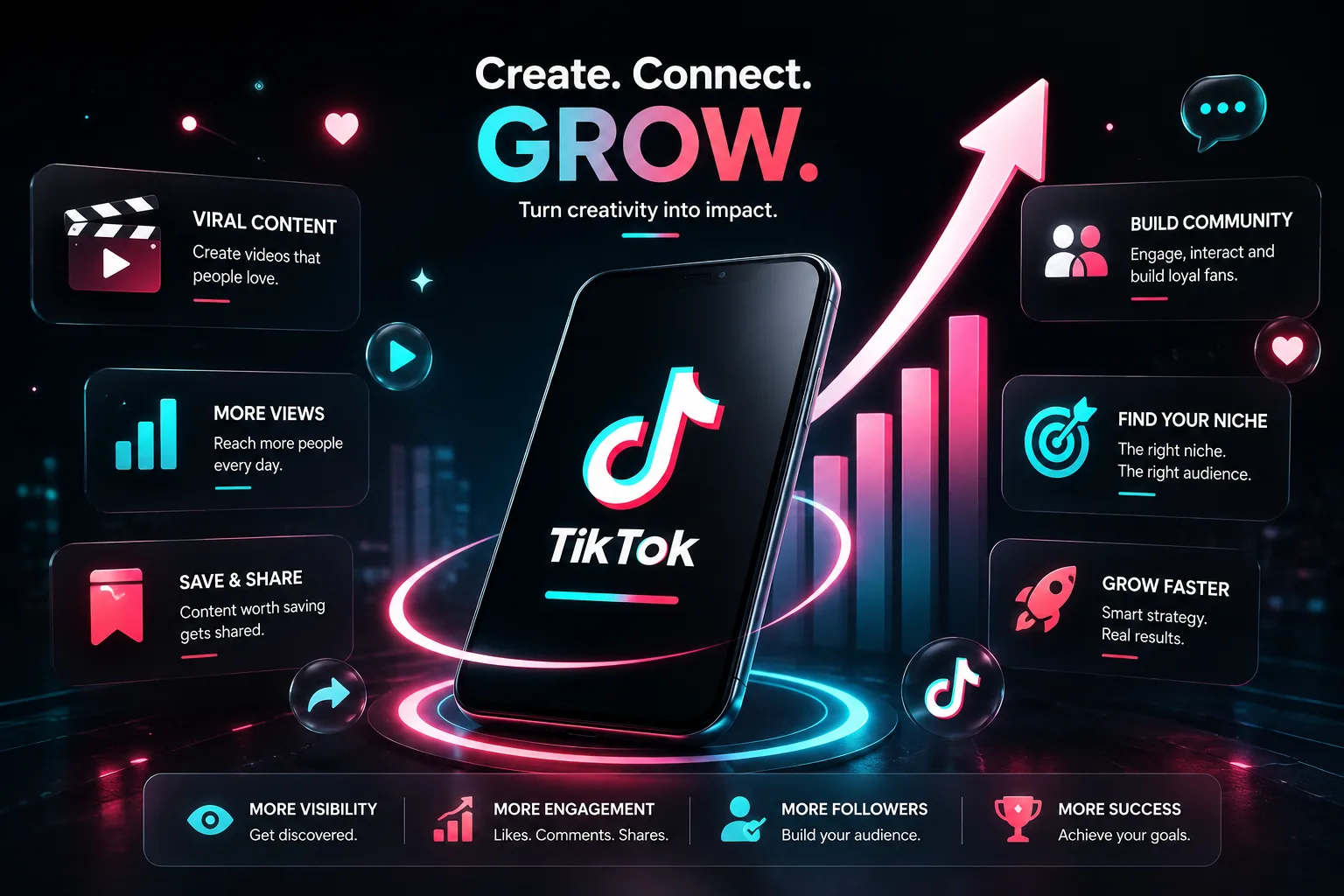

Video Marketing Trends in 2025: How Short-Form Content Is Taking Over
Short-form video delivers about 72% higher engagement and an average 8.4x ROI versus static content. This guide covers platform strategy, the V.I.R.A.L. creation framework, shoppable video, and the metrics that prove impact.
Addan
Content Writer
Short-form video is no longer a tactic — it's the default format of digital marketing. It generates roughly 72% higher engagement than static content and an average 8.4x ROI for well-run campaigns. With audiences watching around 17 hours of online video a week and 67% preferring clips under 60 seconds, mastering the format is essential rather than optional.
Why short-form took over
TikTok, Instagram Reels, and YouTube Shorts reshaped how people consume content, and every major platform now favours short-form in its algorithm. That algorithmic priority means brands willing to learn the format can earn outsized organic reach — TikTok alone hosts about 1.7 billion users with an average engagement rate near 9.38%, while YouTube Shorts draws tens of billions of daily views.
Platform-by-platform
Each platform rewards different behaviour, so native content beats cross-posted leftovers:
| Platform | Edge | What works |
|---|---|---|
| TikTok | Best organic reach for new accounts | Authenticity, trending audio, 0.5s hook |
| Instagram Reels | Priority in Explore and Feed | Demos, education, entertainment clips |
| YouTube Shorts | Cross-promotion to long-form | Keyword titles, end screens to full videos |
| B2B audience targeting | Insight-led, professional clips |
The V.I.R.A.L. framework
A repeatable structure makes good short-form predictable rather than lucky:
- Visual impact — stop the scroll in the first half-second.
- Immediate value — make a clear promise within three seconds.
- Relatable — anchor it in a real pain point or aspiration.
- Actionable — give one takeaway viewers can use right away.
- Lasting impression — close with a hook that earns a follow, save, or replay.
About 80% of social video is watched on mute, so always add captions and on-screen text.
Shoppable video and AI
The line between content and commerce is dissolving. Shoppable video turns watch time into checkout, with conversion rates that vary sharply by platform — roughly 2.1-3.8% on TikTok Shop and up to about 4.1% on Pinterest. AI tools accelerate production too: text-based editors, auto-captioning, smart reframing for multiple aspect ratios, and predictive engagement scoring all shorten the path from idea to published clip.
Measuring performance
Track two layers together. Content metrics — view-through rate, average watch duration, engagement, and replay rate — tell you whether the creative works. Business metrics — click-through, cost per view, ROAS, and brand lift — tell you whether it pays. Reading them side by side is what separates a viral fluke from a repeatable system.
Mistakes to avoid
The recurring errors are predictable: over-polishing at the expense of the hook, cropping a 16:9 video into 9:16 and calling it native, posting in bursts then vanishing, and ignoring silent viewers. Fix the hook first, create platform-native cuts, hold a sustainable cadence of even three to four quality videos a week, and design every clip to land with the sound off.
“In the attention economy the first frame is your headline and the first three seconds decide whether anyone stays.”
Key takeaways
- 01Short-form video drives roughly 72% higher engagement than static posts
- 0267% of consumers prefer videos under 60 seconds
- 03Authenticity beats polish on TikTok and Reels
- 04Shoppable video converts up to about 4.1% on Pinterest
Written by
Addan
Content Writer