How to Generate Leads: 10 Methods That Attract Buyers
Pick two channels that match your buyer and capacity, give every one a clear next step, then judge them on qualified pipeline rather than form fills.
Sahar
Content Writer
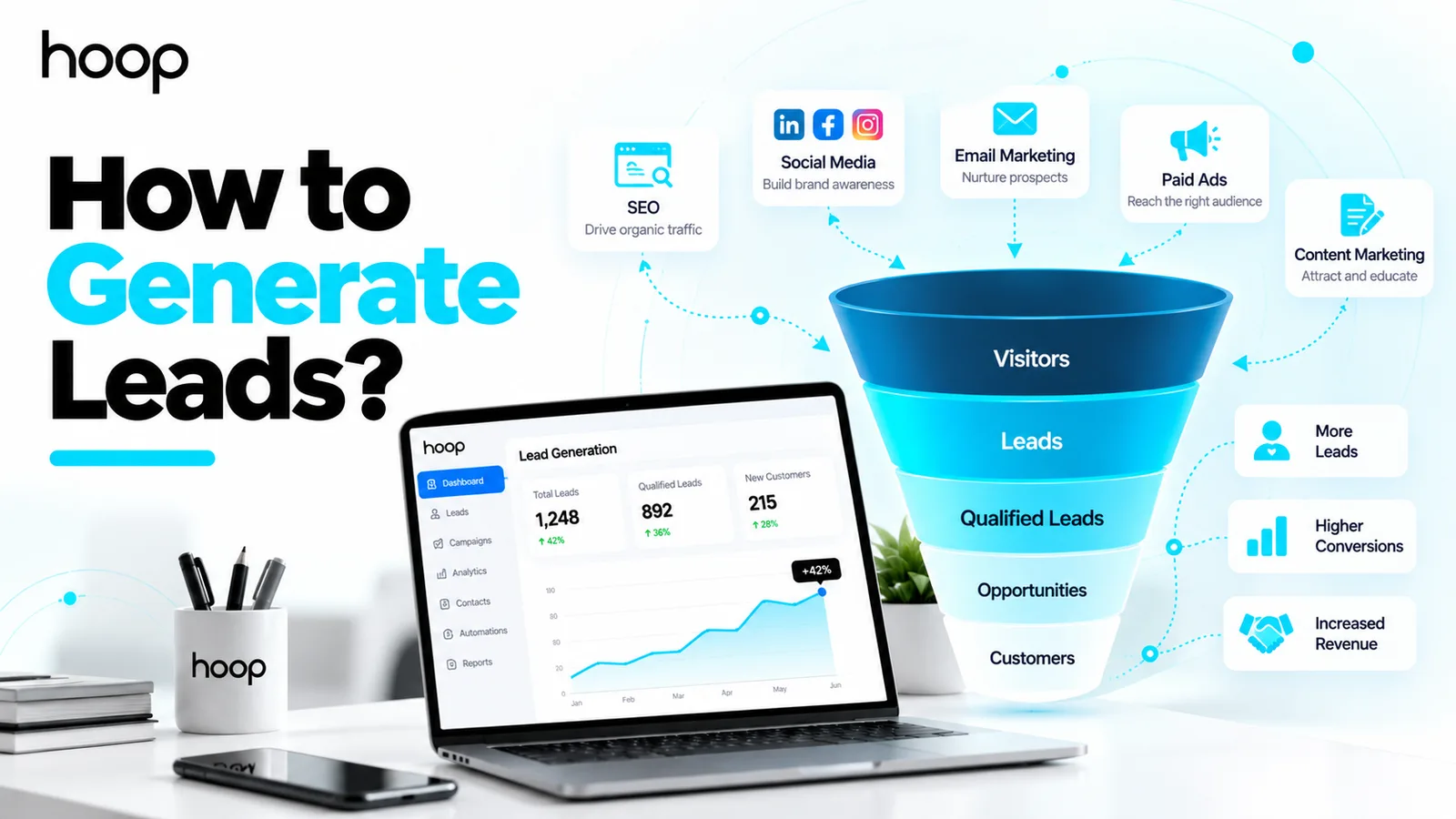
To generate leads, identify your ideal customer, choose channels where buyers already search, and offer a clear next step. Capture inquiries through useful content, targeted outreach, ads, and conversion-focused pages. Then follow up promptly and measure which contacts become customers.
A lead is a person or business that shows interest in your offer. A newsletter signup, demo request, appointment booking, or relevant reply can signal interest. Not every lead represents a likely sale. Your process should attract the right people instead of simply increasing form submissions.
Need this done right?
Hoop builds the strategy, design and development behind sites like this one — talk to us about yours.
What Does Lead Generation Mean for Your Business?
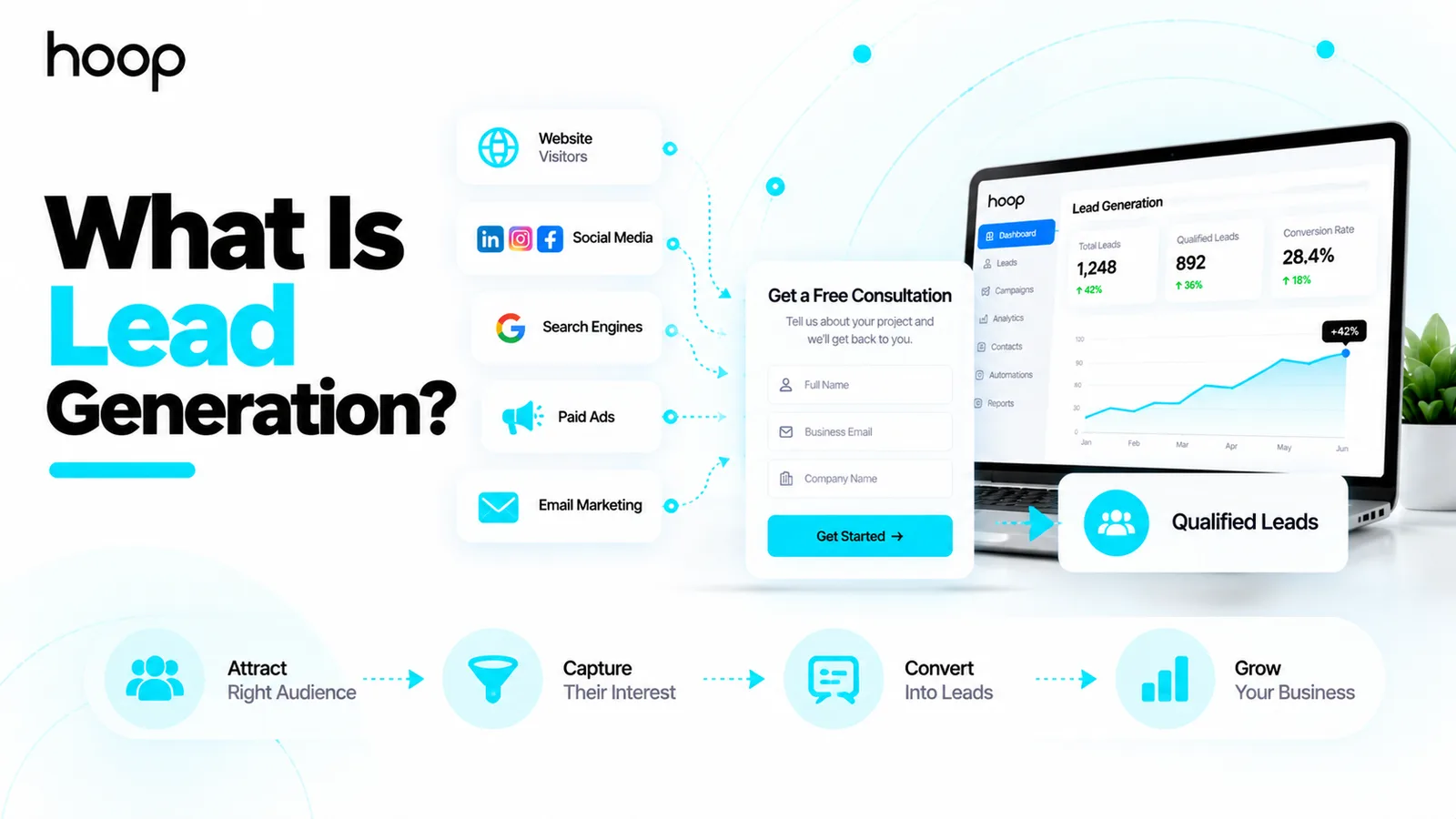
Lead generation turns unfamiliar prospects into identifiable contacts who have a reason to speak with your business. A reliable system connects targeting, discovery, capture, qualification, and follow-up. You need all 5 stages to build a useful pipeline.
Inbound methods attract people through search engines, videos, social content, and referrals. Outbound methods start conversations through personalized email, calls, and professional networking. Most growing companies use a mix, but your buyer determines the priority.
How Do You Define a Lead Worth Pursuing?
Document your ideal customer profile (ICP) before launching campaigns. Describe customer industries, company sizes, locations, purchasing roles, expected budgets, and urgent problems. A software agency might target operations leaders struggling with manual order processing. A local roofer might target homeowners seeking immediate repairs.
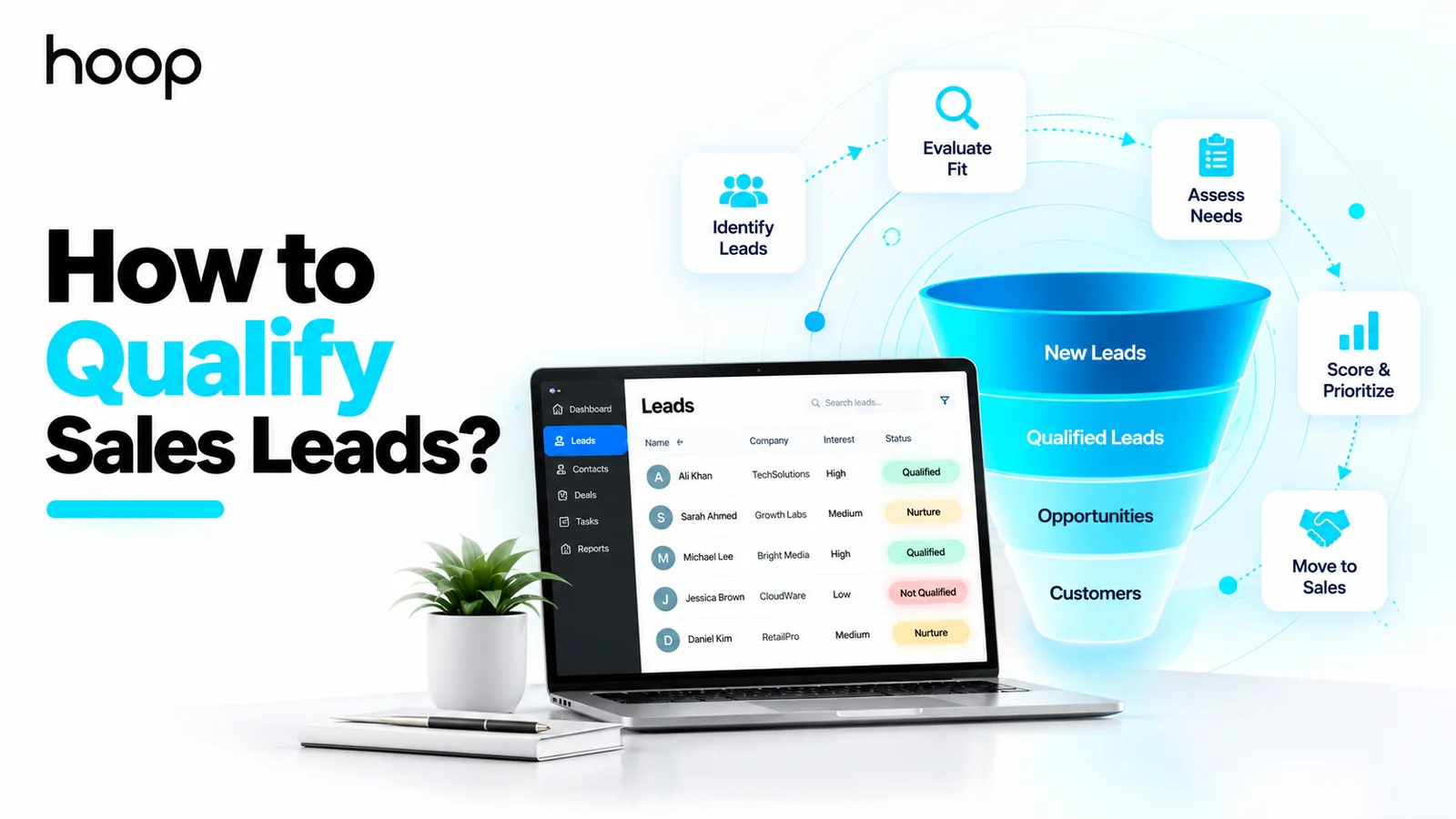
Separate basic interest from sales readiness. A marketing-qualified lead (MQL) meets agreed engagement and fit criteria. A sales-qualified lead (SQL) meets the criteria for a direct sales conversation. A contact who downloads a checklist belongs in a different follow-up sequence from someone requesting a project estimate.
How to Generate Leads With 10 Practical Methods
To generate leads with practical methods, select 2 channels that fit your buyer and current capacity. Test messaging, review lead quality, and expand only after the first channels produce measurable opportunities.
1. Target Search Questions With SEO Content
Publish pages that answer specific questions from prospective buyers. Create service pages for purchase intent and guides for research intent. A technology company can target “custom CRM development cost,” while a plumbing business can target “emergency plumber near me.”
Match each page to the problem behind its keyword. Use accurate headings, helpful examples, clear service descriptions, and a relevant call to action (CTA). Connect supporting articles to the appropriate service page. Track consultation requests from organic traffic, not rankings alone.
2. Run High-Intent Google Search Ads
Place ads against searches that show immediate need. Start with tightly grouped keywords, relevant exclusions, location settings, and a dedicated landing page. A business selling accounting software should not send every ad click to a generic company homepage.
Set a budget you can sustain while collecting conversion data. Track qualified calls, booked demonstrations, and actual customer revenue. Pause search terms that consume spend without producing relevant inquiries.
3. Improve Website Conversion Paths
Turn existing visitors into inquiries before spending more to acquire traffic. Place a specific value proposition above the first scroll. Give visitors one primary CTA, such as “Request a Quote” or “Book a Consultation.”
A strong page explains the offer, shows relevant proof, answers objections, and asks only necessary questions. Test mobile usability, form completion, and page speed. Our landing page optimization service focuses on measurable obstacles to conversion.
4. Publish Helpful Social Content
Choose networks your buyers actually use. LinkedIn often fits professional services and business software. Instagram and Facebook can support visual consumer offers and local services. Publish demonstrations, project explanations, customer outcomes, and clear next steps.
Treat comments and direct messages as conversations, not a reason to send an automatic sales pitch. Track which posts generate suitable inquiries, rather than judging success only by likes or follower counts.
5. Send Relevant Cold Emails
Build small lists around clear customer fit and a specific reason to contact each business. Research the company, identify a plausible issue, and write a short message about one measurable outcome. Avoid purchasing unverified contact lists or sending identical messages to unrelated people.
Use truthful subject lines, identify your business, and honor opt-out requests. Follow applicable email marketing and privacy requirements. One thoughtful follow-up can help; repeated unwanted messages damage trust and sender reputation.
6. Connect With Buyers on LinkedIn
Use professional context to start relevant conversations. Search for decision-makers by industry, job function, or company size. Look for company expansion, a recent appointment, or a public request that relates to your service.
Offer a useful observation before asking for a meeting. LinkedIn Sales Navigator can help with prospect research, but a filtered contact list does not prove purchasing intent. Record responses and progress in your customer relationship management (CRM) system.
7. Offer a Specific Lead Magnet
Exchange genuine value for a voluntary signup. Useful examples include a project cost calculator, a lead audit checklist, an industry benchmark report, or a detailed implementation template. Connect the offer to what visitors were already reading.
Ask for an email address and only the details needed for the promised resource. Explain how you will use the information. Send the resource immediately, then follow up with related guidance rather than an unrelated sales sequence.
8. Ask Existing Customers for Referrals
Contact satisfied customers after delivering a measurable result. Describe the type of client you help and ask whether someone in their network faces a similar challenge. Make introductions easy with a short description of your service.
Referrals work best when you maintain customer trust. You can also build partnerships with complementary providers, such as web developers and business consultants, while respecting transparency and disclosure requirements.
9. Capture Local Service Demand
Strengthen local visibility when geography affects the purchase. Maintain accurate Google Business Profile details, service categories, contact information, and legitimate customer reviews. Build location-relevant service pages only where the business genuinely operates.
Use specific calls to action for phone calls, estimates, and bookings. Track the quality of local inquiries. A nearby customer seeking your actual service usually matters more than broad traffic from unrelated areas.
10. Host Webinars or Short Consultations
Teach buyers how to solve one defined problem. A business software company could host a session on automating invoice approvals. A marketing agency could offer a short conversion audit. End with a relevant invitation for qualified attendees.
Keep registration simple and follow up with the promised recording or action list. Do not assume every attendee wants a sales meeting. Ask permission before adding contacts to ongoing campaigns.
Which Lead Generation Method Should You Try First?
Choose a channel based on buyer intent, available skills, budget, and urgency. Search ads usually fit existing urgent demand; SEO supports longer-term discovery; referrals help businesses with satisfied customers. The table provides planning estimates, not guaranteed results.
| Method | First task | Initial review | Effort |
|---|---|---|---|
| SEO | Publish a buyer-intent page | 8–12 weeks | Medium |
| Google Ads | Launch a focused search campaign | 2–4 weeks | Medium |
| Landing pages | Fix CTA and form friction | 2–4 weeks | Low–medium |
| Cold email | Research 30 suitable accounts | 2 weeks | Medium |
| Start 20 relevant conversations | 2–4 weeks | Medium | |
| Referrals | Contact 10 happy customers | 2 weeks | Low |
For a new business with almost no budget, start with referrals, targeted outreach, and improvements to existing pages. For a company already receiving search traffic, fix conversion problems first. For a funded business needing demand quickly, test focused search ads without treating paid acquisition as the only source.
How to Generate Leads From Your Website
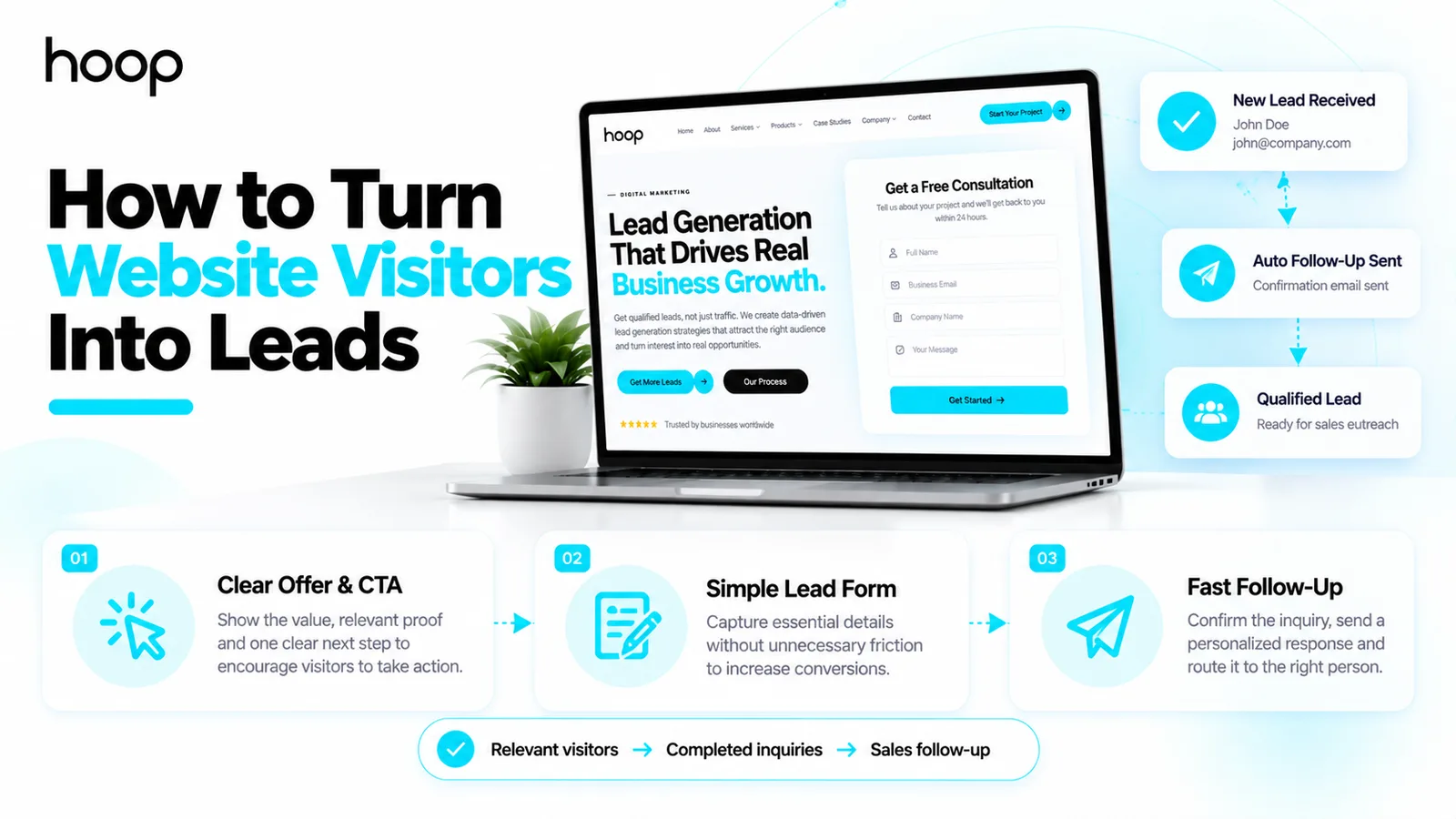
To generate leads from your website, connect a relevant visitor problem with a visible offer and an easy response path. A homepage alone rarely answers every buyer question. Create dedicated pages for distinct services, audiences, or campaigns.
Write a Clear Offer and CTA
State who the service helps, what problem you solve, and what happens after someone responds. “Book a 20-minute CRM consultation” communicates more than “Submit.” Add proof near the CTA, such as a named case study, review, or credible project result.
Reduce Form Friction
Request only fields your team needs for the next step. Name, work email, and project type often provide enough context for an initial conversation. Add budget or timing questions when the answers determine routing. Test forms on mobile and confirm every submission reaches the right person.
Build a Follow-Up System
Send an immediate confirmation that explains the next step. Route urgent requests to a named owner. Use email automation workflows to send relevant resources and reminders when contacts have consented. Review abandoned inquiries before automatically increasing ad spend.
How Can You Generate Leads Without Paid Advertising?
Start with customer referrals, useful SEO pages, professional networking, and personalized outreach. These methods require consistent effort rather than direct media spend. Free distribution does not mean free acquisition because research, content production, and follow-up consume time.
Use a 30-day sprint: interview 5 recent customers during week 1, publish 2 focused pages during week 2, contact 30 suitable prospects during week 3, and review responses during week 4. The numbers are example activity targets. Adjust activity based on available staff and prospect feedback.
Avoid copying scripts into hundreds of unsolicited messages. Instead, build a repeatable approach around a useful observation, a relevant offer, and a respectful follow-up. Business fit matters more than maximum contact volume.
How Do You Turn Leads Into Paying Customers?
Respond quickly, understand the customer problem, and provide a clear next action. Record the inquiry source and assign ownership. Ask about expected results, budget expectations, purchase timing, and who approves the decision. Avoid preparing detailed unpaid proposals before confirming fit.
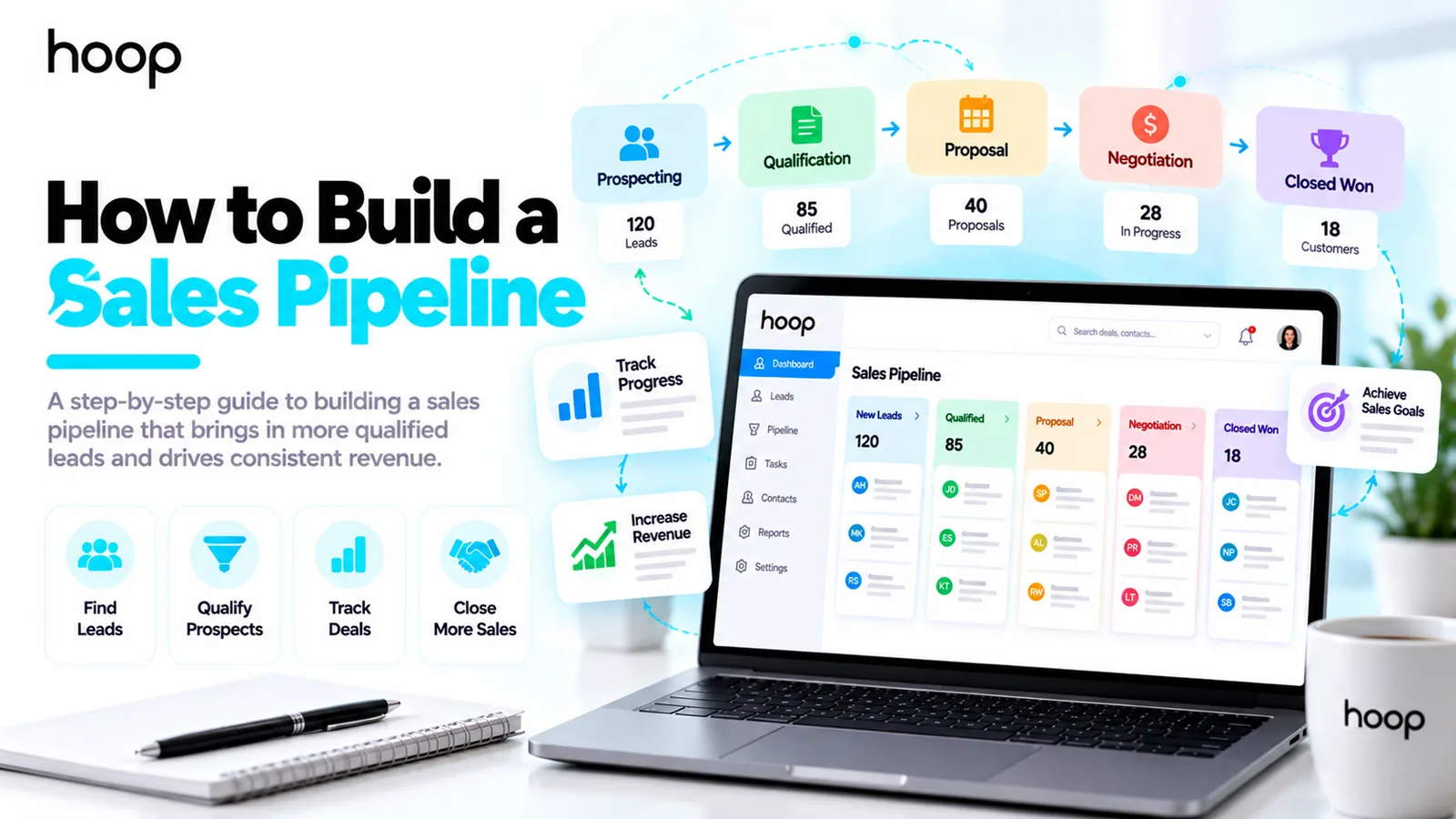
A CRM such as HubSpot, Salesforce, or Pipedrive helps track conversations and reminders. Keep stages simple: new inquiry, contacted, qualified, proposal, and closed. Move stalled contacts into appropriate nurturing instead of treating every silence as a lost sale.
For a structured growth program, Hoop Interactive offers lead generation services that connect audience targeting, inbound campaigns, outbound outreach, and qualification. Link campaign reporting to real opportunities and customers.
How Do You Measure Lead Generation Results?
Track qualified leads, cost per lead (CPL), customer acquisition cost (CAC), and lead-to-customer conversion rate. Count submitted forms, but do not confuse activity with profitable demand. Review performance by channel and sales stage.
For example, suppose a campaign costs $1,000 and produces 40 leads. CPL equals $25 ($1,000 ÷ 40). If 5 contacts become paying customers, CAC equals $200 ($1,000 ÷ 5), excluding additional sales costs. The lead-to-customer rate equals 12.5% (5 ÷ 40 × 100).
Compare those values with average customer profit and retention. A channel producing fewer leads can still generate better business results if more contacts become suitable customers. Review the first 30 days for obvious problems, then compare longer periods before making large investment decisions.
What Lead Generation Mistakes Waste the Most Money?
Targeting too broadly attracts people who never needed your offer. Specify the audience, problem, and buying situation before choosing keywords or platforms. Sending clicks to unrelated pages breaks the connection between the advertisement and the promised offer.
Ignoring lead quality rewards teams for contact volume rather than customer outcomes. Failing to follow up wastes genuine buying interest. Depending on one channel creates exposure when ad costs, algorithms, or search visibility change.
Finally, avoid misleading forms and purchased lists with uncertain consent. Clear privacy notices, accurate claims, and responsible contact handling protect prospective customers and improve long-term trust.
How Should You Build a 30-Day Lead Generation Plan?
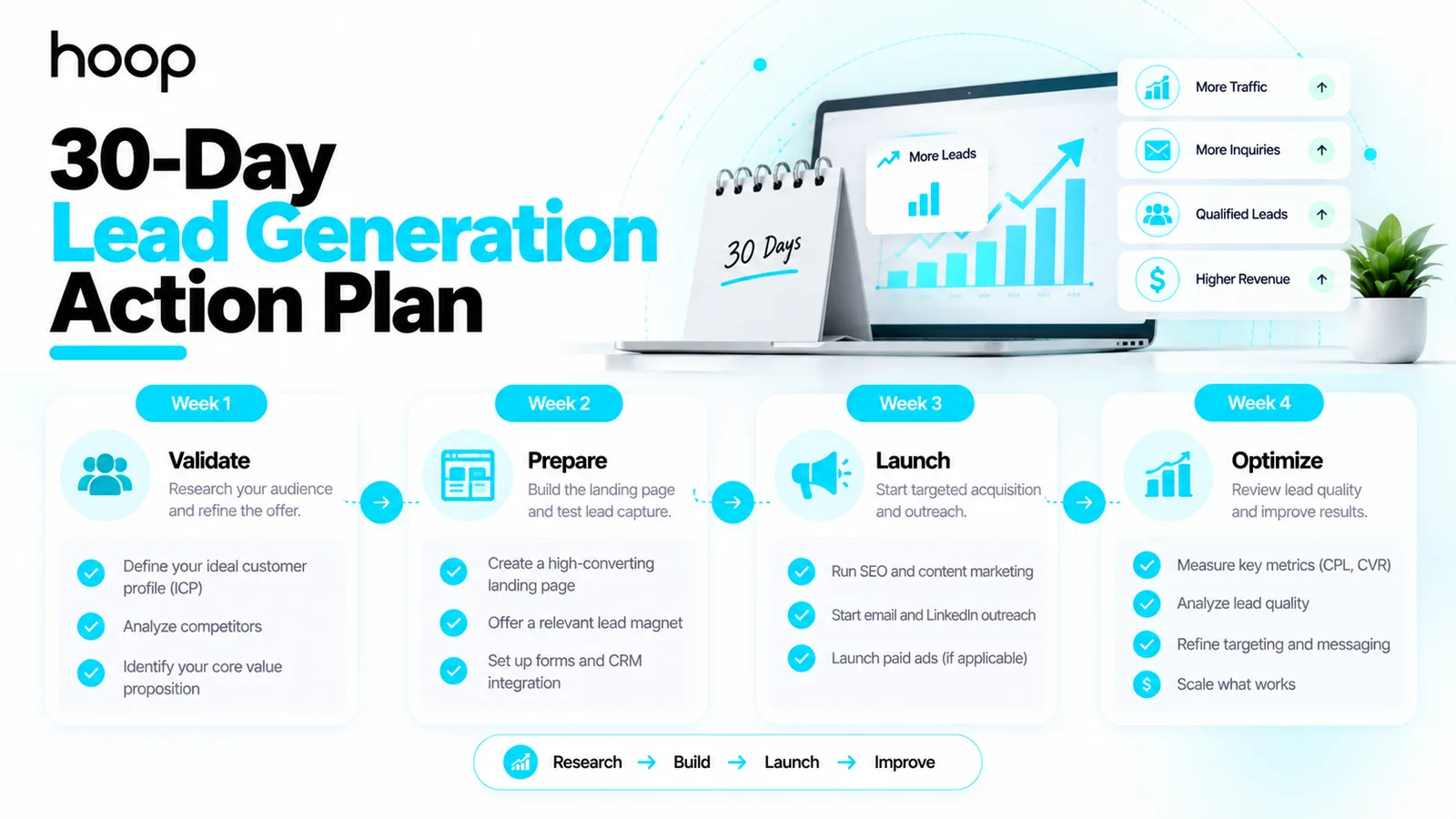
Use the first month to test one offer and 2 acquisition channels. Set a realistic customer goal before choosing activities. Record baseline traffic, current lead volume, and the number of qualified conversations your team can manage. Assign one person responsibility for reviewing each incoming inquiry.
Week 1: Validate the Audience and Offer
Interview existing customers or recent prospects. Ask which problem triggered their search, what alternative solutions they considered, and what made the offer credible. Compare their answers with the language on your service page. Rewrite vague promises into specific outcomes that your business can substantiate.
Week 2: Prepare Your Capture System
Launch one focused landing page with a clear CTA, proof, contact form, and working confirmation message. Connect submissions to a spreadsheet or CRM. Test each form field on a phone and desktop computer. Check the response process using a test inquiry before directing campaign traffic to the page.
Week 3: Start Controlled Acquisition
Publish one targeted search page and start one small outreach or advertising test. Keep the message and offer consistent across every touchpoint. For outreach, record the prospect fit, contact reason, response, and next step. For paid campaigns, track a meaningful conversion rather than relying on clicks alone.
Week 4: Review Quality and Adjust
Compare visitors, inquiries, suitable prospects, appointments, and customers by source. Ask your sales team why contacts did not progress. Fix the strongest barrier first: irrelevant traffic, unclear offer, poor forms, or delayed replies. Keep a channel only when its results justify the time and cost.
Build a Repeatable Lead Generation Process
Generating leads takes more than choosing a promotional channel. Define your buyer, create a useful offer, remove conversion barriers, and follow up with relevant prospects.
Review qualified pipeline and customer results every month. For help joining acquisition and sales into a measurable system, contact Hoop Interactive through our lead generation service team.
“A channel producing fewer leads can still generate better business results if more contacts become suitable customers.”
Key takeaways
- 01Separate MQL from SQL: a checklist download and a project estimate request deserve different follow-up.
- 02Fix conversion paths before buying more traffic — existing visitors are the cheapest leads you have.
- 03Work the maths: $1,000 and 40 leads is a $25 CPL; 5 customers from those makes CAC $200.
- 04Relying on one channel leaves you exposed when ad costs, algorithms, or rankings shift.
Written by
Sahar
Content Writer
Frequently Asked
Questions
Everything you need to know before booking a strategy call. Can't find your answer? Contact us directly.
Yes. Start with referrals, SEO content, local business profiles, and relevant networking. You still invest time in research and follow-up.
Targeted outreach and high-intent search advertising can create conversations quickly when your offer and audience already match. Results depend on competition and demand.
No. A shared spreadsheet works for a small pipeline. Add a CRM when missed follow-ups, duplicate records, or reporting gaps become costly.
Yes. Focused service pages, local search visibility, credible proof, and clear contact forms can attract inquiries. Blogs support additional research-stage searches.
Calculate backward from your revenue goal. Divide the customer target by your observed lead-to-customer rate, then refine for lead quality and capacity.