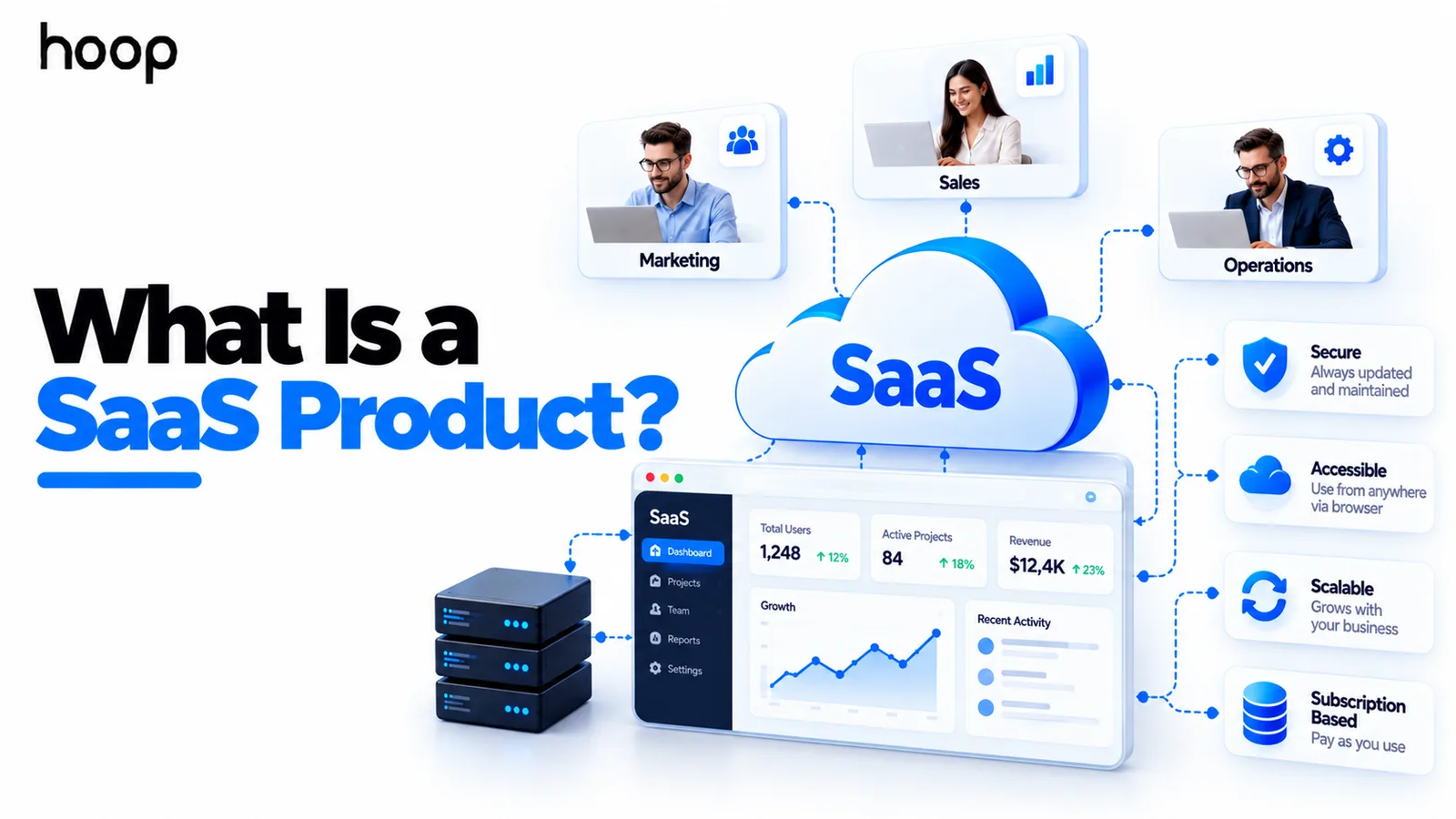
What Is a SaaS Product? Software as a Service Explained
SaaS is an operating model, not a billing method. The provider runs the software as a continuing service; the customer consumes the functionality. A browser interface or a monthly charge does not make a product SaaS on its own.
Sahar
Content Writer
A SaaS product is software that a provider hosts, operates, updates, and delivers to customers as an ongoing service. Users access the software without managing the underlying product themselves.
That definition sounds simple, but it answers only part of the question. A website with a login is not automatically SaaS. A monthly subscription is not automatically SaaS either.
The key idea is that the software itself is the service. The provider keeps the product running while customers keep using its functionality.
Need this done right?
Hoop builds the strategy, design and development behind sites like this one — talk to us about yours.
What Does SaaS Stand For?
SaaS stands for Software as a Service. It describes software delivered through an ongoing service relationship instead of a traditional one-time software purchase.
The provider normally runs the application, maintains the infrastructure, releases updates, and controls the production version. Customers receive access under the provider’s terms.
Most SaaS products are accessed through a browser, but that is not a strict requirement. Desktop clients, mobile apps, and APIs can also connect to SaaS services.
What Makes a Product SaaS?
A product becomes SaaS when software functionality is delivered and operated as a continuing service. The customer uses the product while the provider runs the system behind it.
The model usually includes customer accounts, centrally managed releases, provider-controlled infrastructure, ongoing support, and some form of continued access. Recurring billing is common, but it is not the only pricing option.
The strongest test is simple. Ask whether the customer is paying for or receiving ongoing access to software functionality managed by the provider.
Is Every Web Application a SaaS Product?
No. A web application describes software that runs through a browser or web interface. SaaS describes how software is operated and offered to customers.
An online store, airline booking portal, or bank dashboard can be a web application without being a SaaS product. The software supports another service instead of being the service customers buy.
A CRM platform, project-management tool, or online accounting system is different. Customers use the software itself as the product.
This distinction also explains why professional web application development can support many business models besides SaaS. The interface technology does not define the commercial model.
How Does a SaaS Product Work?
A SaaS customer normally creates an account and accesses the application over the internet. The application then connects to provider-managed services, databases, storage, and other infrastructure.
The customer usually does not install or maintain the production server. The provider controls deployments, monitoring, security updates, and most operational changes.
When the provider releases a new feature, users normally receive the updated product without installing a new major version. This centralized delivery model is a major SaaS advantage.
The provider can also measure product usage, manage accounts, change plans, and support customers from one operating platform.
Who Manages What in SaaS?
The provider usually manages the production application, hosting environment, releases, infrastructure maintenance, monitoring, and platform-level security controls.
Customers still manage how their teams use the software. They may control user access, internal permissions, data quality, account settings, and business workflows.
This division explains why SaaS can reduce technical workload without removing every customer responsibility. A company can avoid running servers while still managing its own users and data.
The exact boundary changes by product. Enterprise plans may add single sign-on, audit controls, data residency choices, dedicated environments, or more detailed administration.
Understanding that boundary also helps buyers compare SaaS products. Two tools may offer similar features while requiring very different levels of customer administration.
What SaaS Is Not
SaaS is not simply any website that earns recurring revenue. It is also not every cloud-hosted application or every product with user accounts.
A marketplace may use complex software while primarily connecting buyers and sellers. A streaming platform may charge monthly while mainly delivering media content.
A company portal may run in the cloud but exist only for one organization. That can still be useful software without being a commercial SaaS offering.
The defining question stays consistent: is the software functionality itself being delivered as a continuing provider-operated service?
What Is Inside a SaaS Product?
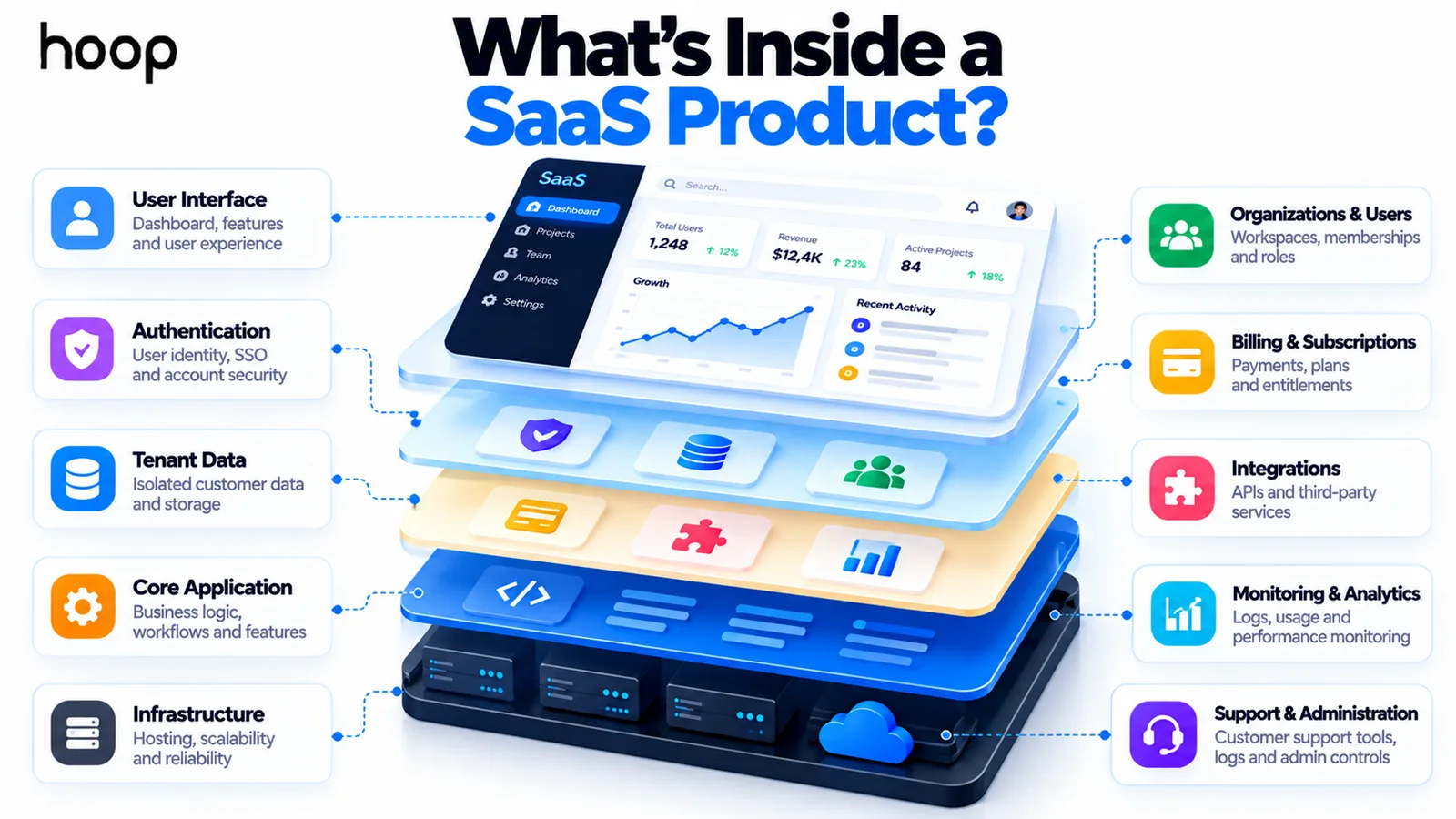
The visible feature is only one part of a production SaaS product. The operating platform behind it usually manages identity, customer data, access, billing, support, and releases.
A business SaaS product may also need organizations, team memberships, role-based permissions, audit logs, subscription states, onboarding flows, and integrations.
This is why SaaS development requires more than building a dashboard. The product must support customers throughout signup, payment, daily use, support, renewal, and account closure.
Hoop Interactive’s SaaS development approach treats those product systems as part of the platform rather than optional add-ons.
Does SaaS Have to Use a Subscription?
No. Recurring subscriptions are common because the provider keeps operating the software, but billing does not define SaaS by itself.
A SaaS company can charge monthly, annually, per user, by usage, through enterprise contracts, or with a freemium model. Some products may even provide free access.
What matters is the service relationship. The provider continues running the software while the customer continues accessing its functionality.
A subscription without software functionality is simply a subscription product. Paying monthly for digital content does not automatically create SaaS.
SaaS Product vs Traditional Software
Traditional software was commonly sold as a version that customers installed on their own computers or servers. The buyer could keep using that version after the purchase.
A SaaS product usually works differently. The provider runs the production environment and customers access the current service rather than owning a permanent deployed copy.
Updates also work differently. Traditional software may require manual upgrades, while SaaS providers can release improvements centrally.
The tradeoff is control. SaaS users gain convenience, but they depend more heavily on the provider for availability, product direction, and continued access.
SaaS Product vs Web Application
A web application is a technical delivery format. A SaaS product is an operating and commercial model built around ongoing software access.
Many SaaS products use web interfaces because browsers make access easy across devices. However, a web interface alone says nothing about whether the product is SaaS.
A useful rule is to ask what the customer is consuming. If the customer is consuming software functionality as the ongoing service, the product may be SaaS.
For broader interactive systems, Hoop also builds web application solutions that do not need a SaaS business model.
SaaS Product vs Subscription Product
A subscription product charges for continued access to something. That “something” could be software, news, entertainment, research, design assets, or a physical delivery.
A SaaS product specifically delivers software functionality. The customer performs tasks inside the software instead of merely consuming recurring content.
This is why a paid newsletter is not SaaS. A subscription-based accounting platform is SaaS because the software performs the ongoing service.
SaaS Product vs Custom Software
Custom software is built for a specific organization or workflow. The organization may own the application or commission it for internal operations.
A SaaS product is usually designed as one evolving product that serves many customers. Those customers normally receive access instead of ownership of the source code.
The categories can overlap. A company might commission a custom SaaS platform and later sell access to many customers.
Businesses with unique internal workflows may instead choose custom software development without turning the result into a SaaS product.
Is SaaS Always Cloud-Based?
Modern SaaS products are usually hosted on cloud infrastructure because cloud platforms make remote delivery, scaling, storage, and deployment easier.
The deeper requirement is provider-operated access. SaaS does not depend on one specific cloud provider or one mandatory infrastructure pattern.
A vendor could run the service on public cloud resources, private infrastructure, or a hybrid environment. Customers still consume the software as a service.
Does SaaS Need Multi-Tenancy?
No. Multi-tenancy is common because it lets one product serve many customers efficiently, but it is not the definition of SaaS.
A multi-tenant application shares parts of the platform while keeping each customer’s data and permissions isolated. This can reduce infrastructure and maintenance overhead.
Some enterprise SaaS products use dedicated customer environments instead. Others use hybrid models that mix shared services with isolated resources.
The right architecture depends on customer count, compliance needs, security requirements, cost, and operational complexity.
Can a Desktop or Mobile App Be SaaS?
Yes. The user interface does not decide whether a product is SaaS.
A desktop or mobile application can act as the client for a provider-managed service. The account, data, billing, and core application logic may still run remotely.
The same logic applies to browser extensions and API-first products. SaaS is defined by the service model rather than one screen type.
What Are Examples of SaaS Products?
SaaS appears across many software categories. Common examples include CRM systems, project-management tools, online accounting software, help desks, analytics platforms, and design tools.
Other examples include HR systems, marketing platforms, file collaboration products, cybersecurity tools, developer platforms, and AI applications.
The category matters less than the delivery model. A product qualifies because customers keep using provider-operated software as an ongoing service.
What Are the Benefits of SaaS Products?
SaaS can reduce the amount of software installation and infrastructure management customers handle directly. It also makes updates and remote access easier.
- Lower upfront cost compared with many traditional enterprise licenses.
- Centralized updates without separate installations on every customer device.
- Access from multiple locations and devices when the product supports them.
- Easier scaling when customer demand changes.
- Faster rollout for teams that do not want to operate the software themselves.
For vendors, the model can also create a continuing customer relationship. That makes retention, support quality, and product improvement central business concerns.
What Are the Disadvantages of SaaS Products?
SaaS also creates tradeoffs. Customers give the provider more control over the product environment and often depend on continued service availability.
- Recurring costs can exceed a one-time purchase over a long period.
- Customers may have less control over upgrade timing and product changes.
- Service outages can affect every customer using the hosted platform.
- Sensitive data may require additional security, privacy, or residency review.
- Switching providers can be difficult when data, workflows, or integrations are deeply embedded.
A strong SaaS product addresses these concerns through reliable operations, clear contracts, export options, good security, and predictable product communication.
How Do SaaS Companies Make Money?
SaaS companies often earn revenue through recurring or usage-linked access. The pricing model should match how customers receive value from the product.
Per-user pricing works well when value grows with team size. Usage pricing can fit products where consumption varies significantly between customers.
Tiered plans can separate basic and advanced capabilities. Enterprise contracts may add support, security, custom terms, or dedicated infrastructure.
Freemium models can lower the barrier to adoption, but free usage still creates infrastructure and support costs. Healthy SaaS economics depend on retention and efficient delivery.
Why Is SaaS So Popular?
SaaS became popular because it aligns software delivery with continuous use. Customers can access current software without running every part of the technology themselves.
Vendors also gain one active product environment instead of supporting many disconnected installed versions. That can make releases, monitoring, and support easier.
The model also supports faster experimentation. Providers can improve onboarding, pricing, features, and workflows without waiting for customers to buy another major version.
However, popularity does not guarantee a good business. A SaaS product still needs a valuable problem, strong retention, reliable delivery, and sustainable acquisition costs.
How Is a SaaS Product Built?
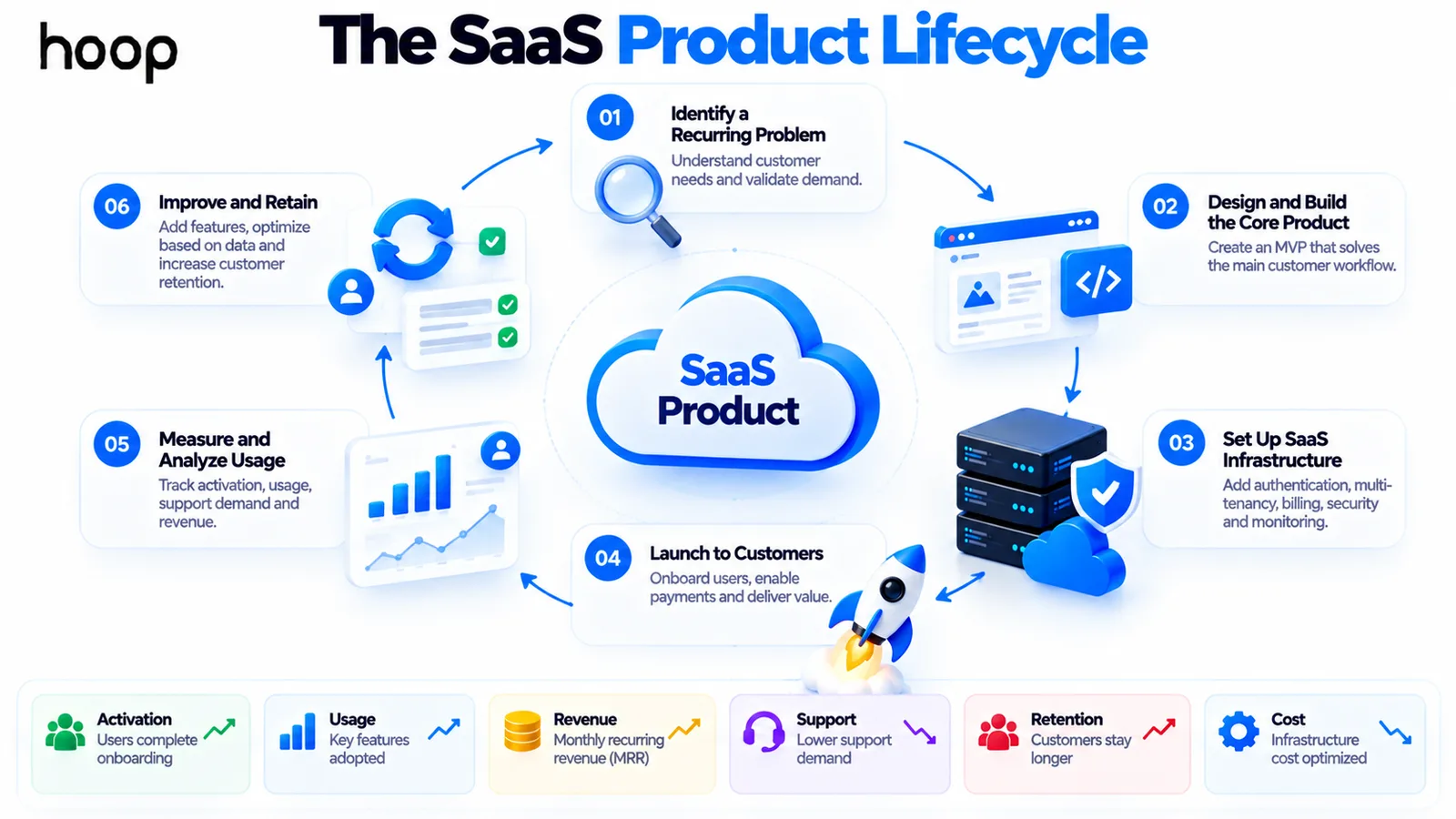
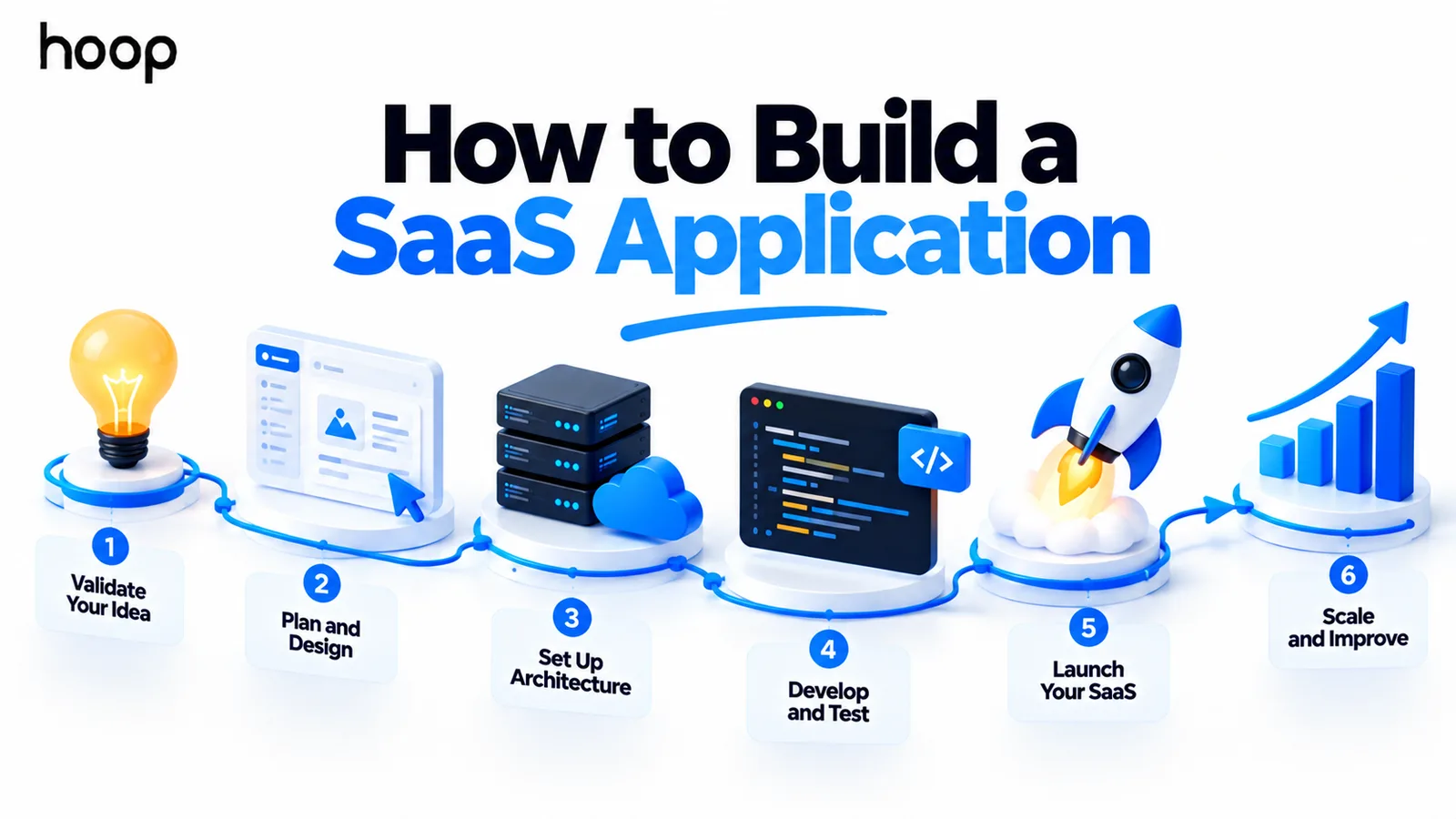
To build a SaaS product, start with a recurring customer problem and a focused workflow that solves it. Then design the product systems needed to serve many customers safely. The step-by-step build guide covers that path in detail.
Those systems may include account management, tenant isolation, permissions, billing, admin controls, monitoring, and deployment automation.
The technical stack should follow the product requirements and team capabilities. The simplest maintainable architecture is usually better than premature complexity.
After launch, the team should measure activation, usage, support demand, retention, and infrastructure cost. SaaS development continues after the first release.
How Do You Know Whether Your Idea Is a SaaS Product?
Ask whether users are coming primarily to use software functionality that you continue operating for them. If yes, the idea may fit the SaaS model.
Then ask whether customers need accounts, persistent data, ongoing access, updates, or continued service from your company. Those signals strengthen the SaaS case.
If the main value is content or consulting, the idea may use software without being SaaS. The same applies to one-time transactions.
The business model should follow the value being delivered. Do not force a subscription onto a product just because recurring revenue looks attractive.
SaaS Is an Operating Model, Not Just a Subscription
A SaaS product is software that customers consume as an ongoing provider-operated service. That service model matters more than the browser, database, or payment schedule.
Strong SaaS products combine useful software with reliable operations, secure data, clear pricing, and continuous improvement. They also need strong customer retention.
If you are planning a SaaS product, define the customer problem first. Then build the service model and product infrastructure around that value.
“A subscription without software functionality is simply a subscription product. Paying monthly for digital content does not automatically create SaaS.”
Key takeaways
- 01Ask one question: is the software functionality itself the ongoing, provider-operated service?
- 02Web application describes the delivery format; SaaS describes the operating and commercial model.
- 03Neither subscriptions nor multi-tenancy are required — both are common, not definitional.
- 04The tradeoff is control: convenience for customers, dependence on the provider for uptime and direction.
Written by
Sahar
Content Writer
Frequently Asked
Questions
Everything you need to know before booking a strategy call. Can't find your answer? Contact us directly.
Not in the usual business-software sense. Netflix is primarily a subscription streaming service where users consume media rather than productivity software functionality.
Yes, its hosted software functionality is delivered as an ongoing online service. Access can include free and paid tiers.
No. A subscription describes how access is sold. SaaS requires the ongoing service itself to be software functionality.
Yes. Free access does not prevent software from being SaaS. The provider can still host and operate the product as a continuing service.
No. SaaS providers can run on cloud platforms, managed services, dedicated infrastructure, or hybrid environments. The architecture depends on the product requirements.