Link Building Strategies That Work in 2026 (Ultimate Guide)
Modern link building earns relevant backlinks from trusted pages by combining digital PR, linkable assets, expert outreach, and safe measurement — quality and relevance over volume.
Sahar
Content Writer
Link Building Strategies That Work in 2026 (Ultimate Guide) means earning relevant backlinks from trusted pages that cite your content for a clear reason. You grow authority fastest when you combine digital public relations, linkable assets, expert outreach, and safe measurement.
Search Engine Optimization (SEO) still needs authority signals because search engines use links to discover pages and judge context. Google also treats deceptive ranking manipulation as spam, so safe link building matters more than link volume.
Need this done right?
Hoop builds the strategy, design and development behind sites like this one — talk to us about yours.
What Makes Link Building Strategies That Work in 2026 (Ultimate Guide) Different?
The strongest link building strategies in 2026 focus on earned trust, topical relevance, and clean editorial context. Search engines and AI answer systems now reward brands that appear across credible sources.
Links Need Relevance, Proof, and Clear Context
A valuable backlink comes from a page that matches your topic, audience, and business goal. A SaaS pricing study needs SaaS links, such as ProductLed, SaaStr, and G2 articles.
A weak backlink comes from random pages, thin directories, or copied guest post farms. Those sources add risk because readers and search engines see no useful reason for the link.
Publishers Need a Strong Reason to Cite You
Publishers cite pages that add evidence, data, tools, templates, or expert quotes. You earn better links when your content helps editors finish stronger articles.
Strong cite reasons include original surveys, industry benchmarks, calculators, templates, and visual charts. Weak cite reasons include generic tips, copied definitions, and thin list posts.
Which Link Types Should You Build First in 2026?
You should build 3 link types first: editorial backlinks, resource links, and brand mention links. Those links support rankings, referral traffic, and AI search visibility.
Editorial Backlinks Build Durable Authority
Editorial backlinks come from articles where a writer chooses your page as a useful source. Examples include Forbes quotes, HubSpot citations, and niche blog references.
You earn editorial backlinks through expert commentary, digital public relations (Digital PR), original data, and relationship-based pitching. Paid placement footprints weaken long-term trust.
Resource Links Match Search Intent
Resource links come from pages that collect useful references for readers. Examples include university guides, association pages, software resource hubs, and local business lists.
Resource pages work well when your asset solves a clear problem. A checklist, calculator, template, or study gives the editor a concrete reason to add your link.
Brand Mention Links Support AI Visibility
Brand mention links turn existing mentions into clickable references. Examples include podcast notes, review articles, award pages, and partner profiles.
Generative Engine Optimization (GEO) also values consistent brand context. A link plus a clear entity mention helps people and AI systems associate your brand with a topic.
Which 7 Link Building Strategies Should You Use First?
Start with 7 link building strategies before you test risky or expensive channels. Use digital PR, original research, resource pages, broken-link replacement, unlinked mentions, partnerships, and expert contributions.
Digital PR Earns Editorial Links
Digital public relations earns links from journalists, analysts, bloggers, and newsletter writers. Strong campaigns give publishers a new angle, a clear statistic, and a named expert.
Use Digital PR for launches, surveys, market reports, and founder commentary. Named examples include SaaS benchmarks, ecommerce trend reports, and local business data studies.
Broken-Link Replacement Solves Publisher Problems
Broken-link replacement helps editors fix dead references. Find dead links on resource pages, then offer a current page that helps the same reader intent.
Use tools such as Ahrefs, Screaming Frog, and Check My Links. Confirm the old page topic with Archive.org before pitching a replacement.
Partnership Links Build Real Business Context
Partnership links come from real business relationships. Examples include vendor pages, integration directories, sponsor pages, podcast profiles, and client case studies.
Those links work because the relationship already exists. A useful partner profile gives readers context, trust, and a clear reason to click.
How to Plan Link Building Strategies That Work in 2026 (Ultimate Guide)
To plan Link Building Strategies That Work in 2026 (Ultimate Guide), choose target pages, set quality rules, and build assets before outreach starts. A planned campaign avoids random link requests.
How to Choose Target Pages for Links
To choose target pages for links, select 3 commercial pages and 3 informational pages. Commercial pages include service pages, product pages, and category pages.
Informational pages include guides, studies, and tools. A balanced plan sends authority to pages that rank and pages that convert.
Hoop connects SEO, content, digital public relations, and reporting through itsdigital marketing services. Use that system when links need content, analytics, and conversion support.
How to Set Link Quality Rules Before Outreach
To set link quality rules before outreach, score every prospect against 5 filters. Use relevance, authority, traffic, placement quality, and spam risk.
Named tools help with scoring. Use Ahrefs for referring domains, Semrush for traffic signals, Moz for Domain Authority, and Google Search Console for landing-page outcomes.
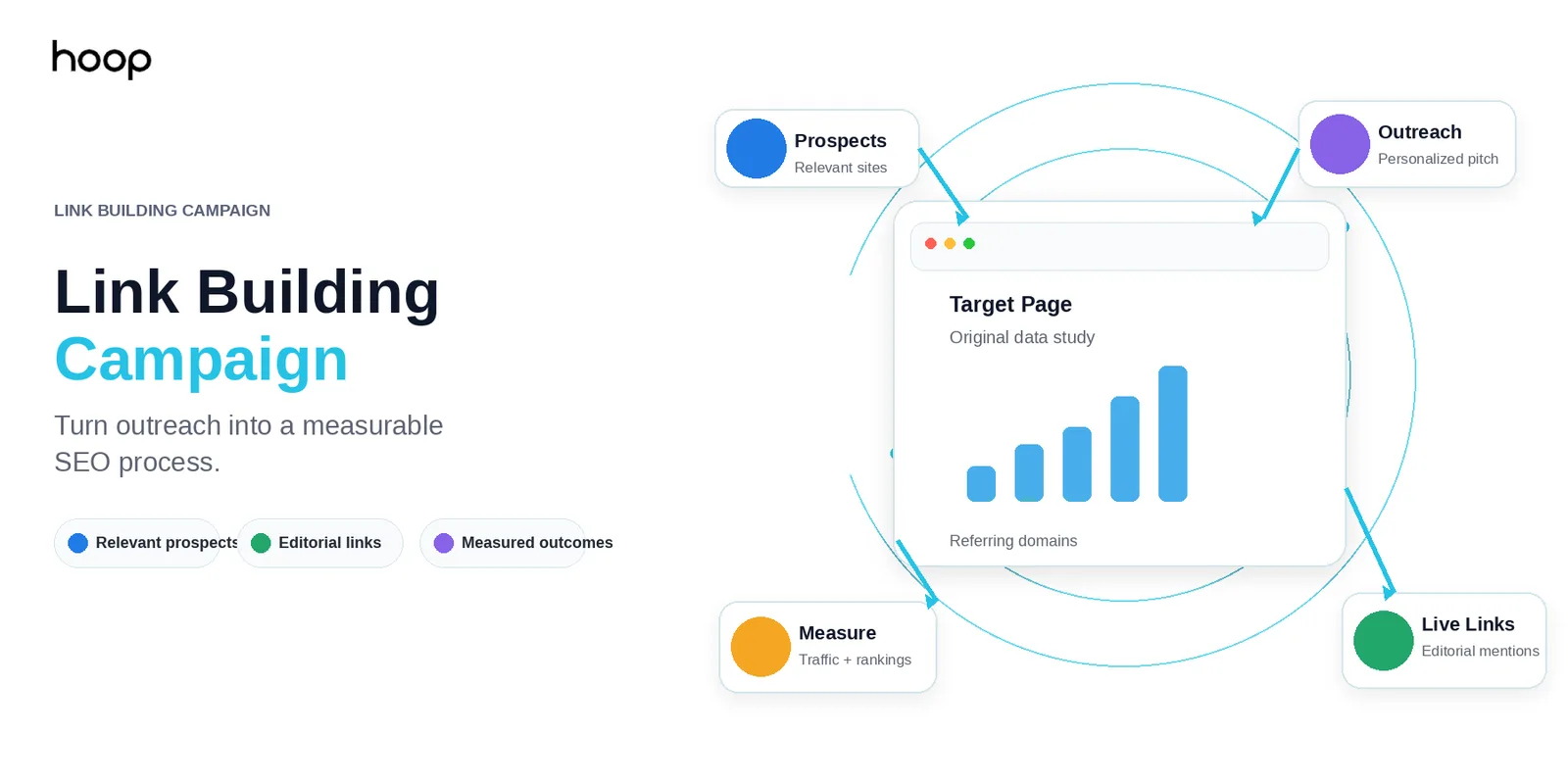
Set a 90-day target before any pitch leaves your inbox. Track 3 milestones: first placements, ranking movement, and qualified leads.
Build campaigns around business value, not vanity metrics. A link to a service guide can beat 10 weak links to a generic blog post.
Use a simple risk label for each prospect. Mark prospects as green, yellow, or red before you contact the editor.
| Task | Timing | Method | Difficulty |
|---|---|---|---|
| Pick target pages | Day 1 | Select 3 service pages and 3 guides | Easy |
| Build linkable asset | Days 2-10 | Create data, template, tool, or checklist | Medium |
| Prospect websites | Days 11-15 | Find editors, journalists, partners, and resource pages | Medium |
| Send outreach | Days 16-30 | Pitch 30 to 50 relevant contacts per asset | Medium |
| Track results | Monthly | Measure links, rankings, referral traffic, and leads | Easy |
What 50-Point Link Building Checklist Should You Use?
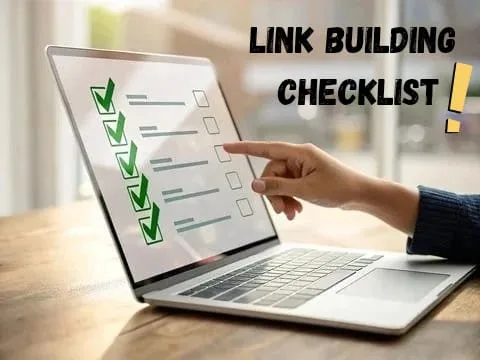
Use this 50-point checklist to build safe, useful, and measurable backlinks in 2026. Each point supports quality, relevance, or revenue tracking.
- Choose 3 target service pages before outreach.
- Choose 3 supporting guides before outreach.
- Map 1 keyword cluster to each target page.
- Record current rankings in Google Search Console.
- Record current referring domains in Ahrefs or Semrush.
- Find 10 competitors with stronger backlink profiles.
- Export competitor backlinks from Ahrefs or Semrush.
- Remove spam domains, copied blogs, and link farms.
- Group prospects by topic, location, and audience.
- Score every prospect for topical relevance.
- Check each prospect for real organic traffic.
- Check each prospect for recent publishing activity.
- Check each prospect for clear editorial standards.
- Reject pages filled with casino, adult, or payday anchors.
- Reject domains with sudden unnatural outbound links.
- Create 1 original data asset per campaign.
- Create 1 practical template per campaign.
- Create 1 expert quote page per campaign.
- Create 1 visual chart for quick citation.
- Create 1 outreach angle for each audience group.
- Write 3 email subject lines for testing.
- Personalize every email with a named page.
- Offer a clear reader benefit in sentence 1.
- Keep outreach emails under 120 words.
- Send follow-ups after 5 business days.
- Stop after 2 polite follow-ups.
- Track open rates, replies, placements, and referral visits.
- Use branded anchor text for brand mentions.
- Use partial-match anchors for resource links.
- Avoid repeated exact-match commercial anchors.
- Request link changes only when the edit helps readers.
- Reclaim unlinked brand mentions monthly.
- Fix broken-link replacement opportunities monthly.
- Pitch podcast notes when guests mention your brand.
- Pitch partner pages when partnerships already exist.
- Pitch local associations when location supports relevance.
- Pitch resource pages with a stronger replacement asset.
- Refresh old linkable assets every 6 months.
- Add internal links from new assets to target pages.
- Check link indexation after 14 days.
- Check referral traffic after 30 days.
- Check ranking movement after 60 days.
- Check assisted conversions after 90 days.
- Compare earned links with paid placement offers.
- Disclose sponsored links with sponsored attributes.
- Use nofollow for links that need no ranking signal.
- Avoid private blog networks and automated link tools.
- Report link quality, not only link count.
- Tie every campaign to leads, sales, or pipeline.
- Review the campaign risk profile each month.
How to Build Linkable Assets Publishers Cite
To build linkable assets publishers cite, create content that adds information editors cannot easily find elsewhere. Original value earns safer links than mass outreach.
How to Create Original Data Assets
To create original data assets, gather a specific dataset and publish a clear finding. Examples include customer surveys, market benchmarks, pricing studies, and usage reports.
A strong data asset needs 3 parts: a method note, a chart, and a quotable takeaway. Editors can cite the finding without extra explanation.
How to Create Practical Resource Assets
To create practical resource assets, publish tools that help readers complete a task. Examples include checklists, calculators, templates, swipe files, and comparison sheets.
A 1-page checklist can attract links when the checklist saves time. A detailed template can attract links when the template reduces planning work.
How to Run Outreach Without Creating Spam Signals
To run outreach without creating spam signals, pitch fewer contacts with stronger relevance. High-volume generic email creates poor replies and weak placements.
How to Write Personalized Outreach Emails
To write personalized outreach emails, mention the editor, the page, and the reader benefit. A direct pitch respects the editor’s time.
Use 4 parts: context, asset, benefit, and simple ask. Keep every email under 120 words, and avoid pressure language.
How to Track Replies and Placements
To track replies and placements, use a sheet or customer relationship management (CRM) tool. Examples include BuzzStream, Pitchbox, HubSpot, and Google Sheets.
Track 6 fields: prospect URL, contact name, email date, reply status, link status, and target page. Clean tracking protects campaign quality.
How to Measure Link Building Results in 2026
To measure link building results in 2026, track authority, visibility, traffic, and revenue. Link count alone gives a weak performance picture.
How to Track Link Quality
To track link quality, review 5 signals: topical relevance, placement context, organic traffic, editorial quality, and anchor text. Relevant links beat random high-metric links.
Use Domain Rating (DR) and Domain Authority (DA) as support metrics only. A lower-score niche site can beat a higher-score generic site.
How to Connect Links to Revenue
To connect links to revenue, tag target pages and monitor conversions. Track form fills, booked calls, trial starts, and ecommerce sales.
Use Google Analytics 4 (GA4), Google Search Console, and customer relationship management data together. Hoop showsreal growth examples across ecommerce, software, and marketing projects.
How to Support Backlinks With Internal Links
To support backlinks with internal links, connect every linkable asset to the pages that sell. External links build authority, and internal links guide authority through your site.
How to Move Authority to Commercial Pages
To move authority to commercial pages, add contextual links from guides, reports, and tools. Link to service pages only when the destination helps the reader take a next step.
Use 3 internal links on a new asset before outreach starts. Choose 1 service page, 1 case study, and 1 contact page when the journey needs proof.
How to Keep Anchor Text Natural
To keep anchor text natural, mix branded, partial-match, and descriptive anchors. Examples include Hoop Interactive, SEO campaign support, and ecommerce growth study.
Avoid repeating the same commercial phrase across many pages. A natural anchor mix matches how editors and customers describe your offer.
Which Link Building Mistakes Should You Avoid in 2026?
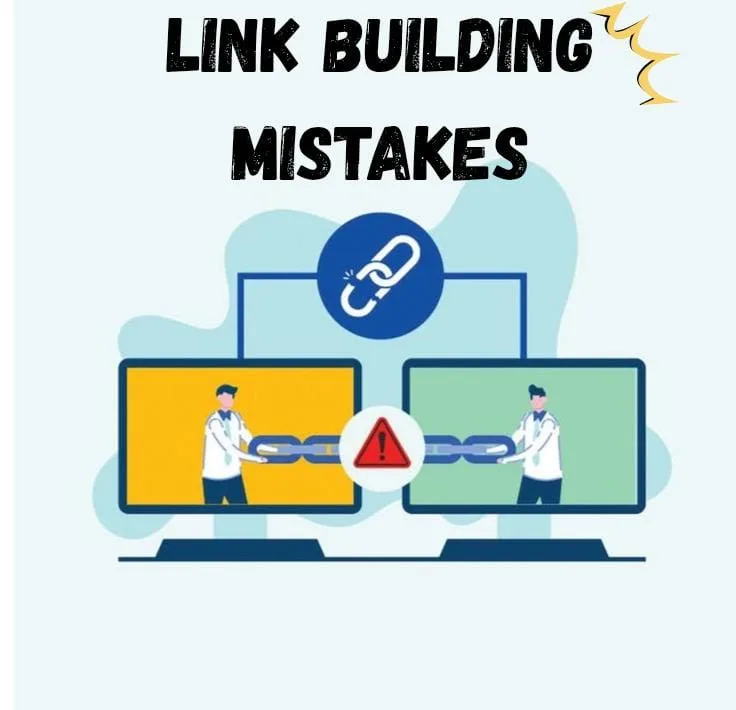
Avoid 7 link building mistakes in 2026: buying risky placements, copying competitors blindly, chasing link count, ignoring relevance, repeating anchors, skipping content quality, and hiding sponsorships.
Google Search Central lists spam policies that target deceptive ranking manipulation and link abuse. A safe campaign creates useful references for real readers.
Avoid mass guest posts when editors accept any topic. Avoid expired domain redirects when the domain no longer serves the old audience.
Avoid private blog networks, automated profile links, scholarship spam, and comment spam. Those methods create footprints that serious brands do not need.
Why Should Hoop Interactive Manage Link Building?
Hoop Interactive manages link building as part of a full-funnel growth system. The team connects SEO, content, technical fixes, analytics, and conversion tracking.
Strong backlinks help only when the target page deserves attention. Hoop improves page structure, copy, tracking, and campaigns through one growth system.
Conclusion
Link Building Strategies That Work in 2026 (Ultimate Guide) require relevance, proof, safe outreach, and clear measurement. You win better links when every campaign starts with useful assets and target pages that convert. Start with 3 pages, create 1 strong asset, pitch relevant publishers, and track results for 90 days. Ready to grow authority without risky shortcuts? Book afree strategy call with Hoop Interactive.
“You grow authority fastest when you combine digital PR, linkable assets, expert outreach, and safe measurement.”
Key takeaways
- 01Earn links from trusted, relevant pages — not spammy schemes
- 02Digital PR and linkable assets attract citations at scale
- 03Outreach works when it's relevant and genuinely useful
- 04Support backlinks with strong internal linking
Written by
Sahar
Content Writer
Frequently Asked
Questions
Everything you need to know before booking a strategy call. Can't find your answer? Contact us directly.
Yes. Relevant editorial backlinks still support discovery, authority, referral traffic, and rankings when the linked page helps readers.
No. Paid links that pass ranking credit create risk when the placement tries to manipulate search rankings.
One page needs enough relevant links to compete in its keyword group. Check the top 10 ranking pages before setting a target.
Yes. Nofollow links can drive referral traffic, brand visibility, and entity mentions even without direct ranking credit.
Original assets plus targeted outreach create the safest method. Data studies, templates, and tools give publishers a real citation reason.