Shopify vs WooCommerce vs Custom: Which Platform is Best?
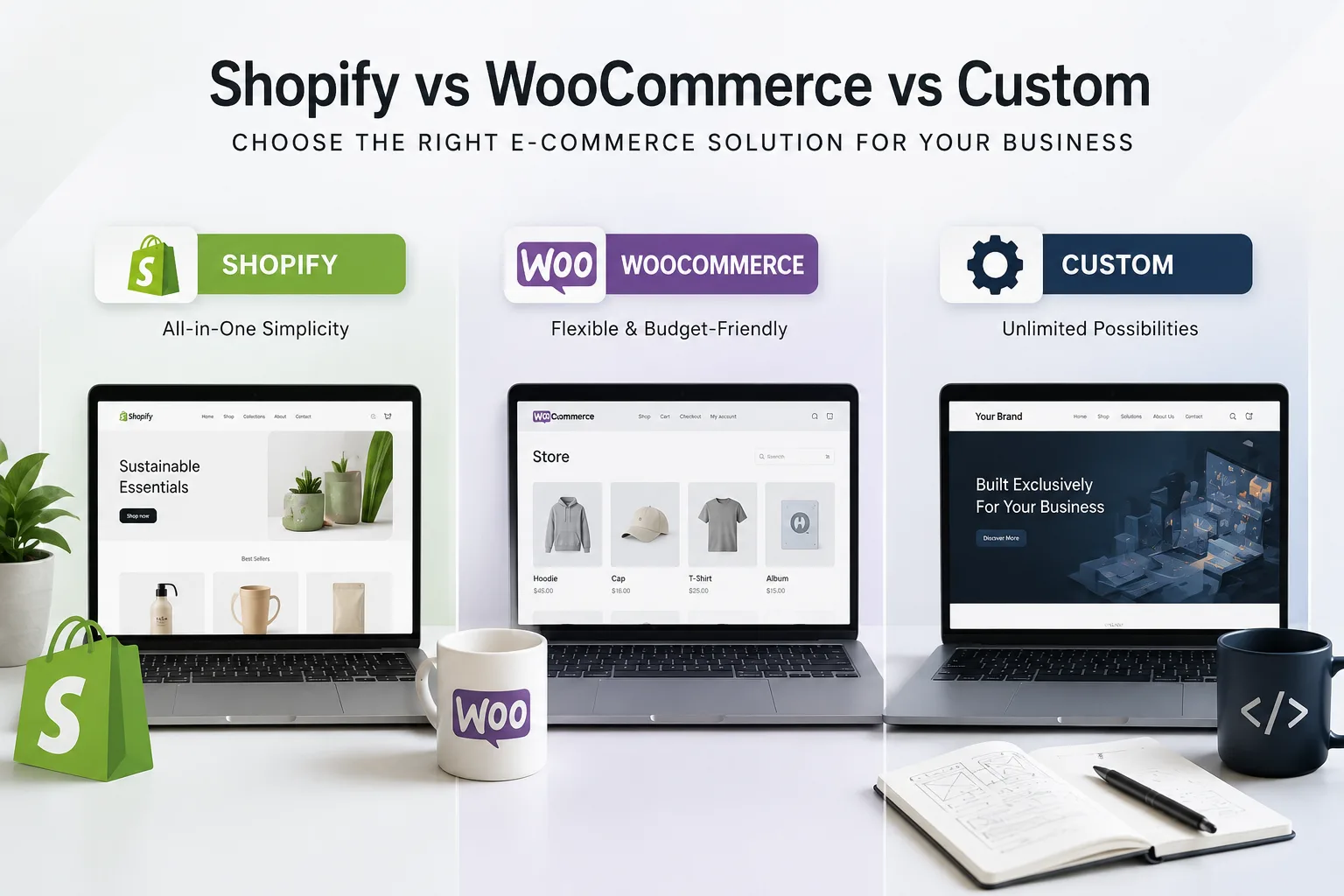
Shopify is the fastest route to market and handles hosting and security for you. WooCommerce trades that convenience for full ownership and deeper SEO control. Custom development costs most upfront but removes platform ceilings on workflows, integrations, and scale.
Sahar
Content Writer
Choosing the right eCommerce platform can determine how efficiently your online business grows. This guide compares Shopify vs WooCommerce vs Custom: Which Platform is Best?, helping you understand the strengths, limitations, costs, and scalability of each option so you can make an informed decision that supports your long-term business goals.
Need this done right?
Hoop builds the strategy, design and development behind sites like this one — talk to us about yours.
Why Choosing the Right eCommerce Platform Matters
Launching an online store is easier than ever, but choosing the wrong platform can create unnecessary challenges as your business grows. The platform you select influences your website’s performance, customer experience, search engine visibility, security, and future scalability.
Some businesses require a simple platform that allows them to start selling quickly, while others need advanced functionality, custom integrations, and greater flexibility. Understanding these requirements before making a decision helps avoid expensive migrations and redevelopment later.
Whether you are launching a new startup, expanding an established business, or creating an enterprise-level online store, selecting the right platform ensures your website can support both your current needs and future ambitions.
Understanding the Three eCommerce Options
Before comparing features, it is important to understand what each platform offers and who it is designed for.
Shopify
Shopify is a fully hosted eCommerce platform that allows businesses to create and manage online stores without handling server management or technical maintenance.
Everything from hosting and security updates to software maintenance is managed by Shopify, making it a popular option for businesses that want a straightforward solution.
Its intuitive interface, built-in payment options, and extensive app marketplace make it suitable for startups and small businesses looking for a fast route to market.
WooCommerce
WooCommerce is an open-source eCommerce plugin built for WordPress. Unlike Shopify, it gives businesses complete control over their website because it is self-hosted.
This flexibility allows users to customise almost every aspect of their online store, from design and functionality to SEO and integrations.
However, WooCommerce requires businesses to manage hosting, updates, security, and maintenance or work with an experienced development team.
Custom eCommerce Development
A custom eCommerce website is built specifically around your business requirements. Rather than adapting your processes to suit an existing platform, custom development creates a solution tailored to your products, customers, and operational needs.
Custom platforms offer maximum flexibility, unlimited scalability, and complete ownership of your website. They are particularly suitable for businesses with unique workflows, advanced integrations, or long-term digital growth strategies.
Although custom development requires a larger initial investment, it often provides greater value as businesses expand.
Shopify vs WooCommerce vs Custom: Feature Comparison
Every business has different priorities, so there is no universal solution. Comparing the three platforms across key areas provides a clearer understanding of which option best supports your goals.
Ease of Setup
If speed is your highest priority, Shopify is one of the easiest platforms to launch. Businesses can create an online store, upload products, configure payment gateways, and begin selling within a relatively short period.
WooCommerce requires additional setup because users must purchase hosting, install WordPress, configure the plugin, and manage security settings.
Custom development involves the longest setup process because every feature is designed and built from the ground up. However, this additional time allows businesses to create a solution that matches their exact requirements.
Customisation and Flexibility
Flexibility becomes increasingly important as businesses grow. Shopify provides a wide range of themes and applications, allowing businesses to customise their stores within the platform’s framework. While suitable for many companies, some advanced modifications may require additional development or may not be possible without platform limitations.
WooCommerce offers greater flexibility because businesses have full access to the website’s code. Thousands of plugins and themes allow stores to expand functionality while maintaining control over design and user experience.
Custom eCommerce development offers complete freedom. Every feature, workflow, and integration is designed specifically for your business without being restricted by third-party platforms. Businesses with unique operational processes often find custom development provides the greatest long-term flexibility.
SEO Capabilities
Search visibility is essential for attracting customers and increasing online sales. Shopify includes built-in SEO features such as editable meta titles, descriptions, XML sitemaps, and mobile-friendly themes. These tools support basic search engine optimisation, although some advanced technical SEO improvements may require additional applications.
WooCommerce is widely recognised for its SEO capabilities because it operates within WordPress. Businesses can optimise URLs, metadata, structured data, page content, and technical SEO using powerful plugins and complete website control.
Custom websites provide the highest level of SEO flexibility. Developers can optimise every aspect of website architecture, Core Web Vitals, page speed, structured data, internal linking, and performance without relying on third-party limitations.
For businesses where organic traffic is a major growth channel, custom development often creates stronger long-term SEO opportunities.
Design and User Experience

A professional website does more than look attractive — it creates a seamless shopping experience that encourages customers to complete purchases. Shopify provides professionally designed themes that help businesses launch quickly with minimal design experience.
WooCommerce allows greater creative control through WordPress themes and custom page builders, making it easier to personalise the appearance of an online store.
With custom eCommerce development and UI/UX design services, every element is designed specifically for your audience.
From homepage layouts and product pages to checkout experiences and customer journeys, businesses can create unique digital experiences that reflect their brand identity and improve conversion rates. For organisations aiming to differentiate themselves in competitive markets, a custom-designed website offers the greatest opportunity to create a memorable customer experience.
Pricing and Total Cost of Ownership
Price is often one of the first factors businesses consider when choosing an eCommerce platform. However, the initial setup cost only tells part of the story. The total cost of ownership includes hosting, maintenance, plugins, security, development, and future upgrades.
Shopify Costs
Shopify operates on a subscription model with monthly plans that include hosting, security, and platform updates. This predictable pricing makes budgeting easier, especially for startups and small businesses.
However, businesses should also consider additional expenses such as premium themes, paid apps, transaction fees for certain payment gateways, and custom development if advanced functionality is required.
While Shopify’s entry costs are relatively affordable, monthly expenses can increase as your business grows and additional features are added.
WooCommerce Costs
WooCommerce itself is free to install, but running a successful online store involves several ongoing expenses. Typical costs include:
- Web hosting
- Domain registration
- Premium plugins
- Security tools
- Website maintenance
- Developer support when needed
For businesses with technical expertise, WooCommerce can be a cost-effective solution. However, those without in-house resources may spend more on ongoing management and support.
Custom Development Costs
A custom eCommerce website usually requires the highest upfront investment because every feature is designed specifically for your business.
Although development costs are greater initially, businesses avoid many of the platform limitations, recurring app subscriptions, and customisation restrictions associated with ready-made solutions.
For organisations planning long-term digital growth, custom development often delivers a stronger return on investment through improved scalability, efficiency, and flexibility.
Scalability and Business Growth
Your eCommerce platform should support your business not only today but also as it grows.
Shopify scales well for many small and medium-sized businesses. With Shopify Plus, larger organisations gain access to additional features, improved automation, and higher performance.
However, businesses may still encounter limitations when implementing highly customised workflows or complex integrations.
WooCommerce also scales effectively when supported by reliable hosting and ongoing optimisation. As traffic increases, businesses must monitor website performance, security, and server resources to maintain a smooth customer experience.
A custom eCommerce solution offers the greatest scalability because it is built specifically around your operational requirements. Whether expanding internationally, adding multiple warehouses, supporting thousands of products, or integrating advanced business systems, custom development provides complete flexibility without platform restrictions. Businesses expecting rapid growth often benefit from investing in scalable architecture from the beginning.
Security and Website Maintenance
Security plays a critical role in protecting customer information and maintaining trust.
Shopify manages hosting, software updates, backups, and security patches automatically. This reduces administrative responsibilities and allows business owners to focus on sales and customer service.
WooCommerce requires businesses to manage security independently. Regular updates, plugin maintenance, backups, malware protection, and hosting configuration are essential for keeping the website secure. With custom development, security measures are built around your specific business requirements. Experienced developers can implement advanced authentication, encrypted data storage, secure payment processing, and ongoing monitoring to reduce security risks.
At Hoop Interactive, security is considered throughout the development process, helping businesses build reliable eCommerce solutions that protect customer data and support long-term growth.
Integrations and Third-Party Tools
Modern online stores rely on integrations to automate operations and improve customer experiences.
Shopify provides a large marketplace of applications covering payment gateways, shipping providers, email marketing, customer support, analytics, and inventory management.
WooCommerce offers even greater flexibility through WordPress plugins and custom API integrations. Businesses can connect their online store with a wide range of accounting systems, CRMs, marketing platforms, and business applications.
Custom development removes many integration limitations altogether. APIs can be developed specifically for your business, allowing seamless communication between internal systems, suppliers, warehouses, payment providers, and customer management platforms.
For businesses with complex operational processes, custom integrations improve efficiency while reducing manual work.
Which Platform Is Best for Different Business Types?
Every business has different goals, budgets, and technical requirements. Choosing the right platform depends on where your business is today and where you want it to be in the future.
Startups
New businesses often prioritise speed, affordability, and ease of use. Shopify is an excellent choice for startups looking to launch quickly without managing technical infrastructure. Its hosted environment allows founders to focus on growing their business instead of maintaining servers and software.
Small and Medium-Sized Businesses
Growing businesses usually require greater flexibility, stronger SEO capabilities, and additional customisation. WooCommerce provides an excellent balance between affordability and control. Businesses can expand functionality using plugins while maintaining full ownership of their website.
Enterprise Businesses
Large organisations often require advanced integrations, custom workflows, and unlimited scalability. For these businesses, custom eCommerce development is often the most suitable option. A tailored solution supports unique operational processes, delivers exceptional customer experiences, and grows alongside the organisation without platform limitations.
How AI Is Changing eCommerce Platform Selection
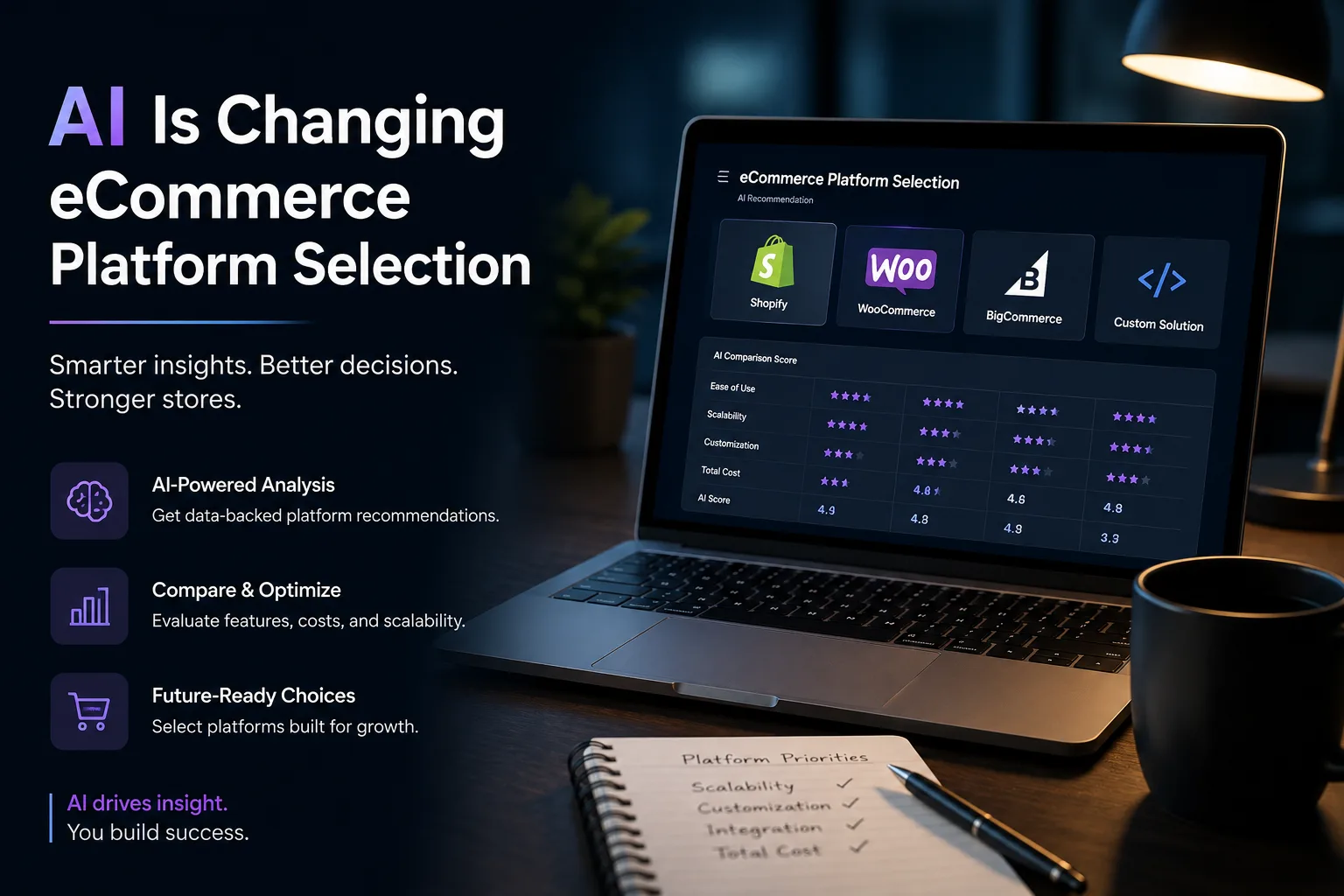
AI development services are transforming online retail and influencing how businesses choose their eCommerce platforms. Modern customers expect personalised shopping experiences, intelligent product recommendations, faster support, and seamless interactions across multiple devices. Many businesses are now integrating AI-powered capabilities such as:
- Personalised product recommendations
- AI chatbots
- Predictive analytics
- Automated inventory forecasting
- Smart search functionality
While Shopify and WooCommerce offer AI-powered applications through third-party tools, custom development provides greater flexibility to build artificial intelligence features around specific business objectives. As AI continues to evolve, businesses should choose an eCommerce platform that can support future innovation rather than simply meeting today’s requirements.
When Should You Choose a Custom eCommerce Website?
Although Shopify and WooCommerce meet the needs of many businesses, there comes a point when a custom solution offers greater long-term value. If your business has outgrown standard features or requires unique functionality, investing in custom eCommerce development can improve efficiency, enhance customer experiences, and support future growth. You should consider a custom solution if you need:
- Advanced business workflows
- Complex API integrations
- Multi-vendor or marketplace functionality
- Enterprise-level scalability
- Complete design flexibility
- Greater control over performance and security
A custom platform allows your website to evolve alongside your business rather than limiting growth through platform restrictions.
Common Mistakes When Choosing an eCommerce Platform
Choosing the wrong platform can increase costs and create challenges as your business grows. Many businesses focus only on the initial price and overlook ongoing expenses, scalability, SEO, and user experience. A platform should support future growth, deliver strong search performance, and meet your specific business needs rather than being chosen simply because it is popular.
How to Choose the Right Platform for Your Business
Choosing between Shopify, WooCommerce, and custom eCommerce development becomes much easier when you evaluate your long-term business strategy. Ask yourself a few important questions before making your decision:
- What is my available budget?
- How quickly do I need to launch?
- Will my business require custom functionality?
- How important is SEO to my growth strategy?
- Do I expect significant business growth over the next few years?
- Will I need advanced integrations with other business systems?
Your answers will help determine which platform aligns with your current requirements while supporting future expansion. At Hoop Interactive, we work closely with businesses to understand their objectives before recommending a platform. Instead of promoting a single solution, we focus on delivering an eCommerce strategy that supports sustainable growth, operational efficiency, and long-term success.
Conclusion
Choosing between Shopify vs WooCommerce vs Custom: Which Platform is Best? depends entirely on your business objectives, technical requirements, and plans for future growth. Shopify offers simplicity and speed, WooCommerce provides greater flexibility and control, while custom eCommerce development delivers unlimited scalability and tailored functionality for businesses with more complex needs.
Rather than selecting a platform based solely on popularity or upfront cost, consider the total value it will provide over time. Factors such as SEO, performance, security, integrations, maintenance, and customer experience all contribute to the long-term success of your online store.
At Hoop Interactive, we help businesses choose, build, and optimise eCommerce solutions that align with their goals. Whether you’re launching your first online store, upgrading an existing platform, or investing in a fully customised solution, our experienced team can guide you through every stage of the development journey.
Contact Hoop Interactive today to create an eCommerce platform designed to support your business today and well into the future.
“A custom platform allows your website to evolve alongside your business rather than limiting growth through platform restrictions.”
Key takeaways
- 01Shopify suits startups that need to sell quickly without managing infrastructure.
- 02WooCommerce suits growing businesses that want plugin flexibility and full code access.
- 03Custom development suits enterprises with unique workflows, complex APIs, or multi-vendor needs.
- 04Compare total cost of ownership — hosting, apps, maintenance, and upgrades — not the setup price.
Written by
Sahar
Content Writer
Frequently Asked
Questions
Everything you need to know before booking a strategy call. Can't find your answer? Contact us directly.
Both platforms have their strengths. Shopify is ideal for businesses seeking a simple, fully managed solution with minimal technical maintenance. WooCommerce offers greater flexibility, stronger customisation, and more control, making it a popular choice for businesses that want to tailor their online store.
WooCommerce and custom eCommerce websites generally provide greater control over technical SEO, website structure, and performance. Shopify includes excellent built-in SEO features, but some advanced optimisations may require additional applications or custom development.
Yes, especially for businesses with unique requirements, complex workflows, or ambitious growth plans. A custom solution offers complete ownership, unlimited flexibility, improved scalability, and the ability to create tailored customer experiences.
Startups often choose Shopify because it offers a fast and straightforward way to launch an online store without managing hosting or technical maintenance. However, startups with highly specialised business models may benefit from a custom solution if long-term scalability is a priority.
Yes. Many growing businesses eventually migrate to a custom eCommerce website as their operational requirements become more advanced. A carefully planned migration helps preserve customer data, SEO performance, and business continuity while introducing greater flexibility.
Keep reading
All articles →
Top Website Development Companies Delivering Powerful Digital Platforms
Jul 15, 2026 · 5 min read
What Is CMS in Web Design? Dynamic Content Explained
Sep 7, 2026 · 10 min read