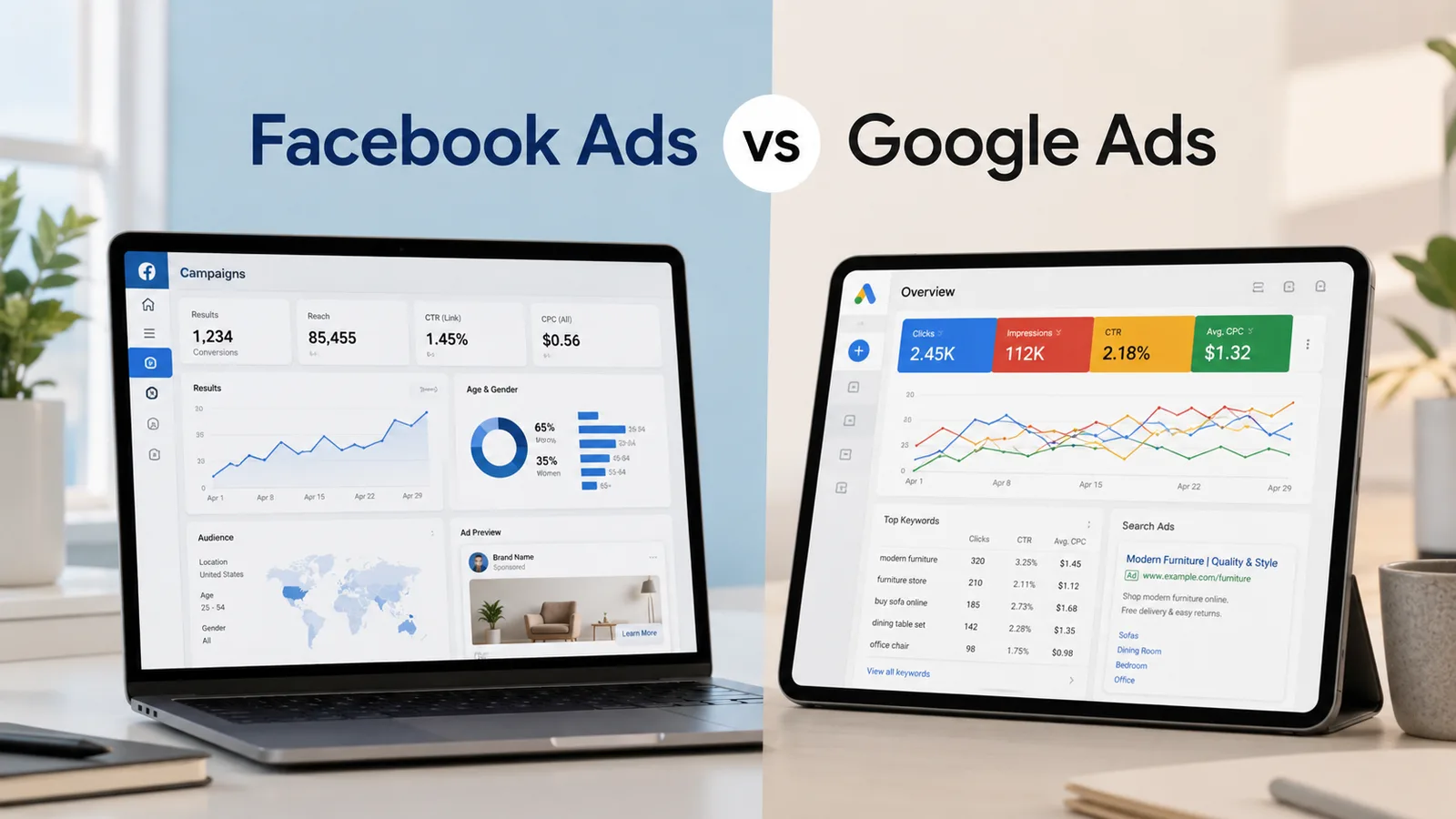
Facebook Ads vs Google Ads: Which Wins for Your Business?
Google Ads wins for immediate, high-intent leads; Facebook Ads wins for brand awareness and audience discovery. Using both together usually produces the strongest long-term results.
Sahar
Content Writer
Google Ads is the best choice for businesses that need immediate leads and sales because it reaches customers who are already searching for products or services. Facebook Ads is the better choice for businesses that want to build brand awareness, reach new audiences, and promote visually appealing products. If your budget allows, using both platforms together often produces the strongest long-term results.
Need this done right?
Hoop builds the strategy, design and development behind sites like this one — talk to us about yours.
What Is the Difference Between Facebook Ads and Google Ads?
Google Ads and Facebook Ads use completely different advertising models. Understanding the difference helps you choose the right platform for your business.
How Google Ads Works
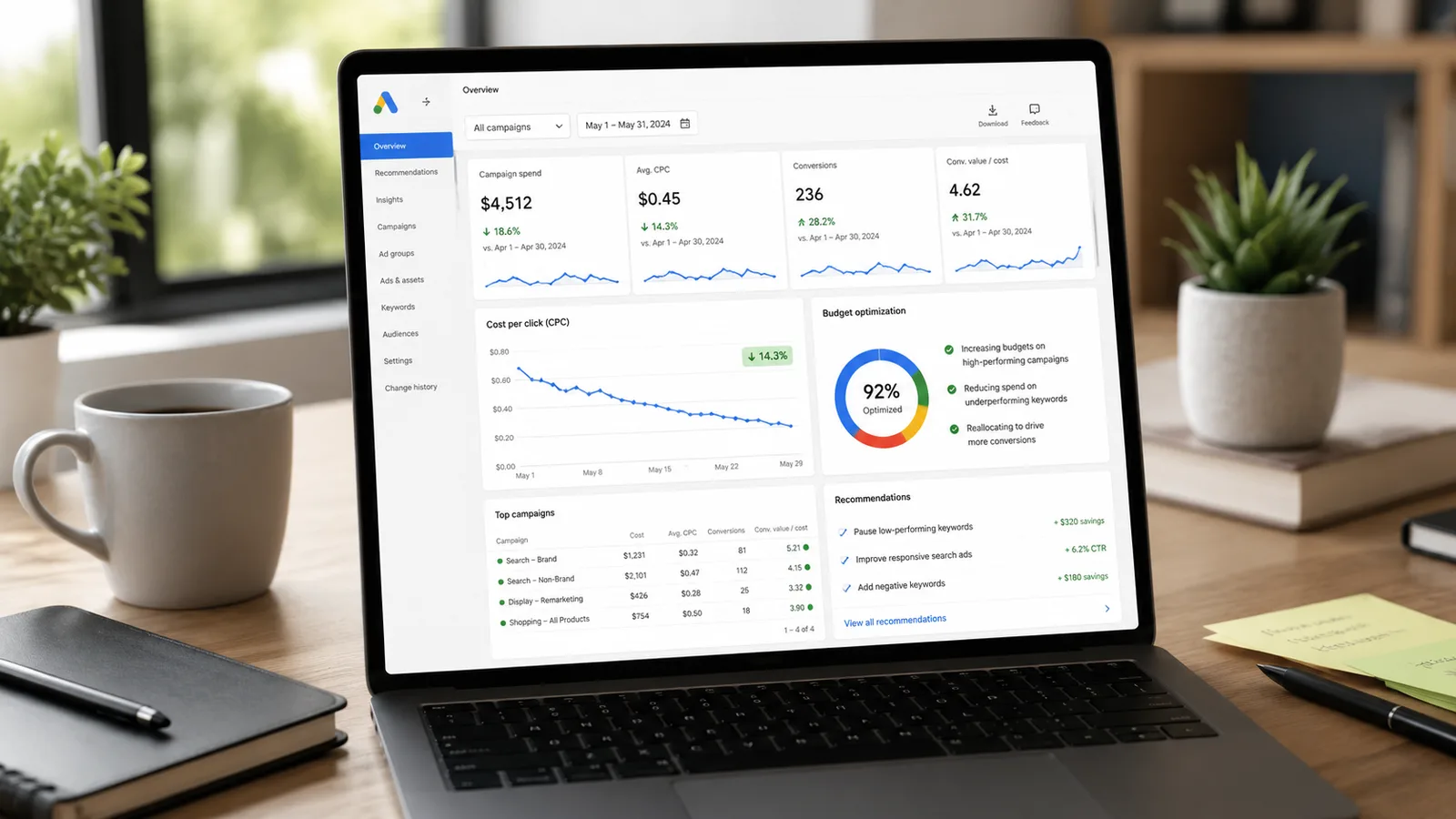
Google Ads uses a search-based advertising model. Advertisements appear when users actively search for products or services on Google.
For example, a person searching for:
- emergency plumber near me
- buy office furniture
- accounting software for small business
already has strong purchase intent.
Google Ads works particularly well for businesses that need immediate leads and conversions. Search campaigns allow companies to connect with customers at the exact moment they need a solution.
Many businesses combine Google Ads campaigns with professional PPC marketing services to improve targeting and maximize return on ad spend.
How Facebook Ads Works
Facebook Ads uses an interest-based advertising model. Instead of waiting for users to search, Facebook shows advertisements to people based on demographics, behaviors, and interests.
Facebook can target users based on:
- Age
- Location
- Job title
- Purchase behavior
- Hobbies and interests
For example, a fitness brand can target people interested in running, gym memberships, and healthy lifestyles.
Businesses can learn more about audience targeting and campaign objectives through the Meta Business Help Center.
Facebook Ads performs exceptionally well for:
- Brand awareness
- Product discovery
- Ecommerce businesses
- Community building
The platform also includes Instagram advertising, which expands audience reach significantly.
Facebook Ads vs Google Ads: Which Platform Costs More?
Advertising costs vary by industry, competition, and campaign objectives. Both platforms allow businesses to start with small budgets.
Average Google Ads Costs
Google Ads typically charges advertisers on a pay-per-click model.
The average cost per click ranges between:
| Industry | Average CPC |
|---|---|
| Ecommerce | $1–$3 |
| Healthcare | $2–$5 |
| Home Services | $4–$20 |
| Legal Services | $8–$50+ |
| Insurance | $10–$60+ |
Highly competitive industries often experience expensive keywords because customer values remain high.
Businesses that invest in broader digital marketing solutions often reduce customer acquisition costs by combining paid advertising with content marketing and search engine optimization.
Average Facebook Ads Costs
Facebook Ads generally costs less than Google Ads.
Most advertisers pay:
- $0.50–$3 per click
- $5–$15 per 1,000 impressions
Lower costs make Facebook attractive for businesses with smaller budgets.
Lower costs do not automatically produce better results. A cheaper click means little if visitors never become customers.
Which Platform Provides Better Value?
Google Ads usually produces stronger conversion rates because users already have buying intent.
Facebook Ads often delivers lower costs and stronger audience reach.
The better value depends on your goals.
Choose Google Ads if your priority is immediate leads.
Choose Facebook Ads if your priority is awareness and audience growth.
Which Platform Delivers Better Targeting?
Both advertising platforms offer advanced targeting capabilities, but they target users differently.
Search Intent Targeting in Google Ads
Google Ads targets users based on search intent.
Someone searching for "emergency electrician" usually needs immediate assistance. Businesses can capture high-intent traffic at the exact moment people need their services.
Search intent targeting works exceptionally well for:
- Lawyers
- Dentists
- Accountants
- Home service businesses
- Software companies
Google also allows advertisers to target specific locations, devices, and times of day.
Interest-Based Targeting in Facebook Ads
Facebook Ads excels at audience targeting.
Advertisers can create audiences based on:
- Interests
- Behaviors
- Demographics
- Previous purchases
- Website visitors
A clothing store can target women between ages 25 and 40 who recently purchased fashion products online.
This level of targeting makes Facebook ideal for introducing products to people who have never heard of your brand.
Which Platform Has Better Targeting?
Google wins when purchase intent matters most.
Facebook wins when audience discovery and brand awareness matter most.
Many businesses use both platforms together because the platforms complement each other rather than compete directly.
Which Platform Generates More Leads and Sales?
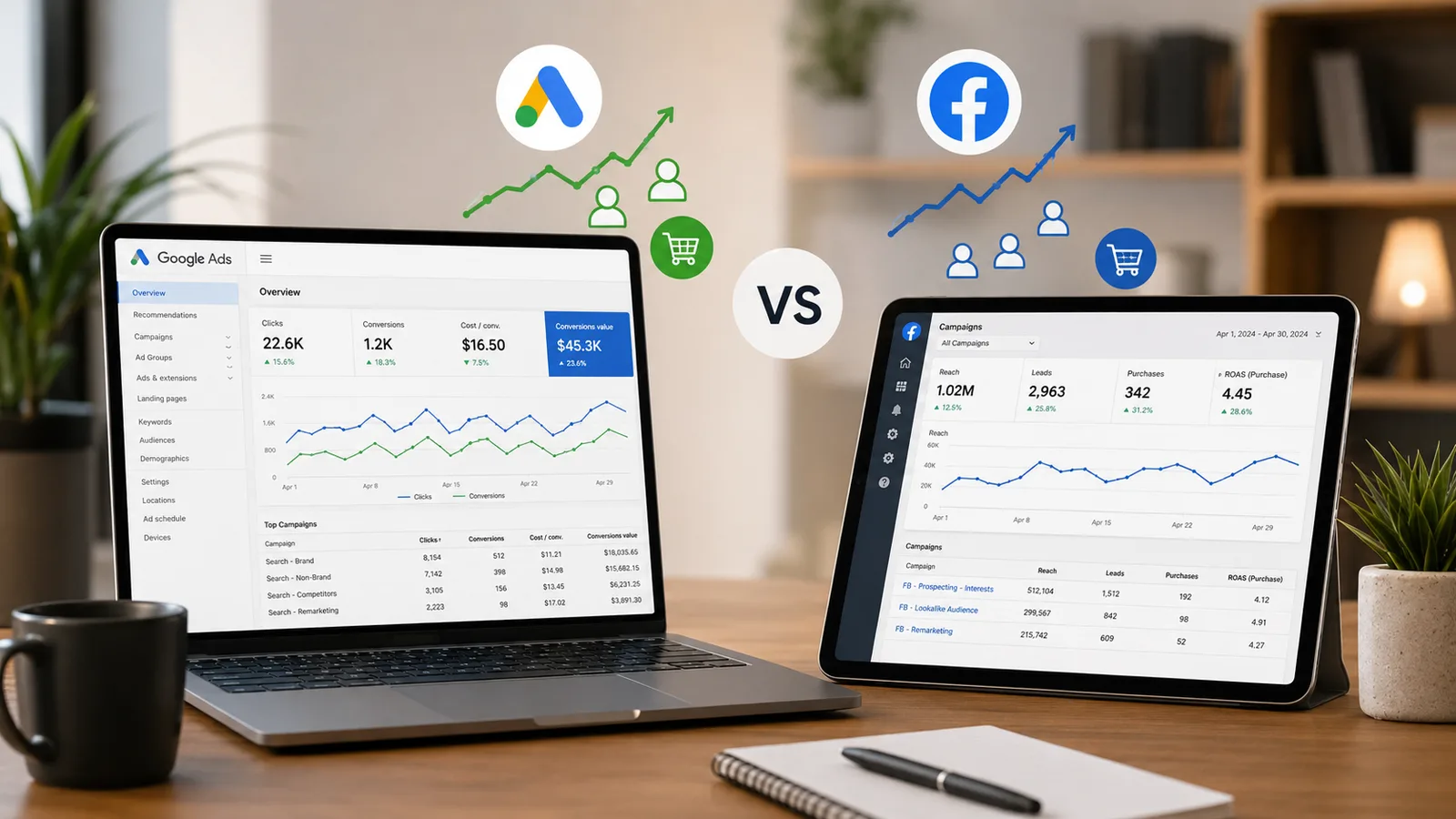
The answer depends on your business model.
Lead Generation Businesses
Google Ads usually generates more qualified leads for businesses that provide services.
Examples include:
- Legal firms
- Healthcare clinics
- Accounting firms
- Plumbing companies
- Real estate agencies
These businesses benefit from users actively searching for solutions.
A person searching for "tax accountant near me" usually wants immediate assistance.
Ecommerce Businesses
Facebook Ads often performs better for ecommerce brands because products can reach users before they begin searching.
Visual advertisements work especially well for:
- Clothing brands
- Beauty products
- Home décor
- Fitness equipment
Facebook's remarketing capabilities also help ecommerce stores recover abandoned shopping carts.
Businesses increasingly use AI marketing services to automate audience segmentation and optimize campaigns across both advertising platforms.
Which Advertising Platform Is Better for Small Businesses?
Small businesses should choose an advertising platform based on business goals, customer behavior, and budget. There is no single platform that works for every company.
Which Platform Works Best for Local Businesses?
Google Ads usually performs better for local businesses because customers search for nearby services with immediate intent.
Businesses such as plumbers, dentists, electricians, and repair companies often generate strong results from search campaigns because users actively need their services.
Local companies can also connect advertisements with a Google Business Profile to increase visibility.
Which Platform Works Best for Startups?
Facebook Ads often helps startups build awareness quickly because advertisers can target audiences before people know the brand exists.
A startup selling a new fitness product can introduce the product to users interested in exercise, healthy eating, and sports equipment.
Facebook also allows startups to test multiple audiences with relatively small budgets.
Which Platform Works Best for Service Companies?
Professional service businesses generally perform better on Google Ads because services solve immediate problems.
A person searching for "family lawyer near me" usually needs assistance immediately.
Businesses that need both awareness and lead generation often combine paid campaigns with professional PPC marketing services to create a balanced strategy.
How to Choose Between Facebook Ads and Google Ads
Choosing the right platform becomes easier when you understand your objectives.
Choose Google Ads When You Need Immediate Leads
Choose Google Ads when your business depends on high-intent searches.
Google Ads works particularly well for:
- Local services
- Professional services
- Software companies
- Emergency services
- B2B businesses
These businesses benefit from users actively looking for solutions.
Choose Facebook Ads When You Need Brand Awareness
Choose Facebook Ads when your goal is introducing products or building an audience.
Facebook performs well for:
- Fashion brands
- Beauty products
- Home décor businesses
- Fitness products
- Subscription services
Visual advertisements and audience targeting create opportunities to reach new customers.
Use Both Platforms When You Need Full-Funnel Marketing
Many successful companies use both platforms together.
A customer might first discover a brand through Facebook and later search for the business on Google before making a purchase.
Combining both platforms creates multiple opportunities to reach potential customers.
How to Build a Combined Advertising Strategy
Businesses that combine Facebook Ads and Google Ads often generate stronger results than businesses that depend on one platform.
How to Use Facebook for Awareness Campaigns
To use Facebook for awareness campaigns, target users based on interests and demographics.
Video advertisements, image advertisements, and carousel advertisements work particularly well during the awareness stage.
The goal is introducing your products and services to new audiences.
Businesses that want to increase brand awareness often combine Facebook advertisements with social media marketing services to improve audience engagement and build stronger customer relationships.
How to Use Google Ads for Conversion Campaigns
To use Google Ads for conversion campaigns, target high-intent keywords that indicate purchase behavior.
Examples include:
- buy accounting software
- emergency plumbing service
- digital marketing agency near me
Search campaigns capture customers when they are ready to take action.
How to Use Retargeting Campaigns
To use retargeting campaigns, show advertisements to people who already visited your website.
Retargeting campaigns help businesses:
- Increase conversions
- Recover abandoned carts
- Improve brand recall
- Generate repeat purchases
Many businesses integrate retargeting campaigns into broader digital marketing solutions to improve long-term customer acquisition.
Facebook Ads vs Google Ads: Which Wins for Your Business?
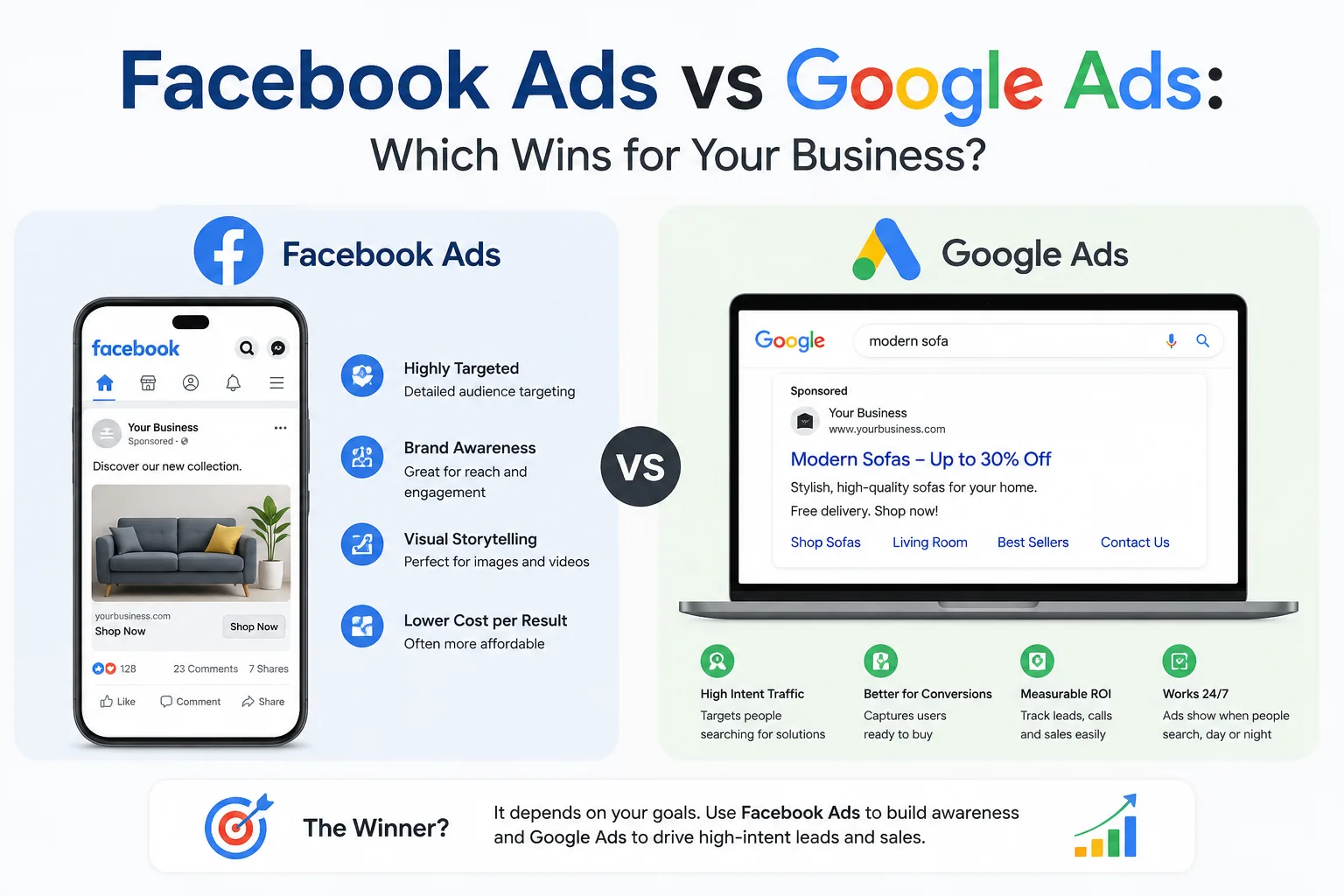
The winner depends entirely on your objectives.
Google Ads Wins for High Purchase Intent
Google Ads wins when users actively search for products or services.
Industries that usually perform well include:
- Legal services
- Healthcare
- Home services
- Accounting
- Software
These businesses benefit from immediate customer demand.
Facebook Ads Wins for Audience Building
Facebook Ads wins when businesses need awareness, engagement, and audience growth.
Industries that often succeed include:
- Fashion
- Beauty
- Fitness
- Ecommerce
- Consumer products
Visual advertisements help businesses introduce products to potential customers.
Both Platforms Win Together
Many businesses achieve the best results by combining both platforms.
Facebook creates demand and introduces products.
Google captures demand when users begin searching.
Companies increasingly use AI marketing services to automate bidding, audience segmentation, and performance analysis across both advertising platforms.
Common Advertising Mistakes Businesses Make
Businesses often fail because of poor strategy rather than platform limitations.
How to Avoid Targeting Everyone
To avoid targeting everyone, define a specific audience.
Broad targeting usually increases costs and reduces conversion rates.
A local bakery should target nearby customers rather than an entire country.
How to Avoid Ignoring Conversion Tracking
To avoid ignoring conversion tracking, measure every important action.
Businesses should track:
- Purchases
- Form submissions
- Phone calls
- Appointment bookings
Data helps advertisers make better decisions and improve profitability.
How to Avoid Weak Landing Pages
To avoid weak landing pages, create pages that match advertisement messaging.
A fast and relevant landing page often improves conversion rates and reduces advertising costs.
Businesses should regularly test headlines, calls to action, and page layouts.
How to Measure Success on Both Platforms
Advertising success depends on profitability rather than clicks or impressions.
How to Measure Return on Ad Spend
To measure return on ad spend, divide revenue by advertising costs.
A company that spends $1,000 and generates $5,000 in revenue achieves a return on ad spend of 5:1.
How to Measure Cost Per Acquisition
To measure cost per acquisition, divide advertising spend by the number of customers acquired.
A lower acquisition cost generally indicates better campaign efficiency.
How to Measure Lifetime Customer Value
To measure lifetime customer value, calculate the total revenue a customer generates during the relationship with your business.
Businesses with high customer values can justify larger advertising budgets.
How Advertising Trends Are Changing in 2026
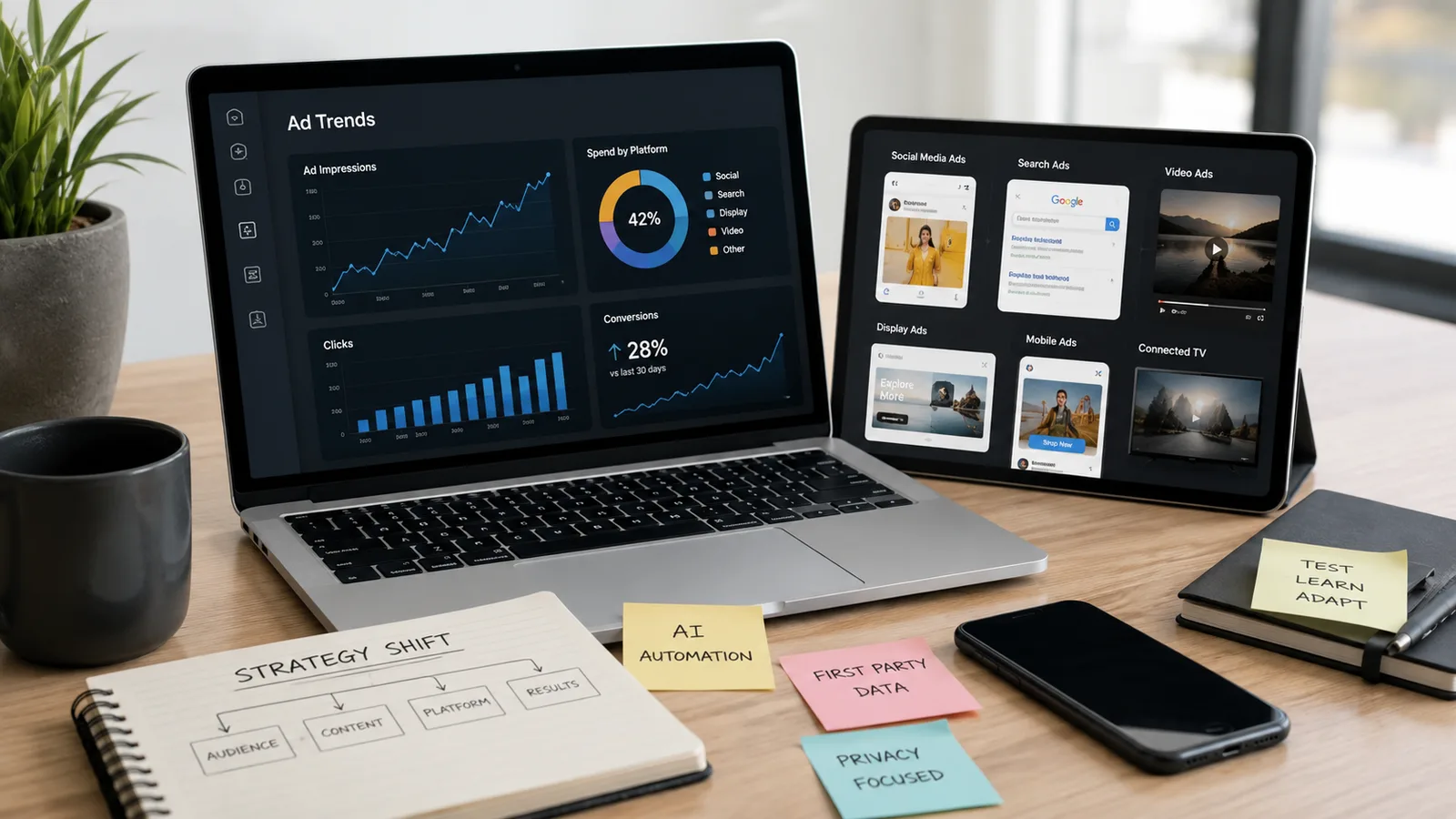
Digital advertising continues to change as artificial intelligence and privacy regulations reshape customer targeting.
How Artificial Intelligence Improves Campaign Performance
To improve campaign performance, advertisers increasingly use artificial intelligence tools to manage bids, predict customer behavior, and create audience segments.
Google uses machine learning in Smart Bidding strategies such as Target Cost Per Acquisition (CPA) and Maximize Conversions. Facebook uses artificial intelligence to identify users who are most likely to engage with advertisements.
Businesses that adopt automation often save time and improve campaign efficiency.
How Privacy Changes Affect Advertising
To adapt to privacy changes, businesses need stronger first-party data strategies.
Third-party cookies continue to decline, which makes customer email lists and website visitor data more valuable. Companies that collect customer information through newsletters, forms, and loyalty programs can build more effective remarketing campaigns.
How Video Advertising Is Growing
To increase engagement, many businesses now invest in short-form video advertisements.
Facebook Reels, Instagram Reels, and YouTube Shorts attract large audiences and often generate higher engagement than static image advertisements. Video content also helps businesses explain products and services more effectively.
Companies that prepare for these advertising trends can build stronger campaigns and stay competitive as digital marketing continues to evolve in 2026.
Quick Reference Table
| Objective | Best Platform | Main Advantage | Difficulty |
|---|---|---|---|
| Immediate leads | Google Ads | High purchase intent | Medium |
| Brand awareness | Facebook Ads | Advanced targeting | Easy |
| Ecommerce sales | Facebook Ads | Visual advertising | Medium |
| Local services | Google Ads | Search demand | Medium |
| Retargeting | Both platforms | Higher conversions | Hard |
Conclusion
Facebook Ads and Google Ads solve different marketing challenges. Google Ads excels at capturing customers who actively search for products and services, while Facebook Ads excels at introducing brands to new audiences and building demand.
The strongest advertising strategies often combine both platforms. Facebook creates awareness and engagement, while Google converts high-intent users into customers. Businesses that understand customer behavior, track conversions, and optimize campaigns consistently usually achieve the highest return on investment.
Whether you choose Facebook Ads, Google Ads, or both, the right strategy makes the difference. Explore Hoop Interactive's PPC marketing services and let our specialists create data-driven campaigns that help your business grow faster.
“Google Ads reaches customers who are already searching; Facebook Ads builds awareness and reaches new audiences.”
Key takeaways
- 01Google Ads reaches people actively searching — best for immediate leads
- 02Facebook Ads builds awareness and reaches new audiences with visual content
- 03They differ on cost, targeting, and intent — not simply better vs. worse
- 04For most businesses, combining both beats choosing one
Written by
Sahar
Content Writer
Frequently Asked
Questions
Everything you need to know before booking a strategy call. Can't find your answer? Contact us directly.
No. The better platform depends on your business goals and customer behavior.
Yes. Facebook usually has lower click costs than Google Ads.
Google Ads usually performs better because local customers actively search for nearby services.
Yes. Many businesses achieve stronger results by combining awareness campaigns with search campaigns.
Google Ads often produces faster results because users already have purchase intent.
Keep reading
All articles →
Are Google Ads Worth It? How to Know Before You Spend
Sep 28, 2026 · 10 min read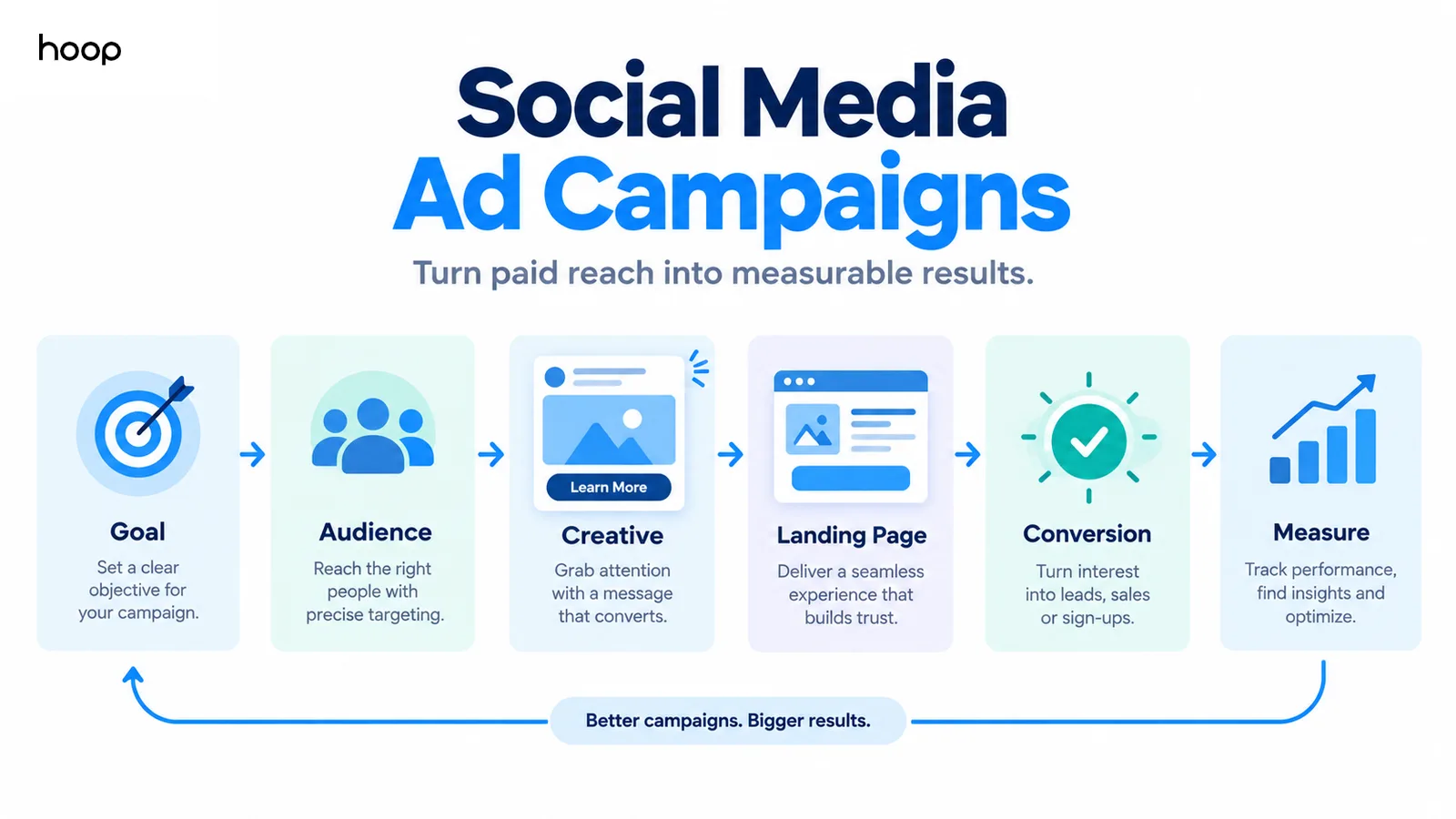
Social Media Ad Campaigns 2026: How to Plan, Launch, and Optimize
Sep 28, 2026 · 10 min read