
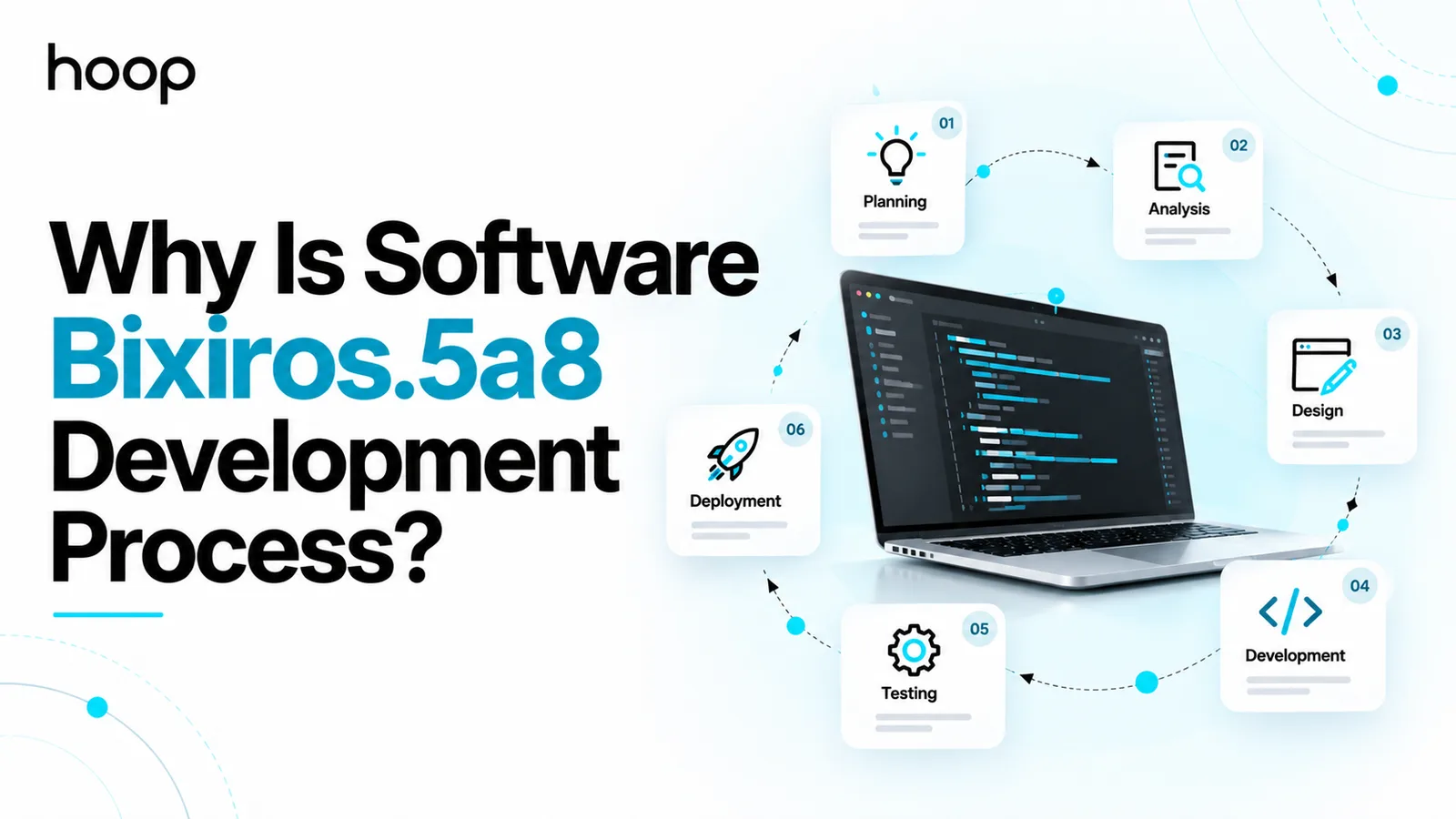
Why Is Software Bixiros.5a8 Development Process? What the Term Really Means
Bixiros.5a8 is not a recognised methodology — pages using the term contradict each other. The real question underneath it is why software needs a development process at all, and why defects survive careful testing.
Sahar
Content Writer
The phrase “why is software Bixiros.5a8 development process” does not point to a recognized software-development framework. Current pages use Bixiros.5a8 in conflicting ways, so the useful question is why software development needs a structured process and why bugs still appear even when teams plan and test carefully.
The established concept behind that question is the software development process itself. Teams define requirements, design the system, build features, test behavior, deploy software, monitor real-world performance, and improve the product over time. That structure reduces avoidable mistakes without pretending software can become perfectly predictable.
Is Bixiros.5a8 a Real Software Development Methodology?
Bixiros.5a8 does not appear in established software-engineering standards as a defined methodology, framework, lifecycle model, or software platform. Pages ranking for the phrase give different explanations. Some treat Bixiros.5a8 as a label for messy, nonlinear development. Others describe it as a formal framework or specific software product without providing a verifiable specification.
That inconsistency matters. A useful technical article should not invent phases, principles, or features for a framework that lacks a reliable definition.
The better interpretation is simple: the search phrase points toward a real software-engineering problem. Software projects become complex because requirements change, components depend on each other, users behave unpredictably, and every update can affect existing behavior.
The recognized software development life cycle gives teams a practical structure for managing that complexity. IBM describes the SDLC as a structured, iterative process for building, delivering, and maintaining software. That process covers planning, analysis, design, coding, testing, deployment, and maintenance.
Why Does Software Development Need a Process?
Software development needs a process because code must solve a real problem, work with other systems, remain maintainable, and continue functioning after launch. Writing code without those controls can produce a working demo that fails under real users, changing requirements, security risks, or growth.
A development process creates clear decision points. Teams can confirm what users need before coding. Architects can design how data, services, interfaces, and infrastructure should work together. Developers can implement smaller pieces safely. Quality Assurance teams can test expected behavior and edge cases. Operations teams can release and monitor the product.
The process also creates shared context. A product manager, designer, developer, tester, and stakeholder can discuss the same goals without relying on assumptions.
Good process does not remove uncertainty. Good process exposes uncertainty early enough to manage it.
Why Does Software Become Complex So Quickly?
Software complexity grows through interactions, not only through lines of code. A login feature can involve a user interface, an authentication service, a database, email verification, password resets, permissions, session handling, rate limits, and security controls.
Each component can work correctly by itself while the combined system fails under a specific condition.
Complexity also grows when software connects to external services. Payment gateways, analytics tools, cloud storage, mapping services, customer relationship management systems, and APIs introduce behaviors the development team does not fully control.
Large products also serve many user states. Administrators, customers, subscribers, guests, employees, and partners may all have different permissions and workflows. Each additional state creates more combinations that developers and testers need to consider.
That is why professional teams divide systems into smaller components, document interfaces, review code, and automate repeatable tests.
What Is a Software Bug?
A software bug is a defect or unintended condition that causes software to behave differently from the expected result. The defect can come from code, requirements, system interactions, configuration, data, or assumptions about how users will behave.
A calculation can return the wrong value. A checkout button can fail only on one browser. A user can lose access after changing an email address. An API can time out when traffic spikes. A permission rule can expose data to the wrong account.
Those problems all qualify as software defects, but they do not share one cause.
Common causes include incorrect logic, missing edge cases, misunderstood requirements, integration failures, race conditions, configuration errors, dependency changes, and regressions.
Why Do Bugs Still Appear After Software Has Been Tested?
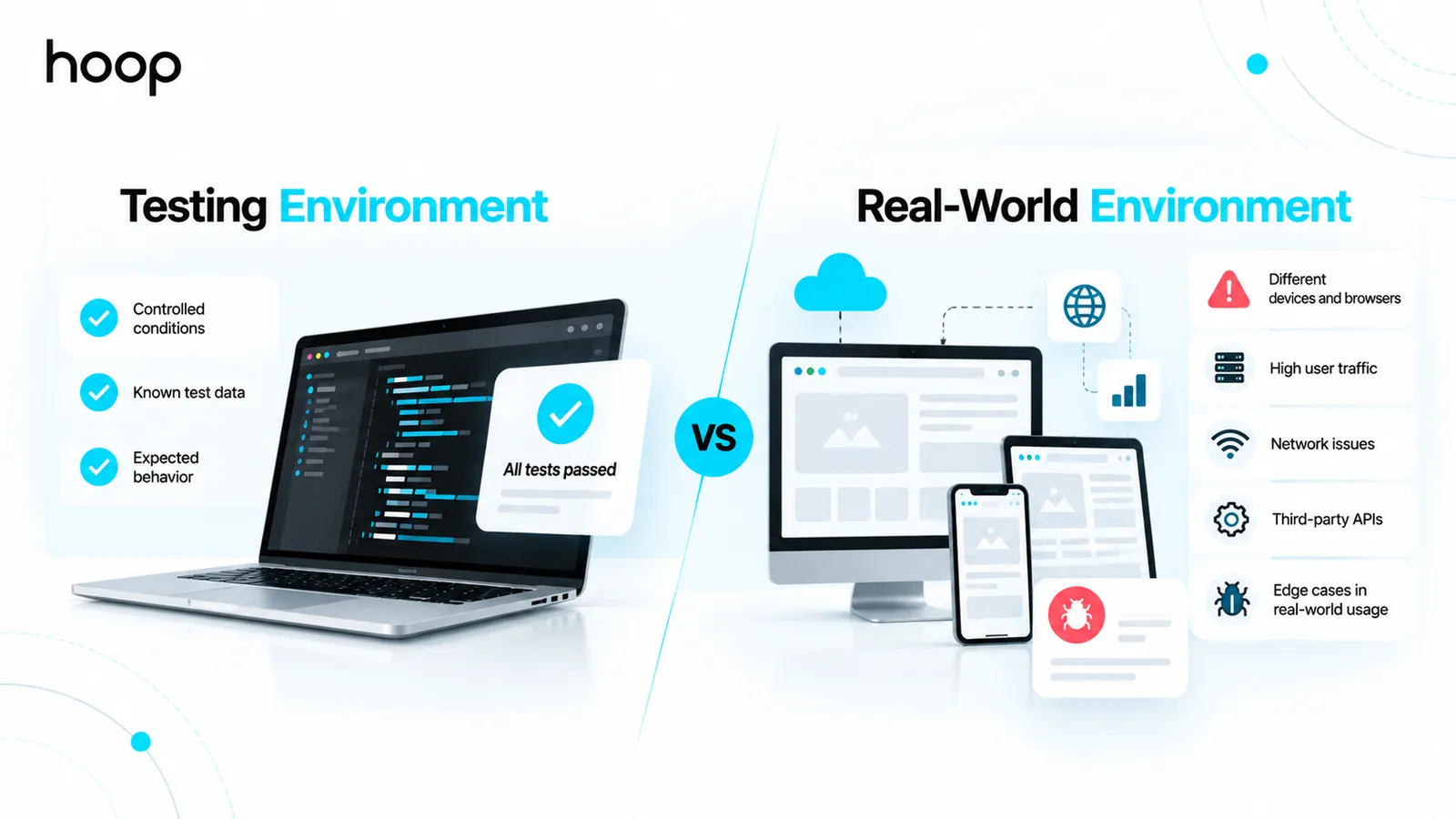
Testing reduces risk. Testing cannot reproduce every possible real-world situation.
A test team can check thousands of scenarios before release. Real users can create millions of combinations across devices, browsers, account states, network conditions, data values, integrations, and usage patterns.
A problem can also require a very specific sequence. A user might log in on one device, change a setting on another, lose connectivity during a payment, return later, and trigger an unexpected state. The software can pass ordinary testing and still fail during that unusual path.
Production environments also expose different loads. A feature that works with 50 test accounts can behave differently with 500,000 users, large databases, slow third-party APIs, and simultaneous requests.
For that reason, mature teams treat release as another source of evidence. Monitoring, logs, telemetry, crash reports, and user feedback help teams discover conditions that pre-release testing did not reproduce.
Why Do New Features Sometimes Break Old Features?
New code changes the behavior of an existing system. A developer can improve one feature and accidentally change something another feature depends on.
Software engineers call this type of failure a regression. Regression bugs occur when previously working behavior stops working after a change.
Consider a shared pricing function. A team updates the function to support subscription discounts. The new logic works for subscriptions, but the change can alter one-time purchase totals if both workflows use the same function.
Regression testing exists to catch that problem. Teams rerun existing tests after new changes to confirm that older behavior still works.
Code reviews, automated tests, small releases, and feature flags also reduce regression risk because they make changes easier to inspect and reverse.
Why Do Requirements Matter Before Coding?
Requirements define what the software must achieve. Weak requirements create expensive mistakes because a development team can build technically correct software that solves the wrong problem.
Teams need functional requirements, such as what users can do. Teams also need nonfunctional requirements, such as performance, security, availability, accessibility, scalability, and compliance expectations.
For example, “users can upload files” sounds simple. The team still needs answers about allowed file types, maximum size, storage location, malware scanning, permissions, retention, download behavior, and failure handling.
Clear requirements do not lock the project forever. Clear requirements create a shared starting point that teams can revise when evidence changes.
Businesses that need software built around specific workflows benefit from a structured discovery process before development starts. Hoop’s custom software development work follows that approach by mapping users, requirements, architecture, and delivery before full implementation.
Why Does Software Architecture Matter?
Architecture defines how major parts of a software system work together. Architecture decisions affect databases, APIs, services, data flows, authentication, infrastructure, integrations, deployment, and failure handling.
A small prototype can survive weak architecture because it serves few users and limited scenarios. The same design can fail when traffic, features, integrations, or team size grow.
Architecture also affects how safely developers can change software. Clear module boundaries reduce the chance that one change will unexpectedly damage unrelated features.
Good architecture does not mean adding complexity early. Good architecture means making deliberate decisions about the complexity the product actually needs.
User experience design belongs in the process too. Clear flows can prevent product confusion before developers write code. Hoop’s UI/UX design services focus on validating task flows and interfaces before production development begins.
How Do Software Teams Reduce Bugs?
Software teams reduce bugs by combining prevention, detection, and production monitoring. No single technique catches every defect.
A strong process usually includes:
- Define requirements with measurable acceptance criteria.
- Design system boundaries, data flows, and failure handling before implementation.
- Review code so another engineer can challenge assumptions and spot defects.
- Run unit tests for small functions and components.
- Run integration tests for connected services, databases, and APIs.
- Run end-to-end tests for complete user workflows.
- Use automated regression tests after changes.
- Test high-risk security, performance, and permissions scenarios.
- Release changes in controlled stages when risk justifies it.
- Monitor logs, metrics, errors, and user feedback after release.
The process works because each layer catches a different class of problem.
Why Is Software Development Iterative?
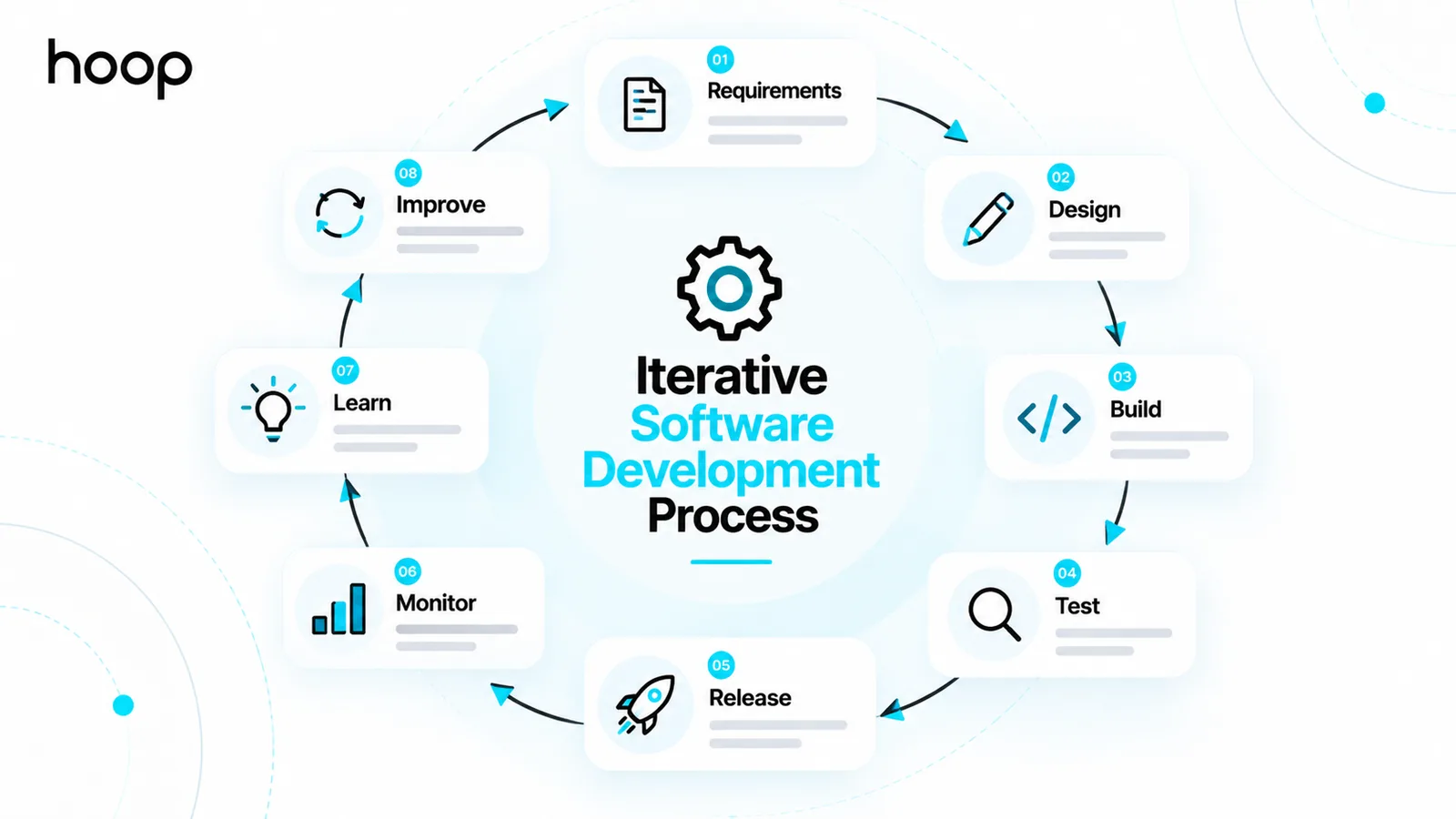
Software development is iterative because teams learn while building and after release. Requirements evolve, users reveal unexpected needs, technologies change, competitors move, security issues emerge, and real usage exposes assumptions that looked correct during planning.
A practical cycle looks like this:
Requirements → Design → Build → Test → Release → Monitor → Learn → Improve
The final step feeds the next cycle.
That loop explains why software development rarely ends after version 1. A successful product often creates more development work because real users reveal new opportunities and edge cases.
Agile teams make the feedback loop explicit through shorter delivery cycles. DevOps teams connect development, testing, deployment, and operations more continuously. Waterfall teams organize the same broad work more sequentially.
The process model can change. The need to understand, build, verify, release, and improve remains.
What Happens When Teams Skip the Development Process?
Skipping process does not always cause immediate failure. The first version can look faster because the team avoids planning, testing, documentation, or architecture work.
The cost often appears later.
A weak requirement can cause major rework. A rushed architecture can create performance limits. Missing automated tests can make every release risky. Poor documentation can make onboarding slower. Uncontrolled deployments can make incidents harder to reverse. Missing monitoring can leave teams unaware of failures until customers complain.
Technical debt describes some of that accumulated cost. Teams accept shortcuts today and pay additional effort later when they need to modify, scale, or repair the system.
The goal is not to eliminate every shortcut. The goal is to understand which shortcuts create acceptable risk and which shortcuts threaten the product.
How Do Large Software Teams Manage Complexity?
Large teams manage complexity by creating ownership and boundaries.
One team may own identity and authentication. Another may own payments. Another may own search. Teams define APIs between those areas so developers can change one component without needing complete knowledge of the entire product.
Version control tracks code changes. Pull requests support review. Automated pipelines build and test changes. Continuous Integration and Continuous Delivery or Deployment (CI/CD) can automate repeatable checks and releases. Observability tools collect metrics, logs, and traces from production systems.
Documentation records architecture decisions, APIs, operational procedures, and important tradeoffs.
The strongest teams also keep communication close to the code. Engineers, designers, product owners, QA specialists, and operations staff share information early instead of waiting for handoffs at the end.
Is Process Supposed to Slow Developers Down?
No. A useful process should reduce expensive rework and make important risks visible.
Bad process can slow development. Teams can create too many approval gates, meetings, templates, and status reports that do not improve product quality or decision-making.
Good process has a clear reason for each step. A code review protects maintainability and catches errors. An automated test protects known behavior. A release checklist protects production. A design review can expose an architectural mistake before the team invests weeks of development.
Teams should remove process that no longer solves a real problem.
The correct question is not, “How much process should we have?” The correct question is, “Which failures are expensive enough to prevent, and what is the lightest control that reduces that risk?”
Quick Reference: Why Software Problems Happen
| Problem | Why It Happens | Process Response | Risk If Ignored |
|---|---|---|---|
| Wrong feature | Requirements do not match user needs | Discovery, user research, acceptance criteria | Rework and wasted budget |
| Regression | New code changes existing behavior | Automated regression tests, code review | Previously working features fail |
| Integration failure | Connected systems behave differently | Integration testing, contract testing | Broken workflows and data errors |
| Production-only bug | Real traffic and states differ from testing | Monitoring, staged releases, telemetry | Customer-facing incidents |
| Scaling failure | Architecture cannot handle growth | Capacity planning, performance testing | Slowdowns and outages |
| Security defect | Threats were not considered early | Secure design, review, security testing | Data exposure and compliance risk |
How Do You Choose the Right Software Development Process?
Choose a process based on the risk, uncertainty, team, product, and delivery environment.
A startup validating a new idea usually needs fast feedback and a small initial scope. A regulated financial system needs stronger documentation, security controls, auditability, and testing. A mature SaaS platform may need frequent releases with automated CI/CD and strong production monitoring.
The process should match the product rather than forcing every project into the same template.
Teams should ask 5 practical questions:
- How stable are the requirements?
- How expensive would a production failure be?
- How frequently must the product change?
- Which security, compliance, and reliability standards apply?
- How quickly can users provide useful feedback?
Those answers help determine how much planning, testing, documentation, automation, and release control the project needs.
Hoop’s software development services cover the full path from discovery and architecture through development, QA, deployment, and long-term support. That end-to-end model works because process decisions stay connected to the product rather than being handed between separate vendors.
Build Software With a Process That Fits the Product
Bixiros.5a8 is not a reliable name for an established software-development framework, but the question behind the phrase is useful. Software needs a development process because real products combine changing requirements, technical dependencies, human decisions, testing limits, and continuous improvement.
The strongest process does not promise perfect software. The strongest process helps teams discover mistakes earlier, reduce avoidable risk, release with confidence, and learn from real users. If you are planning a custom product, Hoop can help you define the right architecture, delivery model, testing approach, and release process before expensive rework begins.
“Good process does not remove uncertainty. Good process exposes uncertainty early enough to manage it.”
Key takeaways
- 01No software-engineering standard defines Bixiros.5a8; treat it as an informal search term, not a framework.
- 02Complexity grows through interactions between components, not through lines of code.
- 03Testing reduces risk but cannot reproduce every real-world combination of device, data, load, and timing.
- 04Match the weight of your process to the cost of failure — the lightest control that reduces a real risk is the right one.
Written by
Sahar
Content Writer
Frequently Asked
Questions
Everything you need to know before booking a strategy call. Can't find your answer? Contact us directly.
Bixiros.5a8 does not have a verified, standard technical definition. Current pages use the phrase inconsistently, so it is safer to treat it as an informal search term rather than a recognized methodology.
Complex software often contains defects because many components, states, inputs, and external systems interact. Testing reduces defects, but teams cannot practically test every possible combination before release.
Real users create conditions that test environments do not fully reproduce. Scale, device differences, unusual data, network failures, and unexpected workflows can expose defects after release.
Very small or formally verified software can achieve extremely high assurance. For most commercial software, proving every possible behavior becomes expensive and difficult as complexity grows.
Software teams learn from each release. User feedback, production data, bugs, new requirements, and technical changes create new work, so teams repeatedly plan, build, test, release, and improve.
Keep reading
All articles →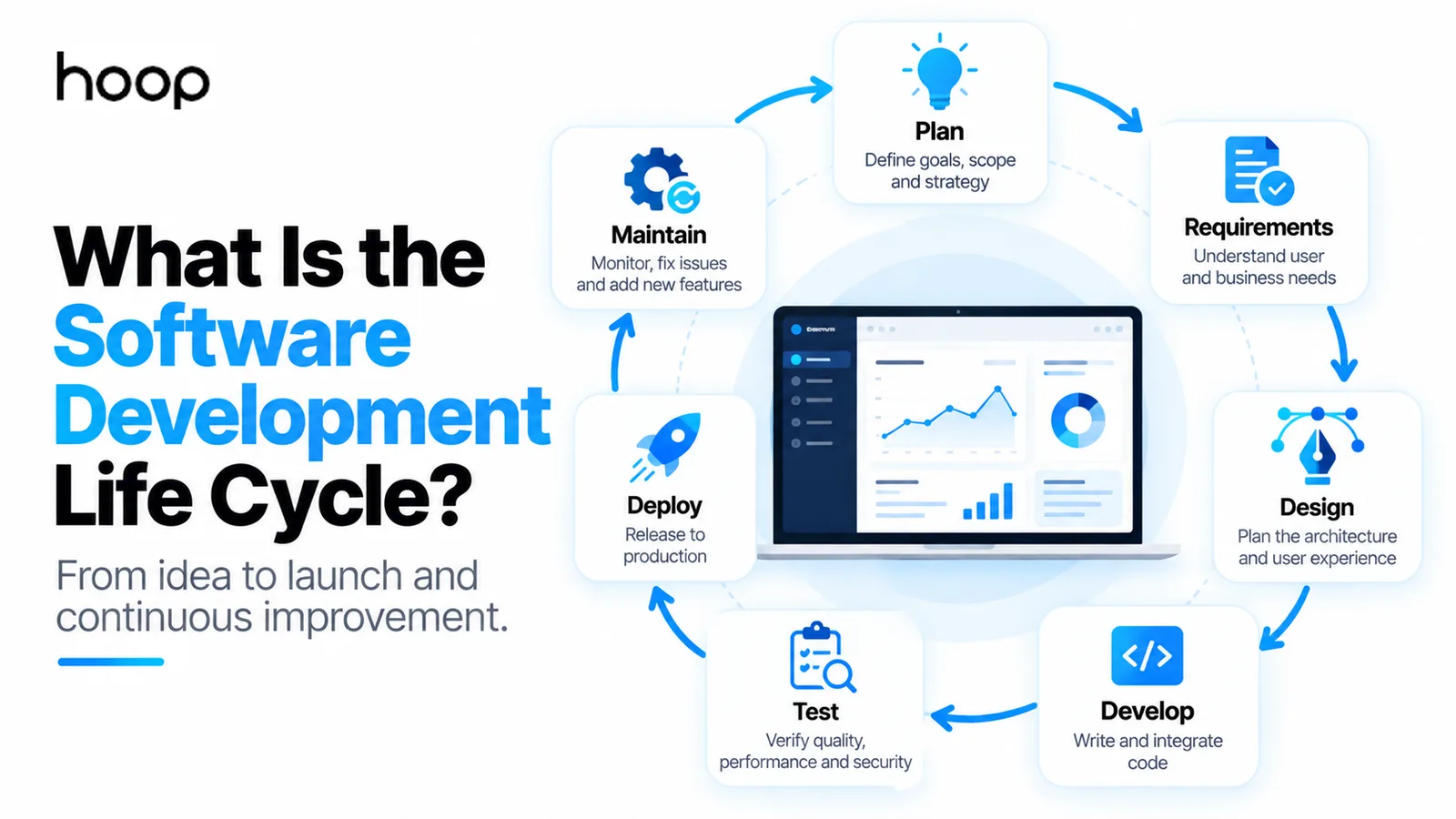
What Is the Software Development Life Cycle?
Sep 28, 2026 · 10 min read
Agile Methodology in Software Development: How It Actually Works
Sep 17, 2026 · 10 min read