Roofing Marketing Plan: How to Get More Roofing Leads in 2026
Roofing leads come from being visible at the moment a homeowner has a problem — usually on a phone, usually after a storm. Local SEO and a complete Google Business Profile carry the long-term load; paid search covers the spikes. Both need a website that answers questions and makes contact obvious.
Sahar
Content Writer
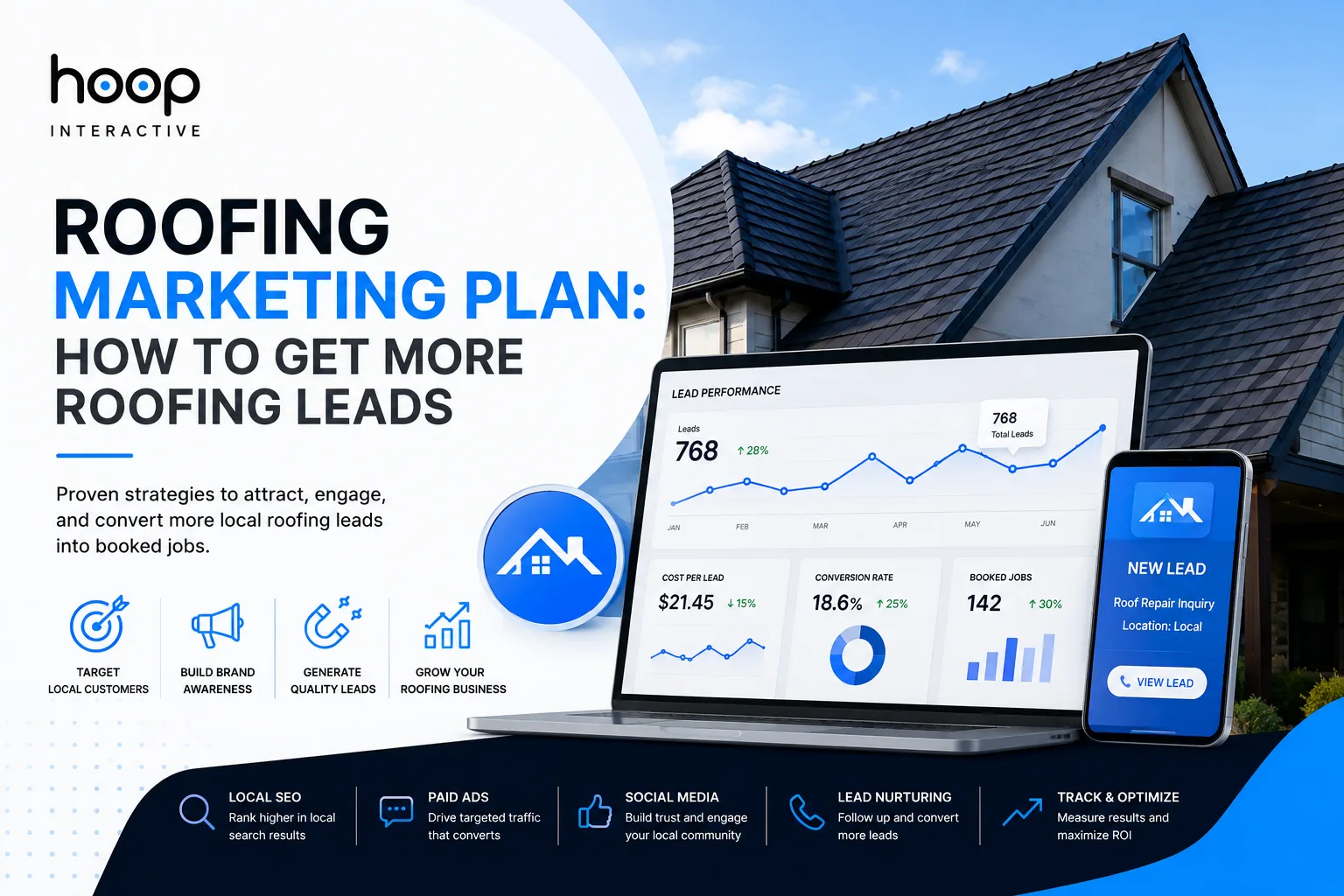
Looking for a proven roofing marketing plan? This guide explains how roofing companies can attract qualified leads, improve local search rankings, increase estimate requests, and grow their business using modern digital marketing strategies that deliver consistent results.
Why Roofing Marketing Matters More Than Ever
The roofing industry continues to expand, but so does the competition. Homeowners and commercial property owners have more choices than ever before, and nearly all of them begin their search online. Whether they need an emergency roof repair, a complete roof replacement, or a routine inspection, they usually turn to Google before contacting a contractor.
If your roofing company does not appear in local search results or your website fails to build trust, potential customers will quickly move on to another business. This is why having a structured roofing marketing plan is no longer optional. It is essential for generating consistent leads and staying ahead of competitors.
Modern roofing marketing goes far beyond placing an advertisement or relying on referrals. It combines local SEO, Google Business Profile optimization, content marketing, paid advertising, social media, email marketing, and online reputation management into one complete strategy.
Whether you operate a small local roofing company or manage multiple locations, investing in digital marketing helps you reach homeowners at the exact moment they need your services.
Understanding Today’s Roofing Customer Journey
Every successful roofing marketing plan starts with understanding how customers make decisions.
Unlike impulse purchases, roofing services involve significant investment. Homeowners want to feel confident before hiring a contractor, so they spend time researching companies, reading reviews, comparing estimates, and evaluating experience.
A customer journey often begins after a storm, when a roof starts leaking, or when a homeowner notices visible damage. They search online using phrases such as:
- Roof repair near me
- Roofing company near me
- Roof replacement contractor
- Emergency roofing services
After discovering several companies, they compare online ratings, certifications, project galleries, warranties, financing options, years of experience, and customer testimonials. Only after building trust will they request an inspection or estimate.
Your marketing strategy should support customers throughout this entire journey by answering questions, demonstrating expertise, and making it easy to contact your business.
Build a Roofing Website That Converts Visitors Into Customers
Your website is your most important marketing asset. Every digital marketing campaign eventually directs potential customers to your website, so it must create an excellent first impression.
An attractive website alone is not enough. It must also be fast, mobile-friendly, secure, and easy to navigate.
Most roofing customers visit a website because they want quick answers. They need to know what services you offer, where you work, whether you are licensed and insured, and how they can request an estimate.
Your homepage should immediately explain what your company does and encourage visitors to take action. Contact information should be visible at the top of every page, along with clear buttons such as “Request a Free Inspection” or “Get a Free Roofing Estimate.”
Trust signals are equally important. Display customer reviews, industry certifications, manufacturer partnerships, warranties, insurance information, financing options, and before-and-after project photos throughout your website.
Including detailed service pages for roof replacement, roof repair, storm damage restoration, commercial roofing, residential roofing, metal roofing, and roof inspections also improves SEO while helping visitors quickly find the information they need.
Local SEO: The Foundation of Roofing Lead Generation
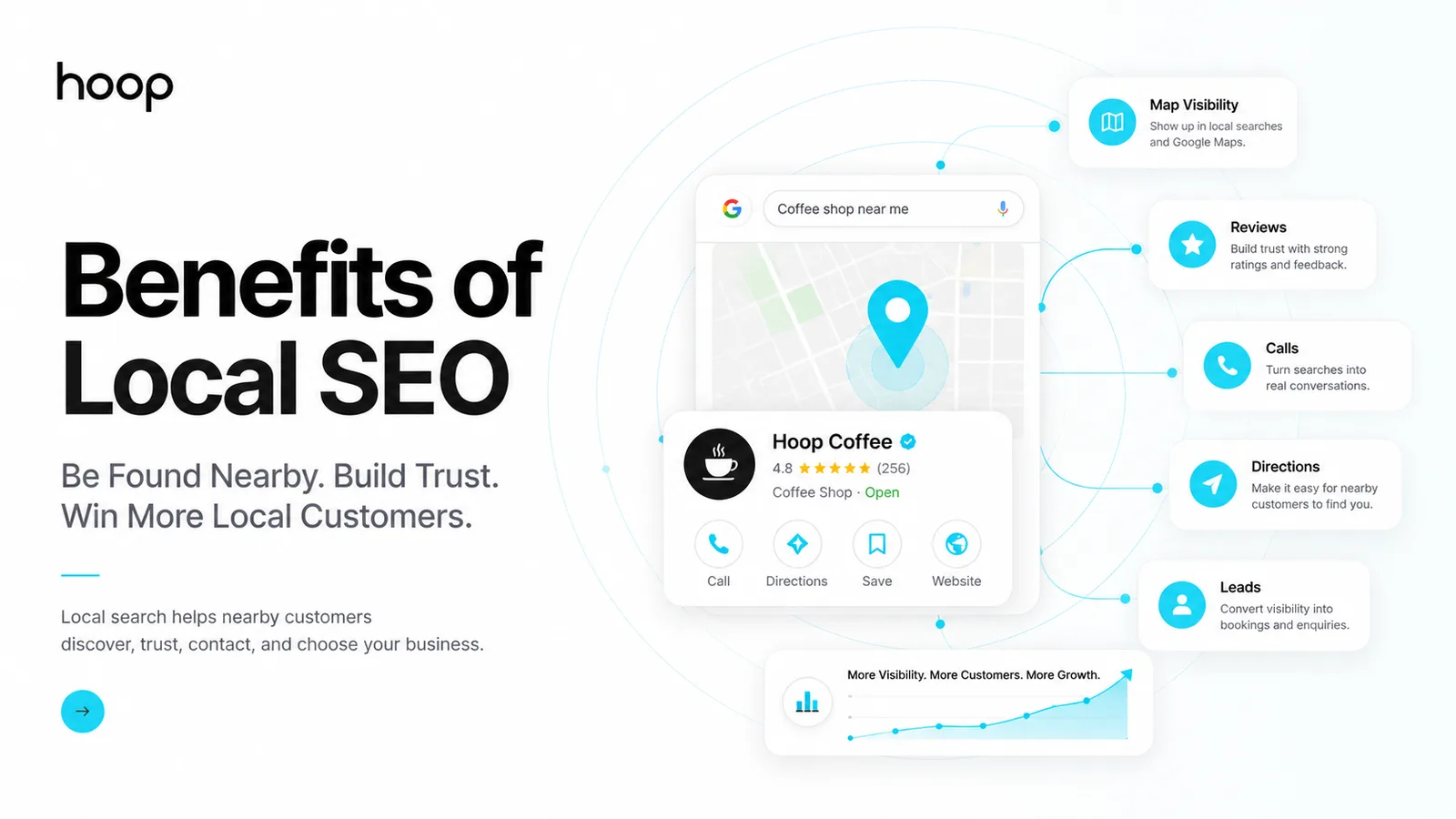
For most roofing companies, local customers generate nearly all business. That makes local SEO one of the highest-return marketing investments available. It helps your company appear when nearby customers search for roofing services. Examples include:
- Roofing contractor near me
- Roof repair in Dallas
- Emergency roof replacement
- Commercial roofing company
- Storm damage roof repair
These searches have extremely high buying intent because customers are actively looking for professional help. Appearing near the top of Google Search and Google Maps significantly increases phone calls, inspection requests, and estimate bookings.
Unlike traditional advertising, local SEO continues generating traffic long after your content is published, making it one of the most cost-effective long-term marketing strategies.
Optimize your Google Business Profile
Your Google Business Profile is often the first impression customers have of your roofing business. A complete and regularly updated profile improves local rankings while encouraging customers to call your business directly.
Include accurate contact information, business hours, service categories, service areas, high-quality project photos, and descriptions of your roofing services. Regularly upload completed roofing projects, answer customer questions, and post business updates to keep your profile active.
Customer reviews also play an important role in local rankings. Encourage satisfied homeowners to leave honest reviews after every completed project, and always respond professionally to both positive and negative feedback.
Create location-specific landing pages
Many roofing companies serve multiple cities or counties. Instead of placing every location on one page, build dedicated landing pages for each service area. For example:
- Roof Repair in Houston
- Roof Replacement in Austin
- Commercial Roofing in San Antonio
- Roofing Contractor in Fort Worth
Each page should contain unique content, local information, customer testimonials, and service details rather than duplicated text. Location pages help search engines understand where your business operates while improving rankings for city-specific searches.
Content Marketing That Attracts Qualified Roofing Leads
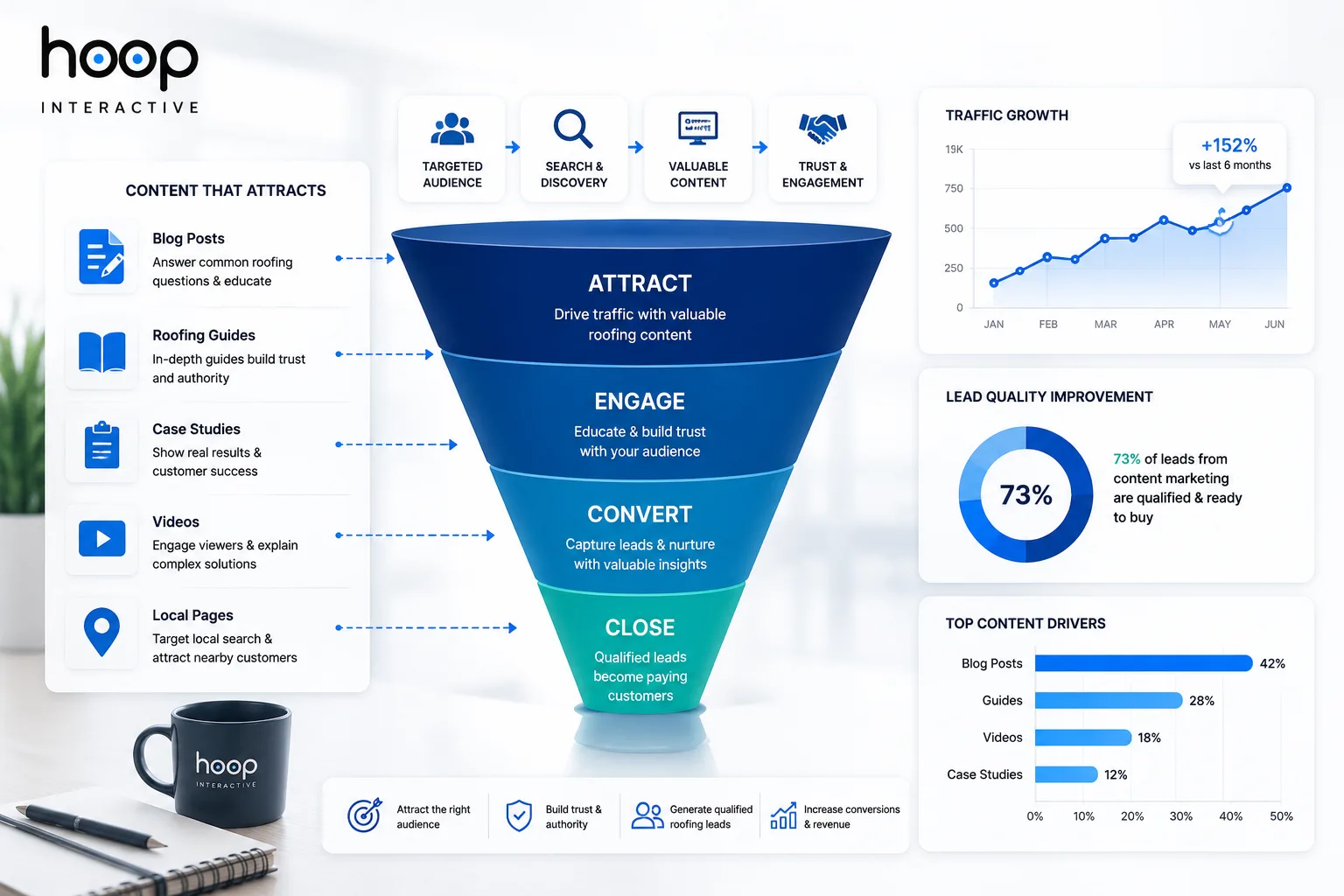
Content marketing is one of the most overlooked parts of a successful roofing marketing plan, yet it consistently delivers long-term results.
When homeowners search for roofing advice, they often have questions before they are ready to hire a contractor. By answering those questions through high-quality content, your business becomes a trusted source of information.
Educational content also expands your keyword coverage, helping your website rank for hundreds of additional search terms. Useful content topics include:
- How to know when your roof needs replacement
- Signs of storm damage
- Roof repair versus roof replacement
- How long does a roof last?
- Choosing the best roofing material
- Seasonal roof maintenance tips
- Understanding insurance claims after storm damage
This type of content attracts visitors at different stages of the buying journey and naturally guides them toward requesting an inspection or estimate.
Keyword Research for Roofing SEO
Every effective roofing marketing plan begins with understanding what customers search for. Instead of targeting only broad keywords such as “roofing company,” focus on search phrases that reflect strong buying intent.
Long-tail keywords often convert better because they match specific customer needs. Examples include:
- Emergency roof repair near me
- Residential roofing contractor
- Best roofing company in my area
- Roof replacement cost
- Hail damage roof inspection
- Commercial roofing services
- Metal roof installation
These searches generally attract homeowners who are actively looking for roofing services rather than simply researching the topic.
Keyword research should also reflect seasonal demand. Storm season, heavy rainfall, snowfall, and extreme weather events often create spikes in roofing-related searches. Publishing relevant content before these periods helps your website capture additional organic traffic while positioning your company as the local roofing expert.
Google Ads or SEO: Which Delivers Better Roofing Leads?
One of the biggest questions roofing business owners ask is whether they should invest in Google Ads or focus on SEO. The answer depends on your goals, budget, and timeline, but the strongest roofing marketing plan uses both.
Google Ads can place your roofing company at the top of search results almost immediately. This is especially valuable during storm season or after severe weather events when homeowners need emergency roof repairs. Paid campaigns can quickly generate calls, inspection requests, and estimate bookings.
SEO works differently. Instead of paying for every click, you invest in building long-term visibility. By optimizing your website, creating helpful content, and improving your authority, you can rank for valuable keywords and generate consistent organic traffic.
Although SEO takes longer to show results, it often produces a lower cost per lead over time. Businesses that combine SEO with Google Ads enjoy both immediate lead generation and sustainable long-term growth.
Instead of choosing one strategy over the other, treat them as complementary marketing channels that support each stage of your business growth.
Create Service Pages That Turn Visitors Into Customers
Many roofing websites make the mistake of listing every service on one page. While this may seem convenient, it limits your ability to rank for specific search terms.
Create dedicated pages for every major service your company offers. Separate pages allow you to target individual keywords while providing detailed information that answers customer questions.
Important service pages include roof replacement, roof repair, commercial roofing, residential roofing, metal roofing, asphalt shingle roofing, flat roofing, storm damage restoration, roof inspections, roof maintenance, and emergency roofing services.
Each page should explain common problems, describe your process, highlight your experience, and clearly explain why customers should choose your company.
Adding before-and-after project photos, financing information, warranties, customer testimonials, and strong calls to action helps increase conversions while building trust.
Use Social Media to Strengthen Your Roofing Brand
Social media helps roofing companies build credibility, showcase their work, and stay connected with local communities.
Homeowners often visit social media profiles before requesting an estimate because they want to see completed projects and learn more about the business behind the website.
Instead of focusing only on promotions, share content that educates and engages your audience. Showcase completed roofing projects, before-and-after transformations, drone footage of installations, customer testimonials, maintenance tips, storm preparation advice, team introductions, and community involvement.
Short videos explaining common roofing issues or demonstrating repair techniques often generate strong engagement because they provide immediate value.
Consistency is more important than posting every day. A regular publishing schedule helps keep your roofing company visible and reinforces your expertise.
Generate Repeat Business With Email Marketing
Many roofing companies focus entirely on attracting new customers while overlooking the value of existing ones.
Email marketing helps you maintain relationships long after a project is complete. Although customers may not need roofing services frequently, staying in touch increases the likelihood that they will return when they need repairs, maintenance, or another replacement.
Send seasonal maintenance reminders, inspection recommendations, warranty updates, severe weather alerts, and helpful roofing tips throughout the year.
You can also use email campaigns to introduce referral programs, announce special promotions, or educate customers about extending the lifespan of their roofs.
Providing valuable information rather than constant sales messages helps build long-term trust and encourages referrals from satisfied homeowners.
Online Reviews Can Make or Break Your Roofing Business
Online reviews have become one of the most influential ranking and conversion factors for roofing companies.
Most homeowners compare ratings before contacting a contractor. A strong review profile gives customers confidence that your business delivers quality workmanship and excellent customer service.
Encourage every satisfied customer to leave a review shortly after completing a project. Making the process simple increases participation and helps build a steady flow of positive feedback.
Responding professionally to all reviews, including negative ones, demonstrates accountability and shows potential customers that you value their experience.
Displaying testimonials on your website further strengthens credibility while improving conversion rates.
How AI Is Changing Roofing Marketing in 2026

Artificial intelligence is transforming digital marketing, and roofing businesses are beginning to benefit from its capabilities.
AI can assist with keyword research, content planning, email personalization, customer support, advertising optimization, and performance analysis.
For example, AI tools can identify trending search topics, recommend high-performing keywords, analyze customer behavior, and optimize advertising campaigns based on real-time data.
Businesses can also use AI to improve lead nurturing by sending personalized follow-up emails and appointment reminders.
Despite these advantages, AI should complement rather than replace human expertise. Homeowners still want to work with experienced roofing professionals they can trust.
The most successful roofing companies combine AI-powered efficiency with authentic customer service, transparent communication, and expert craftsmanship.
Measure What Matters
A successful roofing marketing plan depends on continuous improvement. That means tracking the metrics that directly impact business growth instead of relying on assumptions.
Focus on performance indicators such as qualified leads, website conversions, estimate requests, phone calls, booked inspections, organic traffic, keyword rankings, Google Business Profile interactions, cost per lead, return on advertising spend, and customer acquisition costs.
Review these metrics regularly to identify which marketing channels generate the highest-quality leads and which areas require optimization.
Using tools such as Google Analytics, Google Search Console, call tracking software, and customer relationship management systems provides valuable insights into customer behavior and campaign performance.
Businesses that consistently measure and refine their marketing efforts are better positioned to increase visibility, improve lead quality, and achieve long-term growth.
Roofing Marketing Trends to Watch in 2026
The roofing industry continues to evolve, and successful companies are adapting to changing customer expectations and new technologies.
Artificial intelligence will play an even larger role in campaign optimization, content creation, customer communication, and lead nurturing. Businesses that use AI responsibly can improve efficiency while maintaining a personalized customer experience.
Voice search is becoming increasingly popular as homeowners use smart speakers and mobile assistants to search for local roofing companies. Optimizing your website for conversational search queries can improve visibility for these searches.
Video marketing continues to grow because it helps roofing companies demonstrate expertise and showcase completed projects. Drone footage, project walkthroughs, roof inspection videos, and customer testimonials build trust while increasing engagement.
Online scheduling, text message updates, live chat, and instant estimate requests are also becoming standard expectations. Customers appreciate convenience, and businesses that simplify communication often convert more leads.
Another growing trend is the use of first-party customer data. Building your own email list and maintaining direct relationships with customers helps reduce dependence on third-party advertising platforms while supporting long-term marketing success.
Create a Long-Term Roofing Marketing Plan
A successful roofing marketing plan is not built around a single tactic. Long-term growth comes from combining multiple marketing channels into one unified strategy.
Your website, local SEO, Google Business Profile, Google Ads, content marketing, social media, email marketing, and online reputation management should all work together to support the customer journey.
For example, a homeowner may first discover your company through Google Search, read your reviews, visit your website, browse your completed projects, read a helpful blog post, and finally request a free roof inspection. Every marketing channel contributes to building trust and moving that customer toward a decision.
As search engines evolve and customer behavior changes, your marketing strategy should continue to improve. Regularly reviewing performance data, updating website content, testing new campaigns, and investing in customer relationships will help your roofing company generate consistent leads year after year.
Rather than chasing every new marketing trend, focus on creating a reliable system that consistently attracts qualified prospects, builds credibility, and converts visitors into loyal customers. Hoop Interactive builds that system through its digital marketing services.
“Homeowners rarely hire from the first page they see. They compare ratings, galleries, and warranties first — so give them something to compare.”
Key takeaways
- 01Roofing searches carry unusually high intent because the customer already has damage.
- 02Build one page per service and one per genuine service area, never a single combined list.
- 03Reviews influence both local rankings and the final choice between similar contractors.
- 04Track booked inspections and cost per lead, not impressions or rankings alone.
Written by
Sahar
Content Writer
Frequently Asked
Questions
Everything you need to know before booking a strategy call. Can't find your answer? Contact us directly.
The most effective strategy combines local SEO, Google Business Profile optimization, Google Ads, content marketing, online reviews, email marketing, and a high-converting website.
Improve local visibility, optimize your Google Business Profile, publish helpful content, collect customer reviews, and run targeted Google Ads. A fast, mobile-friendly website with clear calls to action increases estimate requests and calls.
Both offer unique benefits. Google Ads can generate immediate leads, while SEO builds long-term organic traffic and lowers acquisition costs over time. Many successful roofing companies combine both.
It helps your company appear in Google Maps and local search when homeowners search for nearby roofing services. A complete profile with accurate information, project photos, and positive reviews increases trust.
Track qualified leads, phone calls, inspection requests, website conversions, keyword rankings, organic traffic, cost per lead, return on advertising spend, and customer retention.