
How Much Does It Cost to Develop Software?
Software development pricing runs from a narrow prototype to a complex enterprise platform. This guide explains current planning ranges, the factors that change a quote, ongoing ownership costs, pricing models, and how to compare providers without paying for the wrong scope.
Sahar
Content Writer
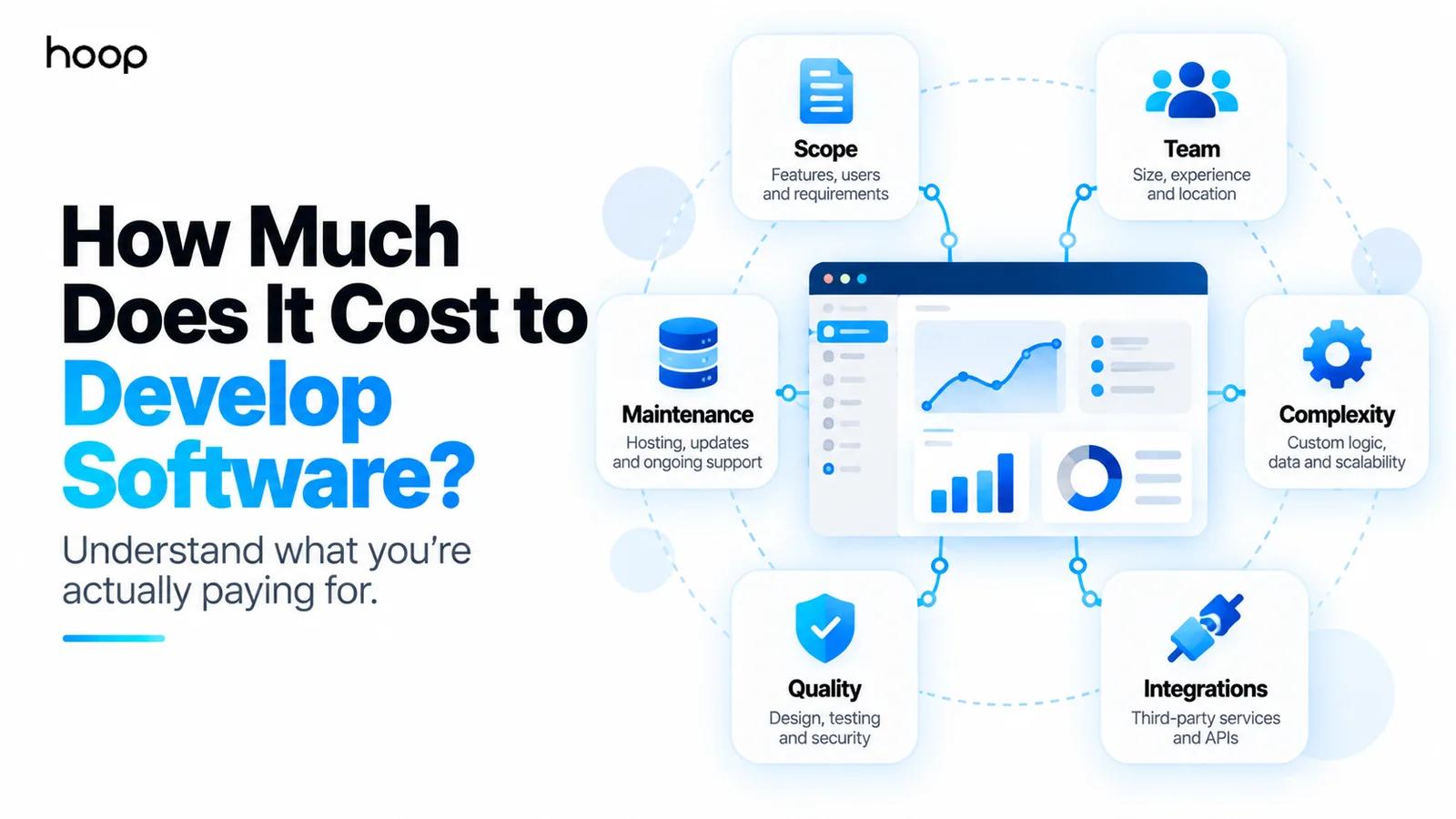
Software development can cost about $5,000 for a narrow prototype. Complex enterprise platforms can exceed $1 million. The final price depends on scope, team, complexity, integrations, quality requirements, and support.
A more useful question asks what the quoted price actually includes. The headline number alone cannot show that. A low estimate may cover only coding. A higher estimate may include discovery, design, architecture, testing, deployment, documentation, and post-launch support.
What Do Software Projects Actually Cost?
Current market data shows a very wide range because software projects vary greatly. Clutch reports an average reviewed software project cost above $130,000. Its listed software firms commonly charge about $25 to $49 per hour. Other current agency pricing guides place focused MVPs below that average and enterprise systems far above it.
Use the ranges below for early budgeting, not as fixed quotes.
| Project Stage | Typical Scope | Planning Range | Typical Timeline |
|---|---|---|---|
| Prototype | Clickable or coded concept with limited logic | $5,000–$30,000 | 2–8 weeks |
| Focused MVP | Core workflows, accounts, basic data, selected integrations | $25,000–$120,000 | 2–5 months |
| Growth Product | More roles, automation, integrations, analytics, stronger infrastructure | $75,000–$250,000 | 4–9 months |
| Enterprise Platform | Complex workflows, compliance, migrations, integrations, high-scale infrastructure | $250,000–$1,000,000+ | 9–18+ months |
The ranges overlap because team location and project structure change the final price. A focused MVP from a nearshore team can cost less than the same scope from a large onshore agency.
Why Can Software Development Quotes Differ by 10x?
Two quotes can differ by 10x because providers may price different work. Short feature lists rarely capture full engineering effort.
One provider may price the visible screens and core code. Another provider may include product discovery, user experience design, security, automated testing, cloud setup, and maintenance planning.
Team composition also changes the quote. A freelancer may cover design, development, and deployment alone. A full product team may include designers, frontend developers, backend developers, Quality Assurance engineers, DevOps engineers, and project managers.
Location changes labor rates too. Current Clutch pricing data shows large differences between countries and regions. That difference can move the same project into a very different budget range.
What Drives Software Development Cost?
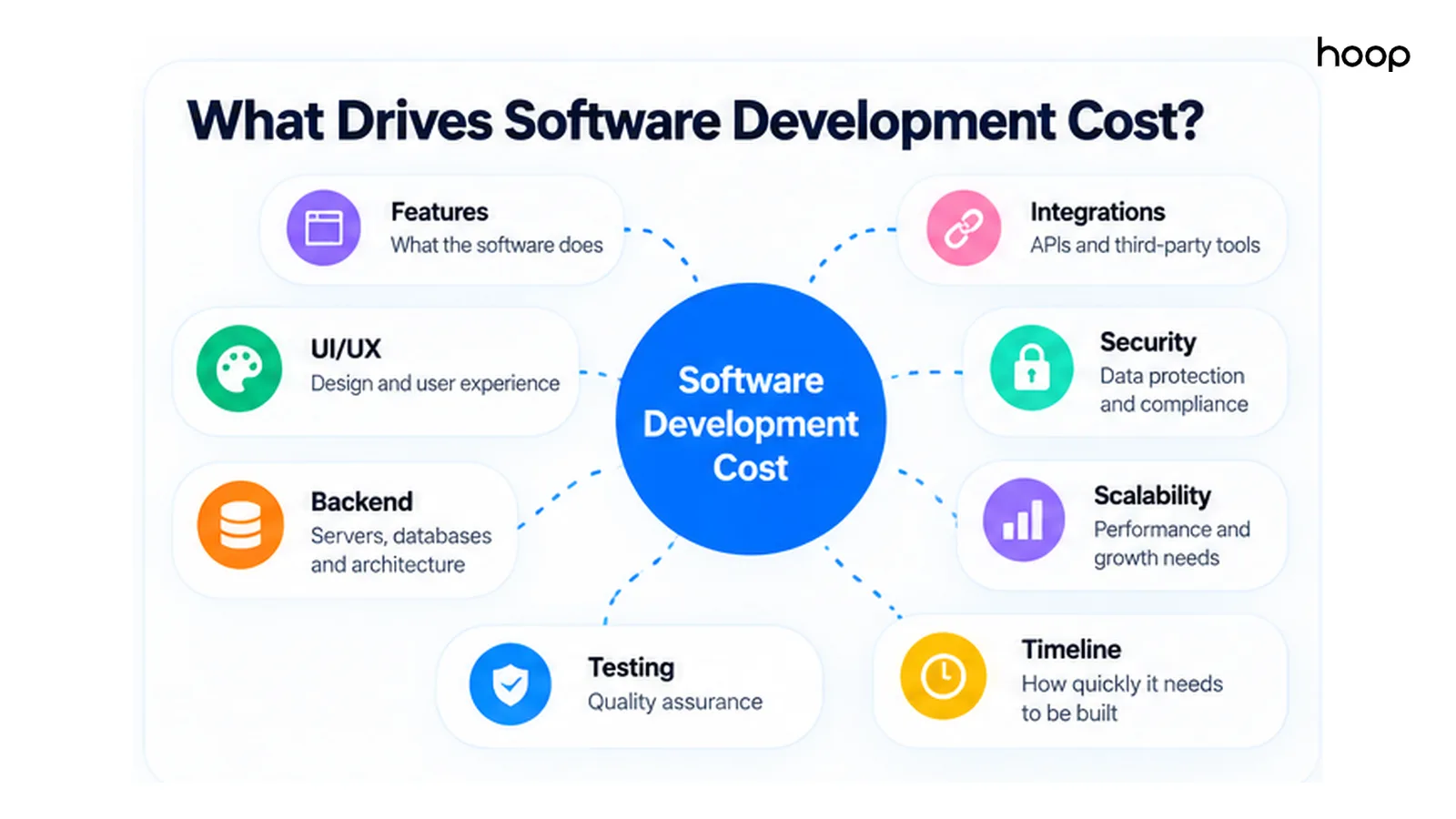
Scope and complexity usually influence software development cost more than technology. Extra requirements add design, development, testing, and maintenance work.
Features and business logic
Feature count matters, but feature complexity matters more. A “user account” can include registration, login, password resets, permissions, verification, sessions, and account deletion.
A simple dashboard can show stored data. A complex dashboard may combine real-time data, filters, permissions, exports, alerts, and custom calculations.
UI and UX design
Custom interface work increases cost because teams must research users, create flows, design screens, and test interactions. Strong design can also reduce development rework.
If your product needs research, prototypes, accessibility planning, and a design system, professional UI/UX design services can become a meaningful budget line.
Backend architecture and data
Backend work handles business rules, databases, authentication, APIs, and background processes. Complex data relationships require more architecture and testing.
Large migrations can add more work. Teams may need to clean data, map old fields, write migration scripts, and verify every transfer.
Integrations
Third-party services can reduce development time, but integrations still require engineering. Payment gateways, Customer Relationship Management systems, accounting software, maps, messaging tools, and identity providers all add work.
Legacy systems usually cost more to connect. Older systems may lack modern APIs, consistent data formats, or clear documentation.
Security, compliance, and scalability
Security requirements increase engineering effort. Role-based access, encryption, audit logs, secure storage, and compliance controls need careful implementation and testing.
Scalability also changes architecture. Software for 500 users does not require the same infrastructure as software serving millions of requests.
Testing and quality assurance
Testing protects the product from expensive failures. Teams may use unit tests, integration tests, end-to-end tests, manual testing, security checks, and performance testing.
Skipping testing can lower the first invoice. The same decision can increase rework and support costs later.
Timeline and team size
A shorter deadline can increase cost. Teams may need more people working in parallel, stronger project coordination, and faster review cycles.
Adding developers does not reduce time in a perfect ratio. Communication, dependencies, code reviews, and integration work grow with the team.
How Does Cost Change by Product Stage?
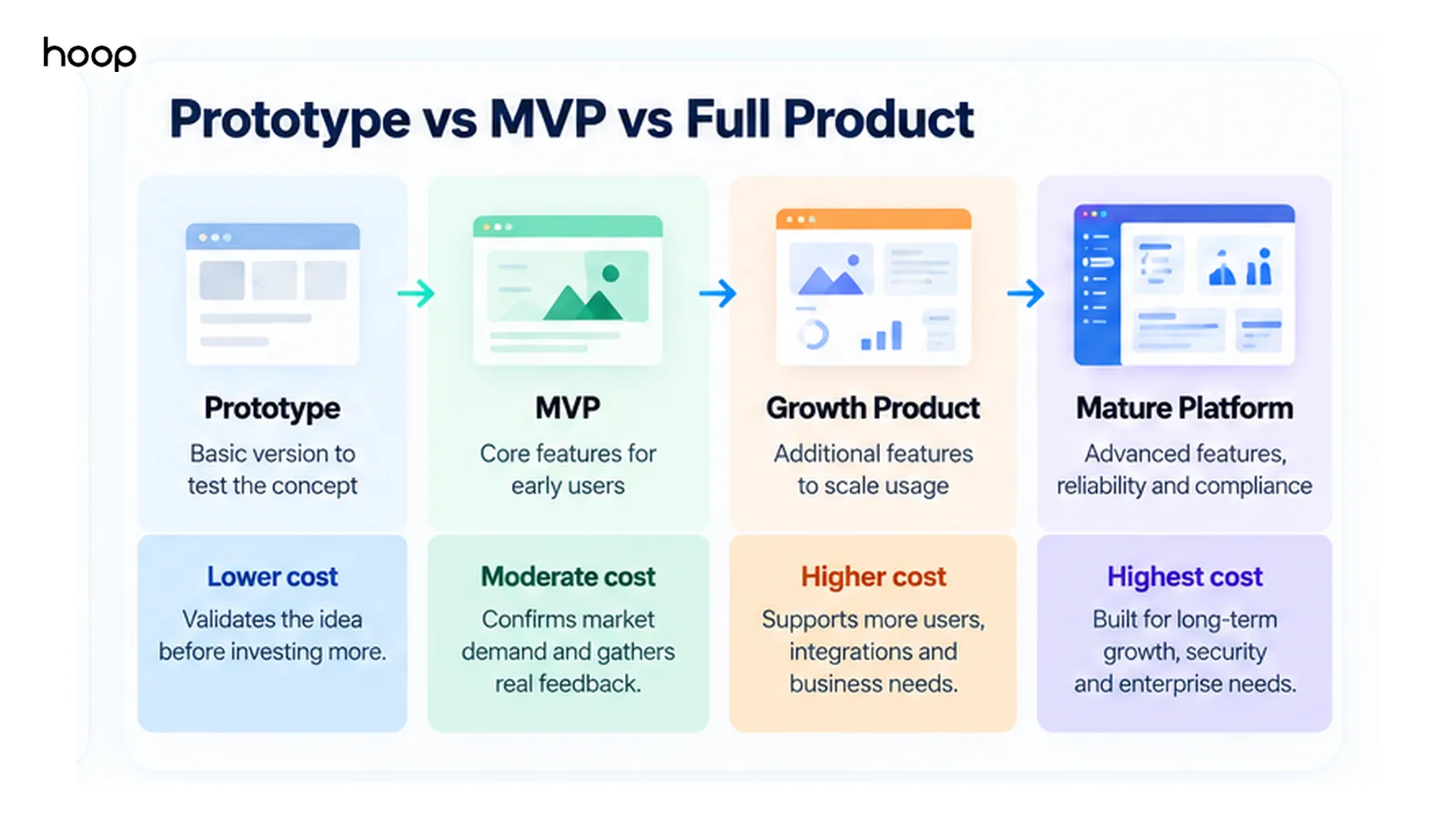
The product stage often gives a better cost estimate than the idea alone. Each product stage serves a different goal.
Prototype: validate the concept
A prototype tests an idea before the business funds a complete product. The prototype may use clickable screens or limited working code.
A prototype usually avoids advanced security, large integrations, and heavy infrastructure. The goal is learning, not full production readiness.
MVP: validate demand
A Minimum Viable Product (MVP) gives real users the smallest useful version of the product. The MVP should support the core workflow reliably.
An MVP may include accounts, a database, basic administration, selected integrations, and production deployment. Teams should exclude features that do not test the main business assumption. Our MVP development guide covers where to draw that line.
Growth product: scale real usage
A growth product adds features after the business has evidence of demand. Common additions include advanced permissions, automation, analytics, integrations, and stronger infrastructure.
The product may also need billing, onboarding, monitoring, support tools, and better operational controls.
Mature platform: operate reliably at scale
A mature platform supports larger teams, more users, and more business risk. Security, performance, compliance, disaster recovery, and observability become more important.
The platform may also support several departments, locations, or customer types. Complex software at this stage can require continuous development rather than a one-time project.
What Does a Software Development Quote Usually Include?
A strong quote should show the work before, during, and after coding. Coding is only one part of product delivery.
Discovery defines users, goals, constraints, and requirements. Architecture defines how data, services, and components will work together.
Design covers flows, wireframes, interfaces, and prototypes. Development covers frontend code, backend code, databases, APIs, and integrations.
Quality work covers testing, bug fixing, performance checks, and security reviews. Deployment covers environments, cloud setup, releases, monitoring, and backups.
Documentation supports future maintenance. Project management coordinates scope, priorities, communication, and delivery.
A provider offering custom software development should make these inclusions and exclusions clear before development starts.
How Do Pricing Models Change Cost?
The pricing model changes who carries the risk when scope changes. The model should match how predictable the project is.
A fixed-price model works best when requirements are stable and specific. The provider prices an agreed scope before work starts.
Time and materials works better when requirements will change. The client pays for actual team time as the product evolves.
A dedicated-team model suits ongoing product development. The client pays for a stable team that works across changing priorities.
None of these models automatically costs less. A clear scope can make fixed pricing efficient. High uncertainty often makes flexible pricing more realistic.
How Does Team Location Affect the Price?
Team location can change the hourly rate without changing the feature list. Current market data shows major regional differences.
The current Clutch pricing guide lists many software firms around $25 to $49 per hour. It lists higher common ranges in several onshore markets.
Rate alone does not determine value. Seniority, communication, product judgment, code quality, and rework also affect the final bill.
A lower hourly rate can still become expensive if the project takes longer. A higher rate can save money when experienced engineers reduce rework.
What Does Software Cost After Launch?
Launch does not end the software budget. Every production product creates operating and maintenance costs.
Hosting and cloud services create recurring expenses. Database usage, storage, bandwidth, monitoring, email, analytics, and third-party APIs can also carry monthly fees.
Maintenance covers bug fixes, dependency updates, security work, browser changes, operating system changes, and infrastructure updates.
The product will also change. Customers request features, employees discover new workflows, and business rules evolve.
Many teams budget maintenance as an ongoing percentage of the original build cost. The exact amount depends on change frequency and product complexity.
Total Cost of Ownership (TCO) should include the build, infrastructure, maintenance, support, licenses, and future development.
What Costs Are Often Missing From a Quote?
The initial build price may exclude costs that appear before or after launch. Ask about these items before comparing providers.
Third-party subscriptions can add recurring costs. Payment platforms, email services, messaging tools, maps, analytics, identity services, and AI APIs often charge separately.
Data migration can also create a separate workstream. Teams may need to clean old records, map fields, resolve duplicates, and verify imported data.
Training and rollout matter for internal software. Employees may need guides, onboarding sessions, permissions setup, and support during the transition.
App stores can create extra work for mobile products. Release builds, store assets, privacy information, certificates, and review requirements need time.
Compliance can add specialist work too. Healthcare, finance, government, and enterprise buyers may require audits, evidence, policies, or security reviews.
Content can sit outside development scope. Product copy, help documentation, images, videos, translations, and legal text may need separate owners.
A useful estimate should identify these costs before the contract starts. Clear exclusions protect both the client and the development team.
Does Faster Software Development Cost More?
A faster launch often costs more because teams work in parallel. The project may need additional engineers, testers, or reviewers.
Parallel work also increases coordination. Teams must manage dependencies, merge changes, review code, and test combined features more frequently.
Some deadlines cannot be compressed safely. Security reviews, user testing, app-store review, data migration, and third-party approvals can impose fixed waiting periods.
A phased launch can reduce pressure. Release the core workflow first, then add lower-priority features after real users start providing evidence.
Should You Build Custom Software or Buy Existing Software?
Build custom software when existing products cannot deliver the required business value. Do not build only for extra flexibility.
Buying an existing tool can cost less when the business process is standard. Accounting, email, project management, and basic customer support often have mature products available.
Custom development makes more sense when the business needs proprietary workflows, unique integrations, special data control, or full product ownership.
The decision should compare long-term costs. Subscription fees can become expensive at scale, while custom software creates higher upfront investment and ongoing ownership duties.
How Can a Nontechnical Founder Compare Quotes?
Compare scope and assumptions before comparing the final number. A cheaper quote means little when major work sits outside it.
Ask every provider the same questions:
- What exact features and user roles does the quote include?
- Which design, testing, deployment, and project management work is included?
- Which integrations, licenses, hosting fees, and third-party costs are excluded?
- Who owns the source code, documentation, and intellectual property?
- How does the provider price changes after the scope is approved?
- What support is included after launch?
- What assumptions could change the estimate later?
The answers reveal whether the providers priced comparable work. The answers also show which risks remain with your business.
How Can You Reduce Cost Without Cutting Quality?
Reduce scope before reducing engineering quality. A smaller well-built product usually creates more value than a larger fragile product.
Start with the smallest version that proves the business case. Delay secondary features until real users show that the features matter.
Use proven services for common needs. Payment processing, email delivery, authentication, and analytics rarely need custom reinvention.
Define requirements before development starts. Clear acceptance criteria reduce misunderstandings and expensive rework.
Test risky assumptions early. Prototype complex integrations, unusual workflows, or performance requirements before funding the full build.
Keep decision-making fast. Delayed approvals and unclear ownership can increase project time without improving the product.
When Is the Cheapest Quote More Expensive?
The cheapest quote becomes expensive when the product needs major rework after launch. Poor architecture can slow every future feature.
Missing tests increase regression risk. Weak documentation makes maintenance harder. Poor security can force expensive emergency work.
A low-cost team can still deliver strong software. Price alone does not predict quality.
Judge the quote against scope, engineering practices, ownership, communication, and long-term maintainability. The goal is the lowest sensible total cost, not the smallest first invoice.
Plan the Budget Around the Product You Actually Need
The best software estimate starts with a clear problem, a defined first release, and transparent assumptions. Compare quotes by scope, not by the final number alone.
Hoop Interactive can help you scope, design, build, test, and launch production-ready software through its software development services. Start with the smallest product that proves the business case, then expand from real evidence.
“The goal is the lowest sensible total cost, not the smallest first invoice.”
Key takeaways
- 01A 10x gap between quotes usually means the two providers priced different work.
- 02Complexity drives cost more than feature count — one “user account” hides seven jobs.
- 03Hosting, migration, training, app-store work, and compliance often sit outside the build price.
- 04Cut scope, never engineering quality; rework costs more than the discount saved.
Written by
Sahar
Content Writer
Frequently Asked
Questions
Everything you need to know before booking a strategy call. Can't find your answer? Contact us directly.
A focused custom build can start around $10,000–$30,000. Complex platforms can exceed $250,000 or $1 million. Scope and team model create most variation.
A professionally built MVP often falls around $25,000–$120,000. Focused nearshore builds can cost less. Complex onshore builds can cost more.
Software development combines design, engineering, testing, security, infrastructure, and project coordination. Complex features and integrations increase the required team time.
No, not at the start. SaaS usually costs less upfront. Custom software can become attractive when ownership or unique workflows create enough value.
Budget for recurring maintenance after launch. The amount depends on infrastructure, complexity, support needs, security work, and feature velocity.
Keep reading
All articles →
Custom Software Development: Step-by-Step Guide for Non-Tech Founders
Jul 15, 2026 · 11 min read
Custom Software Development in 2025: A Complete Guide for Modern Businesses
Aug 4, 2026 · 8 min read