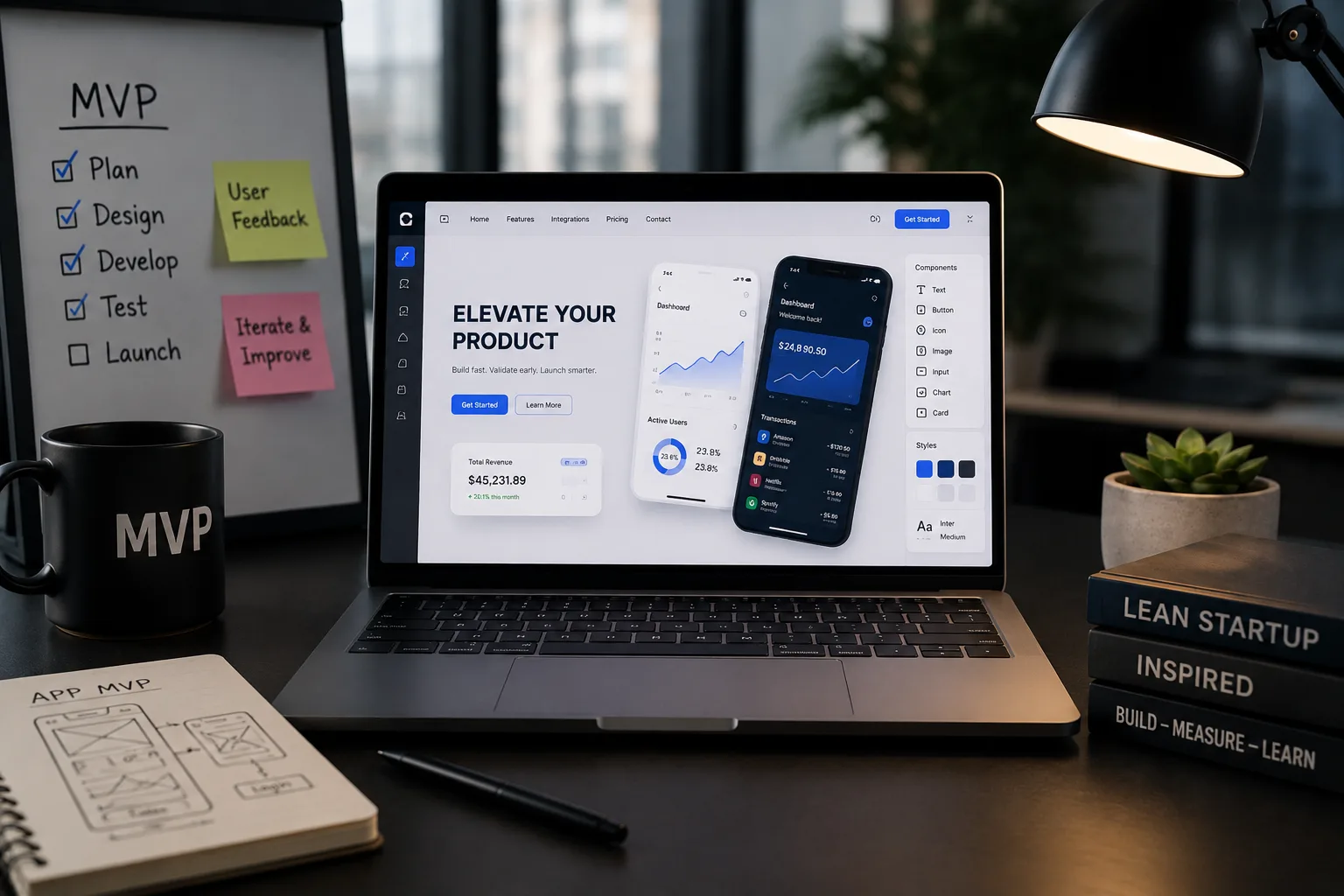
MVP Development Guide: How to Launch Your Startup Idea
An MVP lets you launch your startup idea with the smallest product that delivers real value — validating with real users while keeping development cost and risk under control.
Sahar
Content Writer
Starting a business is exciting, but turning an idea into a successful product requires careful planning. This MVP Development Guide: How to Launch Your Startup Idea explains how to validate your idea, build a Minimum Viable Product (MVP), attract early users, and launch with confidence while keeping development costs and risks under control.
Need this done right?
Hoop builds the strategy, design and development behind sites like this one — talk to us about yours.
What Is an MVP?
A Minimum Viable Product (MVP) is the simplest version of a product that solves a real customer problem using only the essential features. Instead of building a fully featured application from day one, startups launch an MVP to test their idea with real users before investing in further development.This approach allows founders to gather customer feedback, improve the product based on real-world insights, and reduce the risk of building something the market does not need. Many successful companies started with simple MVPs before growing into global businesses. Their first versions focused on delivering one clear solution rather than trying to include every possible feature. For startups with limited budgets and resources, MVP development provides a practical way to enter the market quickly while maintaining flexibility for future improvements.
Why Every Startup Should Build an MVP
Launching a complete software product without validating your idea can be expensive and risky. Many startups fail because they spend months developing features that customers never use. An MVP helps founders test assumptions before making a significant investment. Instead of relying on guesses, businesses collect real data from users and make informed decisions about future development. Building an MVP offers several important advantages.
- Reduces development costs
- Speeds up product launch
- Validates business ideas
- Attracts early adopters
- Collects valuable customer feedback
- Supports future scalability
- Helps secure investor confidence
An MVP is not about creating an incomplete product. It is about delivering the right solution at the right time while learning directly from your target audience.
Step 1: Validate Your Startup Idea
Every successful product begins by solving a genuine problem. Before investing in software product development, take time to understand whether your idea addresses a real customer need.Start by identifying your ideal users and understanding the challenges they face. Speak with potential customers, conduct surveys, and analyse competitor products to discover gaps in the market. Ask yourself simple but important questions.
- What problem am I solving?
- Who will benefit from this solution?
- Why would customers choose my product?
- How do people solve this problem today?
- What makes my idea different?
The answers will help you refine your product strategy and create a stronger value proposition. Market research is equally important. Studying existing products allows you to identify opportunities where your startup can offer something better, faster, or more convenient.Validation saves time, reduces unnecessary spending, and gives founders greater confidence before moving into development.
Step 2: Define Your Product Vision
Once your idea has been validated, the next step is creating a clear product vision. Many founders know what they want to build but struggle to explain the long-term purpose of their product. A clear vision keeps everyone aligned throughout the MVP development process. Your product vision should explain:
- The business problem being solved
- Your target audience
- The value your product delivers
- Long-term business objectives
- Future growth opportunities
When developers understand your vision, they can recommend better technical solutions and help prioritise features that create the greatest value.Remember, every feature should support your business goals rather than simply making the application more complex.
Step 3: Understand Your Target Audience
Your MVP should be built for real users, not assumptions.Understanding your audience allows you to design a product that meets customer expectations from the beginning.Start by creating simple user personas that describe your ideal customers. Consider their age, profession, goals, challenges, buying behaviour, and preferred digital platforms.You should also map the customer journey to understand how users will interact with your product.This process helps identify potential usability issues before development begins and ensures the final application provides a smooth user experience.Strong customer research also improves feature prioritisation because you understand exactly which problems need immediate solutions.
Step 4: Prioritise Features Using the MoSCoW Method
One of the biggest mistakes startup founders make is trying to build every feature at once.Adding unnecessary functionality increases costs, extends development timelines, and delays market entry.Instead, focus on features that deliver the highest value to users.The MoSCoW prioritisation method is a simple framework that helps founders organise features effectively.
Must-Have Features
These are the core functions your MVP cannot operate without. They solve the main customer problem and form the foundation of your product.
Should-Have Features
These features improve the user experience but are not essential for the first release. They can be introduced after gathering customer feedback.
Could-Have Features
These are additional improvements that provide extra value but have little impact on the initial launch.
Won't-Have Features
These ideas are intentionally postponed for future updates, helping the development team stay focused on the project's primary objectives. Prioritising features in this way keeps the project manageable while allowing startups to launch much faster.
Step 5: Build a Product Roadmap
After deciding which features belong in your MVP, create a clear product roadmap. A roadmap outlines the development journey from planning to launch and beyond. Rather than listing technical tasks, it focuses on business priorities and major milestones. A typical product roadmap includes:
- Product discovery
- UI and UX design
- Software development
- Quality assurance
- MVP launch
- Customer feedback
- Product improvements
- Future feature releases
A roadmap provides direction for everyone involved in the project, ensuring the team remains focused on delivering meaningful results instead of constantly changing priorities. It also improves communication between founders, developers, designers, and stakeholders, reducing confusion throughout the development process.
Step 6: Choose the Right MVP Development Partner
Selecting the right MVP development company is one of the most important decisions for any startup.The right partner does far more than write code. They help validate your idea, recommend suitable technologies, identify potential risks, and create a scalable software solution that supports future business growth.Look for a development team with experience in custom software development, Agile methodologies, product strategy, and startup projects.Clear communication is equally important. A reliable partner explains technical concepts in simple language, keeps you informed throughout the project, and works collaboratively to achieve your business objectives.Choosing an experienced development company from the beginning often saves both time and money while increasing the likelihood of launching a successful product.
Step 7: Design a User-Friendly MVP
A successful MVP is not only functional but also easy to use. Even if your product solves a real problem, users may abandon it if the interface is confusing or difficult to navigate.This is why UI / UX design plays an important role in the MVP development process. Before development begins, designers create wireframes and interactive prototypes. These allow founders to visualise the product and make improvements before any coding starts. Good design focuses on:
- Simple navigation
- Clean layouts
- Fast user journeys
- Mobile responsiveness
- Consistent branding
- Easy accessibility
Remember, the goal is to help users complete tasks with as little effort as possible. A positive user experience encourages engagement, builds trust, and increases customer retention.
Step 8: Develop Your Minimum Viable Product
Once the planning and design stages are complete, the development team begins building the MVP.This stage involves turning your ideas into a working digital product using modern technologies such as React, Next.js, Flutter, React Native, Node.js, Python, and cloud platforms like Amazon Web Services (AWS), Microsoft Azure, or Google Cloud.Development usually happens in small phases called Agile sprints. Instead of waiting months to see progress, founders receive regular updates and can review completed features throughout the project. This approach offers several advantages:
- Faster development cycles
- Continuous feedback
- Easier changes
- Better collaboration
- Reduced project risks
Working in smaller stages helps ensure the final product stays aligned with your business goals while maintaining high quality.
Step 9: Test Before You Launch
Testing is one of the most important stages of software product development. Releasing an MVP without proper testing can lead to poor user experiences, negative reviews, and unnecessary development costs.Quality Assurance engineers examine every feature to ensure it performs correctly across different devices, browsers, and operating systems. Testing typically focuses on:
- Functionality
- Performance
- Security
- Usability
- Compatibility
- Bug detection
Founders should also involve a small group of beta users before the official launch. Their feedback often highlights usability issues that internal teams may overlook. Fixing problems before launch creates a stronger first impression and increases customer confidence.
Step 10: Launch Your Startup Idea
After completing development and testing, your product is ready for launch.Launching an MVP is not the end of the journey—it is the beginning of learning from real users.A successful product launch requires careful planning. Besides releasing the application, businesses should prepare marketing campaigns, customer support, analytics tools, and onboarding processes. During the first few weeks, monitor how users interact with the product. Pay close attention to:
- Customer feedback
- User behaviour
- Feature usage
- Retention rates
- Technical performance
These insights help identify areas for improvement and guide future product updates.
MVP vs Prototype vs Proof of Concept
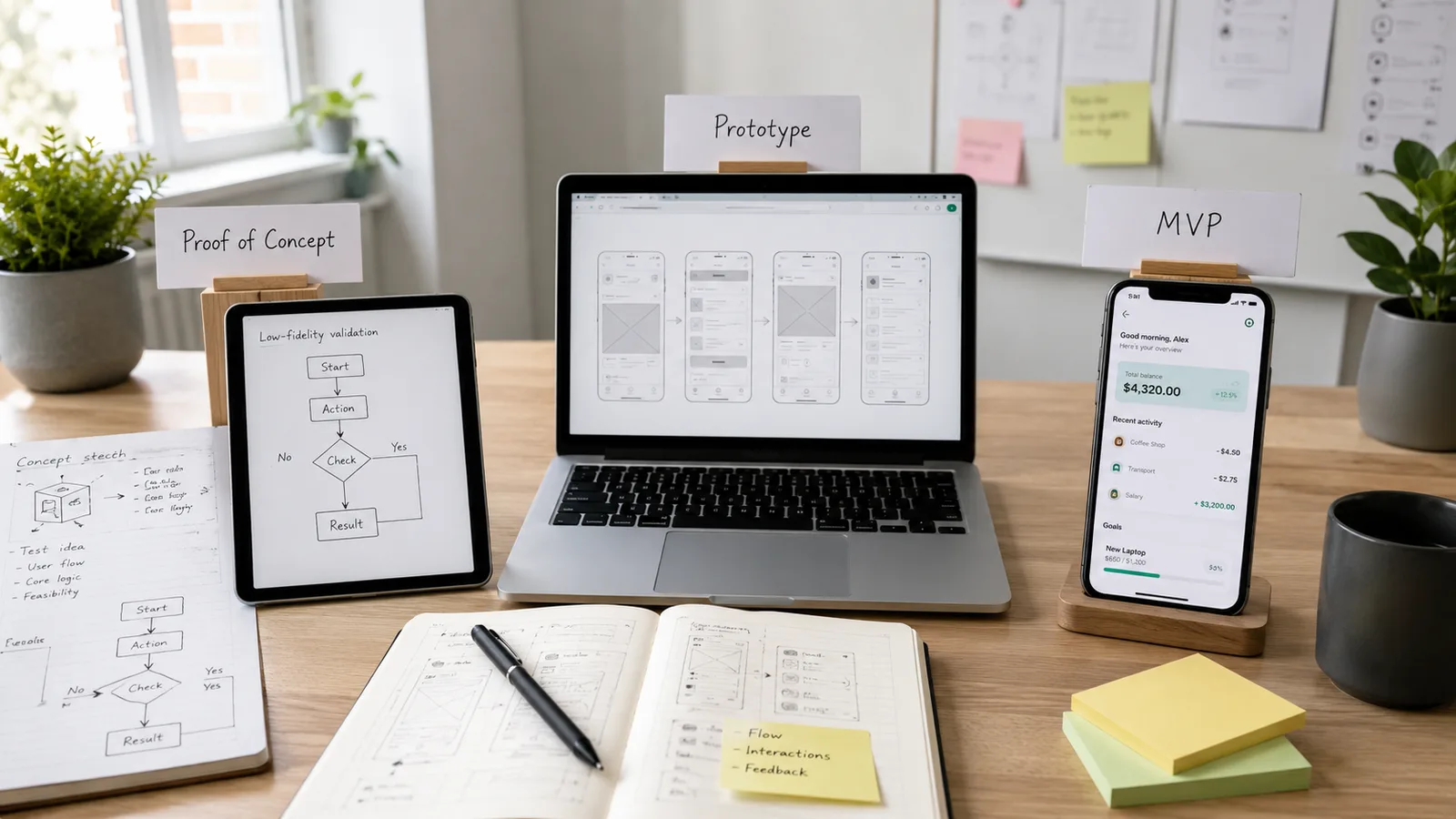
Many first-time founders confuse these three terms. Although they are related, they serve different purposes during product development.
Prototype
A prototype is an early visual representation of your product. It demonstrates how the application will look and function before development begins. Designers use prototypes to test user flows, gather feedback, and improve the user experience.
Proof of Concept (PoC)
A Proof of Concept is created to determine whether a technical idea is feasible. Instead of focusing on users, it answers technical questions such as whether a specific technology, integration, or architecture will work.
Minimum Viable Product (MVP)
An MVP is a working product that real customers can use. Unlike a prototype or PoC, an MVP is released to the market, allowing businesses to validate their idea, collect customer feedback, and move closer to achieving product-market fit. Understanding these differences helps founders choose the right approach at each stage of their startup journey.
Common MVP Development Mistakes to Avoid
Even great startup ideas can fail if common mistakes are ignored. One of the biggest mistakes is trying to build a perfect product before launch. Waiting until every feature is complete often delays market entry and increases development costs. Another common issue is ignoring customer feedback. Your early users provide valuable insights that should guide future product improvements. Poor feature prioritisation can also create unnecessary complexity. Focus only on solving the primary customer problem during the first release. Some startups underestimate the importance of testing. Releasing software with bugs or performance issues damages customer trust and affects long-term growth. Finally, choosing a development partner based only on price can create more problems later. Experience, communication, technical expertise, and product strategy are equally important when selecting an MVP development company.
How Artificial Intelligence Is Accelerating MVP Development
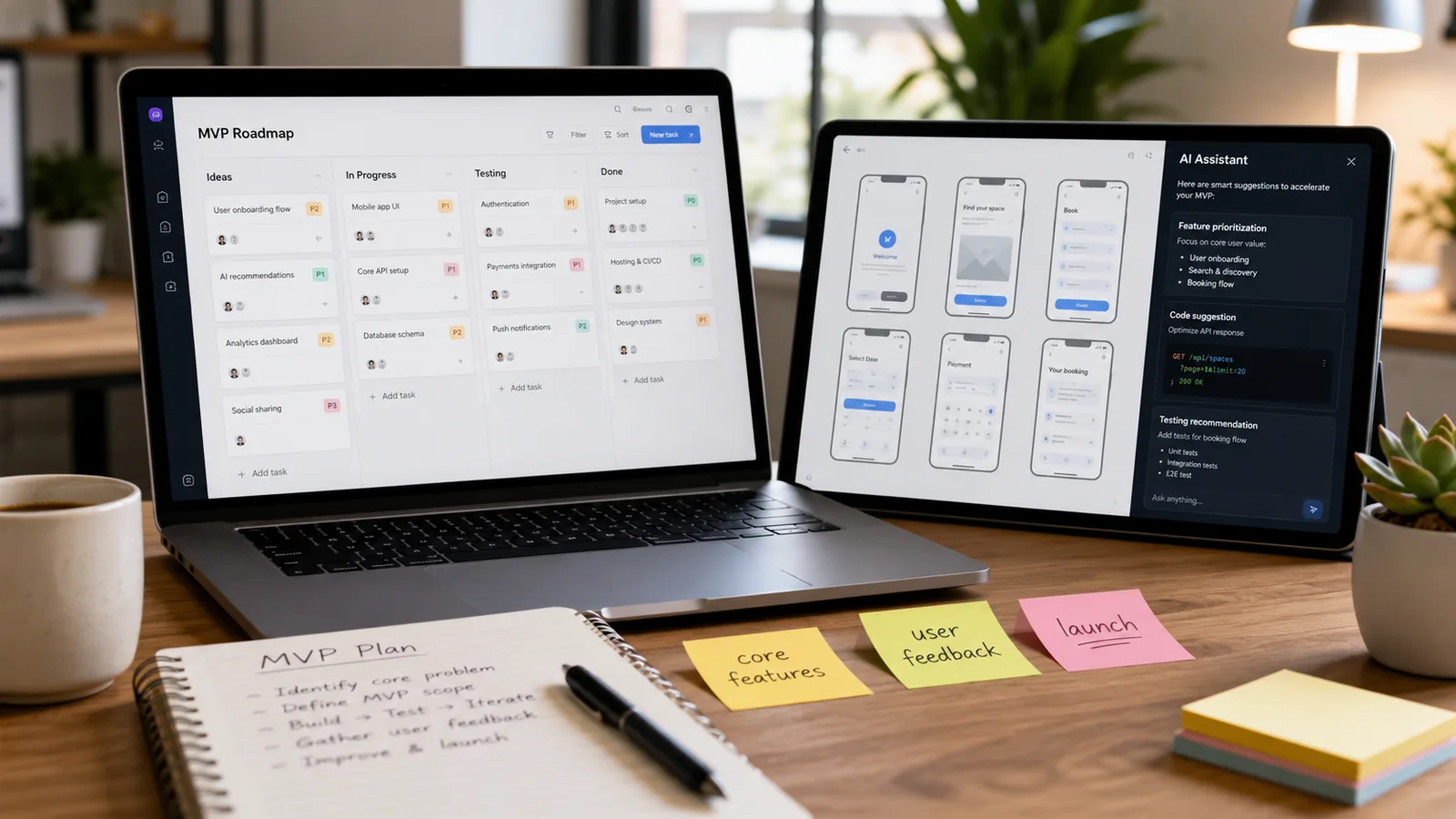
Artificial Intelligence is transforming the way startups build digital products in 2026. Development teams now use AI to automate repetitive tasks, improve software quality, generate code suggestions, and analyse customer behaviour more efficiently. Businesses are also integrating AI-powered features directly into their MVPs, including:
- Intelligent chatbots
- Personalised recommendations
- Predictive analytics
- Smart search
- Automated customer support
However, founders should avoid adding Artificial Intelligence simply because it is popular. Every AI feature should solve a genuine business problem and improve the overall user experience. Using AI strategically allows startups to launch smarter products while maintaining development efficiency and long-term scalability.
Measuring Your MVP's Success
Launching your Minimum Viable Product (MVP) is only the beginning. The real value comes from understanding how users interact with your product and using that information to make better business decisions. Instead of assuming your MVP is successful because it is live, measure its performance using meaningful data. Some of the most important KPIs include:
- User registrations
- Customer retention rate
- Daily and monthly active users
- Feature adoption
- Customer feedback
- Conversion rate
- Revenue generated
- Customer satisfaction
These metrics help you understand whether your product is solving the intended problem and moving closer to achieving product-market fit. Regularly reviewing performance also helps you decide which features should be improved, removed, or introduced in future updates.
When Should You Scale Beyond an MVP?
Every startup reaches a point where the MVP has successfully validated the business idea. Once you have consistent user feedback, growing demand, and evidence that customers find value in your product, it may be time to expand. Scaling should be driven by data rather than assumptions. If users are actively requesting new features, your customer base is growing, and your business model is proving sustainable, you can begin transforming your MVP into a full-scale product. Common signs that you're ready to scale include:
- Consistent customer growth
- Positive customer feedback
- Stable product performance
- Clear revenue opportunities
- Strong product-market fit
Scaling may involve adding advanced features, improving cloud infrastructure, enhancing security, expanding integrations, or supporting additional platforms such as web and mobile applications. Taking a gradual approach allows your business to grow while maintaining software quality and customer satisfaction.
Why the Right Development Partner Matters
Choosing the right partner is just as important as choosing the right product idea. An experienced development team helps you avoid common startup mistakes, improve product quality, and build software that supports long-term growth. A trusted MVP development company should offer more than technical expertise. They should understand your business goals, provide strategic recommendations, communicate clearly, and guide you throughout the entire MVP development process. When evaluating a development partner, consider:
- Experience with startup products
- Technical expertise
- Agile development practices
- Transparent communication
- Post-launch support
- Scalable software solutions
Working with the right team reduces development risks and allows founders to focus on growing their business rather than managing technical challenges.
Conclusion
Building a startup product doesn't require launching a feature-packed application on day one. By following this MVP Development Guide: How to Launch Your Startup Idea, you can validate your concept, reduce development risks, and bring your vision to market faster with confidence. Focusing on customer needs, prioritising essential features, collecting real feedback, and continuously improving your product creates a strong foundation for long-term success.
Whether you're creating a SaaS platform, web application, mobile application, or another digital product, an MVP gives you the opportunity to learn, adapt, and grow before making larger investments. With the right product strategy, Agile development approach, and experienced technical guidance, your startup can build scalable software that delivers real value.
If you're ready to transform your idea into a successful digital product, Hoop Interactive is here to help. Our team specialises in MVP development, custom software development, product strategy, and scalable digital solutions tailored to startups and growing businesses.
Contact Hoop Interactive today and take the first step towards launching your startup idea with confidence.
“An MVP is the simplest version of your software that delivers value while solving the core problem.”
Key takeaways
- 01Validate the idea before building the product
- 02Build the smallest version that delivers core value
- 03Launch to real users and learn from behavior, not assumptions
- 04Control cost and risk by resisting feature creep
Written by
Sahar
Content Writer
Frequently Asked
Questions
Everything you need to know before booking a strategy call. Can't find your answer? Contact us directly.
A Minimum Viable Product (MVP) is the simplest version of a product that includes only the essential features needed to solve a specific customer problem. It allows startups to validate their ideas, gather feedback, and improve the product before investing in full-scale development.
MVP development helps startups reduce costs, minimise risks, launch products faster, and collect valuable customer insights. It enables founders to make informed decisions based on real user behaviour instead of assumptions.
The timeline depends on the project's complexity, required features, design, and development approach. A well-planned MVP can usually be completed much faster than a fully featured software product because it focuses only on core functionality.
A prototype is a visual model used to test ideas and user experience before development begins. An MVP is a functional product that real users can access, allowing businesses to validate demand and collect practical feedback.
Success depends on achieving your business goals. Positive customer feedback, increasing user engagement, customer retention, product-market fit, and sustainable growth are all indicators that your MVP is moving in the right direction.
Yes. An MVP is designed to evolve. As your startup grows and customer feedback increases, you can add new features, improve performance, enhance security, and scale the software to meet changing business requirements.
Keep reading
All articles →
Custom Software Development: Step-by-Step Guide for Non-Tech Founders
Jul 15, 2026 · 11 min read
How Much Does It Cost to Develop Software?
Sep 18, 2026 · 9 min read