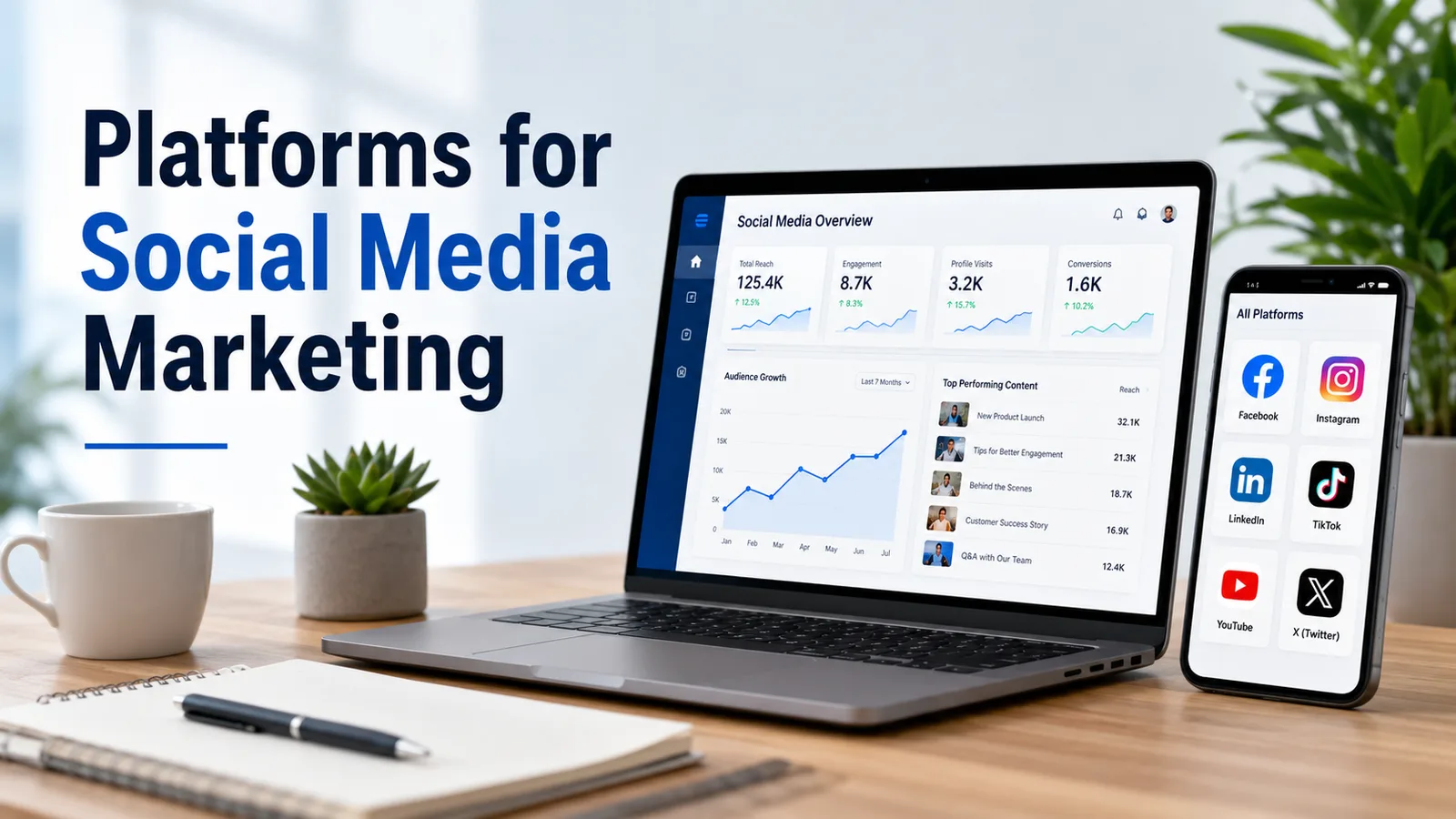
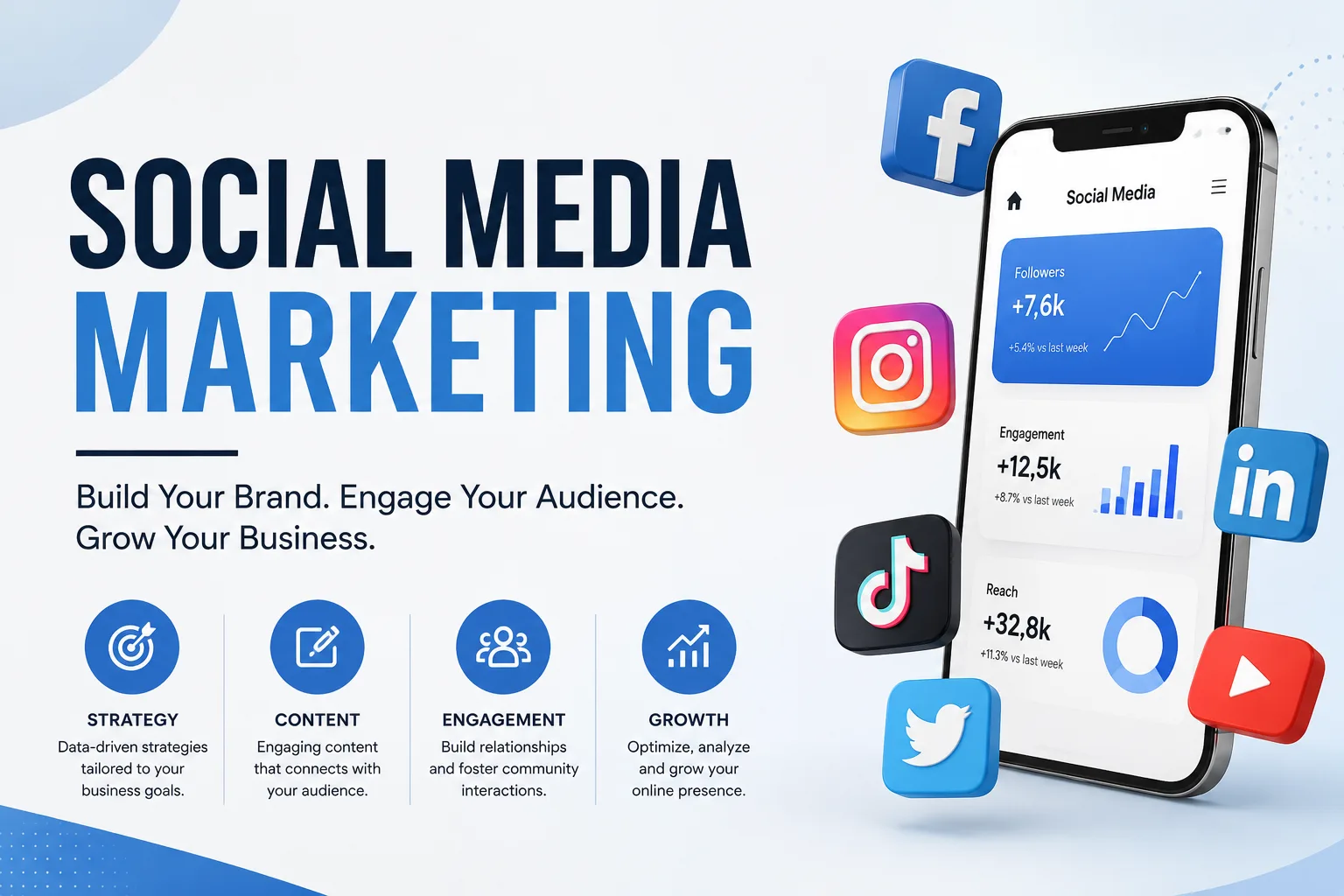
Social Media Marketing for Small Business: 2026 Playbook
Social media marketing for small business uses focused content, community engagement, paid promotion, and tracking to drive real results — starting with one audience, one offer, and one or two platforms.
Sahar
Content Writer
Social media marketing for small business uses focused content, community engagement, paid promotion, and tracking to generate measurable business results. You need 1 clear audience, 1 primary offer, and 1 or 2 priority platforms before increasing content volume.
A practical 2026 plan connects each post with awareness, trust, leads, sales, or customer retention. Effective social media marketing for small business turns customer feedback into weekly decisions. The strongest plan also protects your time through repeatable workflows.
Need this done right?
Hoop builds the strategy, design and development behind sites like this one — talk to us about yours.
What Is Social Media Marketing for Small Business in 2026?
The method turns social attention into business actions through planned content, conversations, offers, advertising, and measurement. Social media marketing for small business includes organic publishing, community management, creator partnerships, paid campaigns, and conversion tracking.
Organic Content Builds Familiarity
Organic content earns unpaid reach through posts, Reels, Stories, carousels, Shorts, documents, live videos, and replies. Each format should answer a buyer question or prove a business claim.
Paid Social Expands Proven Messages
Paid social distributes selected messages through Meta Ads, LinkedIn Ads, TikTok Ads, YouTube Ads, and Pinterest Ads. Paid campaigns work faster when organic results reveal strong hooks, offers, and formats.
Start paid promotion after a post earns quality comments, saves, clicks, or inquiries. A weak organic message rarely becomes profitable through extra distribution.
Community Management Creates Sales Conversations
Community management covers comments, direct messages, mentions, reviews, and customer questions. Fast, useful replies show reliability and move interested people toward the next action.
Why Does Social Media Marketing for Small Business Drive Growth?
The channel supports discovery, trust, customer care, lead generation, and repeat sales from one connected presence. Social media marketing for small business gives lean teams direct access to customers without enterprise media budgets.
Social Search Improves Discovery
People search inside Instagram, TikTok, YouTube, Facebook, LinkedIn, and Pinterest before choosing products or services. Your profile, captions, spoken words, and on-screen text should use customer language.
Write descriptive profile names, clear bios, service locations, and specific captions. Use phrases such as "wedding photographer in Austin" instead of broad labels like "creative studio."
Human Content Builds Trust
Small businesses can show founders, employees, customers, processes, locations, and real outcomes. Named proof reduces uncertainty faster than stock images or vague claims.
Publish customer stories, before-and-after results, product demonstrations, staff answers, and behind-the-scenes clips. Request written permission before sharing customer identities or private details.
Connected Offers Produce Revenue
A post needs a defined next step. Good actions include booking consultations, requesting quotes, visiting product pages, joining email lists, or sending a keyword.
How to Plan Social Media Marketing for Small Business Goals
To plan social media marketing for small business goals, choose 1 business result for the next 90 days. Build content, engagement, and reporting around that result.
Good goals include 30 qualified inquiries, 100 product purchases, 500 email subscribers, or 20 consultation bookings. Avoid goals that only count followers without business context.
Choose 1 Primary Business Result
Select the result that removes the largest current growth constraint. A new brand needs awareness, while an established service firm needs qualified leads.
Write the goal with a number, deadline, audience, and conversion action. Example: generate 40 local quote requests from Instagram and Facebook within 90 days.
Match Each Goal With 3 Metrics
Track 1 exposure metric, 1 engagement metric, and 1 business metric. Awareness can use reach, saves, and branded searches.
Lead generation can use profile visits, website clicks, and qualified form submissions. Ecommerce can use product views, add-to-cart events, and purchases.
Record a 30-Day Baseline
Measure current performance before changing strategy. Record posting frequency, reach, engagement rate, clicks, leads, sales, and response time.
Use platform analytics, Google Analytics 4, customer relationship management records, and sales data. The baseline shows whether new work improves business performance.
How to Choose Platforms for Social Media Marketing for Small Business
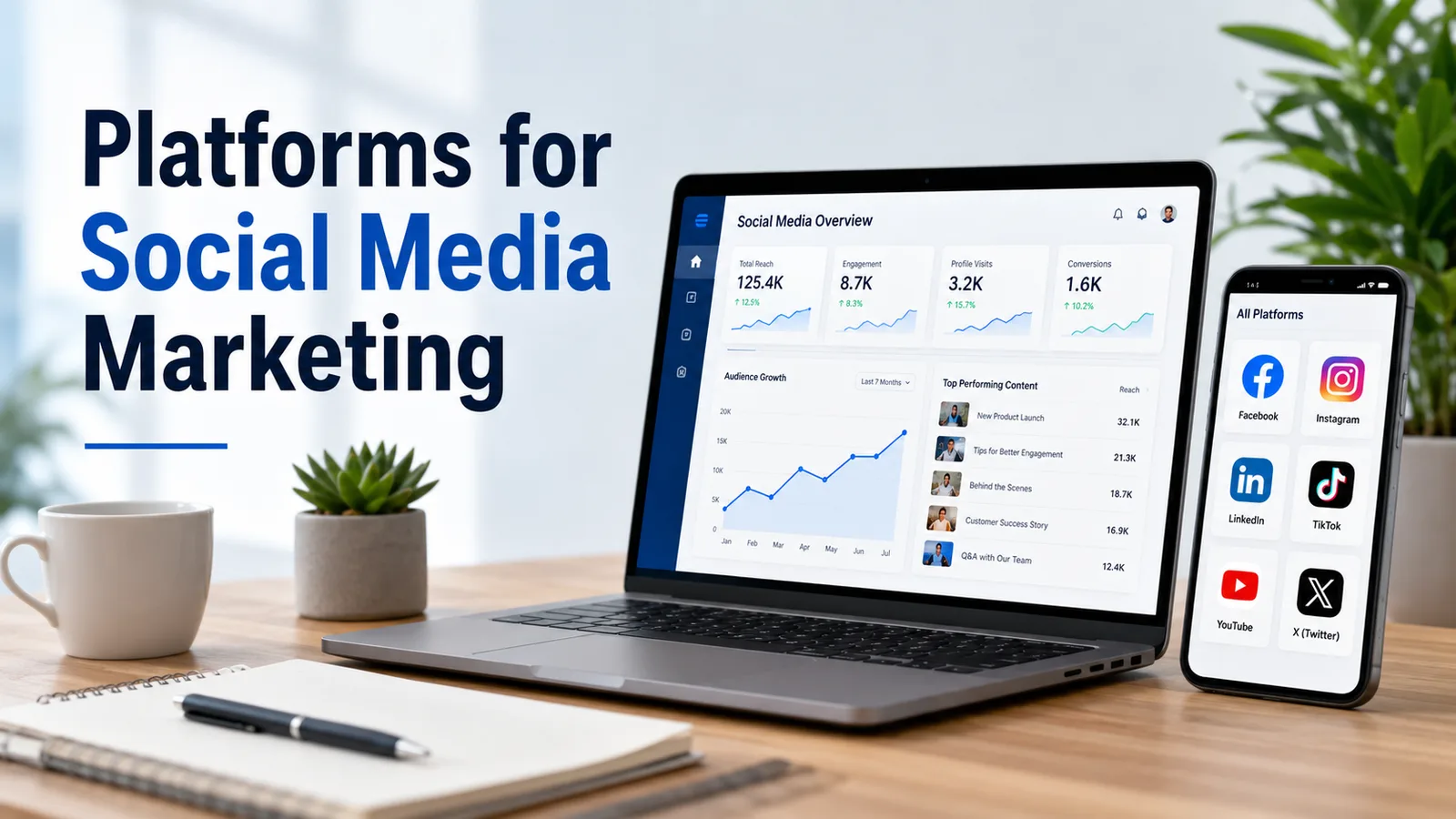
To choose platforms for social media marketing for small business, match customer behavior, buying risk, content strengths, and team capacity. Start with 1 primary platform and 1 support platform.
Buffer's 2026 strategy guidance also favors fewer well-managed platforms over thin activity across many networks. Focus protects quality, response speed, and measurement.
Match Platforms With Buying Behavior
Choose Instagram and TikTok for visual discovery, demonstrations, beauty, food, fashion, fitness, products, and local experiences. Choose LinkedIn for business-to-business services, consulting, software, recruitment, and professional expertise.
Choose Facebook for local groups, events, reviews, older audiences, and retargeting. Choose YouTube for tutorials, comparisons, product education, and searchable expertise.
Match Formats With Production Capacity
Select platforms your team can support every week. A camera-confident founder can create Reels, TikToks, and Shorts efficiently.
A research-led consultant can create LinkedIn documents, text posts, and YouTube explainers. A retail team can create product videos, customer clips, Stories, and live demonstrations.
Optimize Every Business Profile
Use a searchable business name, clear category, service location, value statement, website link, contact option, and consistent visual identity. Pin 3 posts covering your offer, proof, and process.
Add accurate hours, prices where appropriate, delivery areas, and booking information. Social media marketing for small business loses conversions when profile visitors cannot understand the next step.
How to Build a Content System That Supports Sales
To build a content system that supports sales, create 4 content pillars and assign each pillar a buyer purpose. Social media marketing for small business needs repeatable themes rather than daily improvisation.
A balanced system educates, proves, connects, and sells. Consistent social media marketing for small business requires planned production and fast audience responses.
Create 4 Content Pillars
Use education for questions, tutorials, checklists, and comparisons. Use proof for testimonials, results, case studies, and demonstrations.
Use connection for founder stories, team moments, values, community work, and customer features. Use offers for products, services, events, consultations, lead magnets, and promotions.
Choose 3 Repeatable Formats
Pick formats your team can produce without delays. Useful formats include 30-second videos, 5-slide carousels, customer photographs, founder posts, and live question sessions.
Build a 30-Day Content Calendar
Plan topics before production. Assign each post a platform, format, audience problem, content pillar, call to action, owner, and publishing date.
Schedule 3 to 5 quality posts weekly on priority platforms. Keep 20% of calendar space open for customer questions, local events, trends, and timely updates.
How to Run a Weekly Social Media Workflow
To run a weekly social media workflow, divide strategy, production, publishing, engagement, and review into fixed work blocks. The system reduces context switching and missed follow-up.
Batch Content Production
Record several videos during one session. Photograph products, staff, locations, packaging, or processes during the same production block.
Protect Daily Engagement Time
Check comments, direct messages, reviews, tags, and mentions at 2 fixed times daily. Respond faster when a sales question or complaint needs attention.
Move qualified conversations into a booking page, checkout, phone call, or customer relationship management system. Record the lead source for later reporting.
Review Performance Every Week
Compare posts by hook, topic, format, audience, call to action, and conversion result. Do not judge content through likes alone.
Repeat messages that generate saves, shares, clicks, inquiries, or sales. Stop formats that consume time without supporting the goal.
Quick-Reference Weekly Workflow
| Task | Timing | Method | Difficulty |
|---|---|---|---|
| Strategy review | 30 minutes weekly | Check goal, offer, audience, and priorities | Easy |
| Content planning | 60 minutes weekly | Select 3 to 5 topics from 4 pillars | Moderate |
| Production | 2 hours weekly | Batch videos, images, captions, and covers | Moderate |
| Publishing | 30 minutes weekly | Schedule platform-specific posts | Easy |
| Community management | 20 minutes daily | Reply to comments, messages, reviews, and mentions | Moderate |
| Performance review | 45 minutes weekly | Compare reach, clicks, leads, sales, and costs | Moderate |
How to Turn Social Attention Into Leads and Sales
To turn social attention into leads and sales, connect every strong post with a tracked conversion path. Social media marketing for small business fails when interested viewers reach unclear pages or unanswered inboxes.
Match Content With a Focused Landing Page
Send visitors to a page that matches the post promise. The page should repeat the offer, explain value, show proof, answer objections, and present one action.
Hoop'ssocial media services connect strategy, content, community, paid distribution, and reporting. That structure keeps attention linked with measurable outcomes.
Track Every Campaign Source
Add Urchin Tracking Module [UTM] parameters to profile links, campaign links, Stories, and paid ads. Use source, medium, campaign, and content fields consistently.
Build a Direct-Message Sales Process
Create a simple qualification path for direct messages. Ask about the customer's goal, location, timeline, budget range, and preferred next step.
Move qualified prospects toward booking or checkout quickly. Escalate complaints, refunds, legal concerns, and sensitive issues to a named team member.
How to Add Paid Social Without Wasting Budget
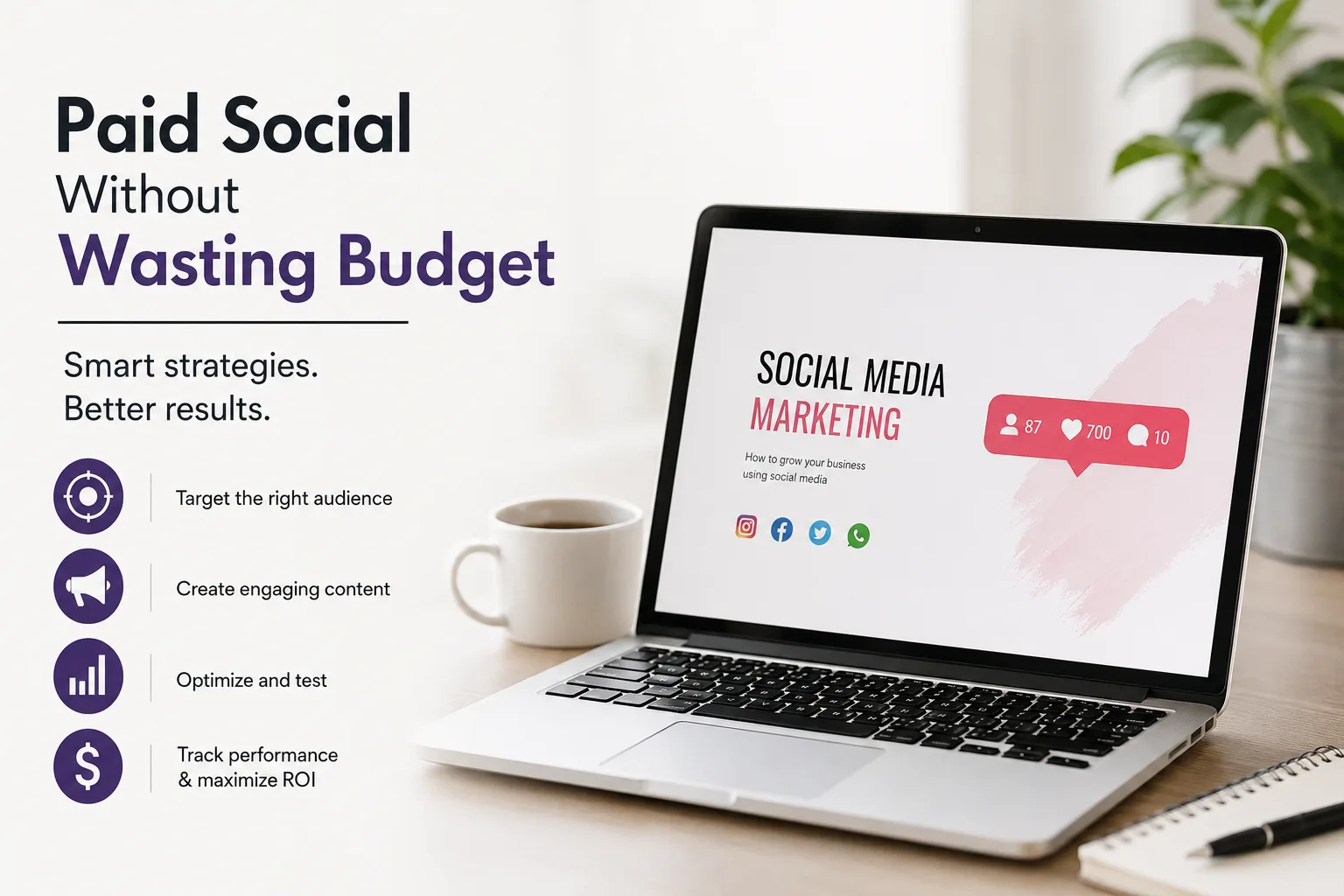
To add paid social without wasting budget, promote proven messages and track qualified outcomes. Social media marketing for small business should not fund broad campaigns without a defined offer.
Promote Organic Winners First
Select posts that already produce useful engagement, website clicks, inquiries, or sales. Test 2 hooks, 2 creative versions, and 1 offer before adding more variables.
Usepaid advertising services when tracking, creative testing, landing pages, and revenue reporting require specialist management. Qualified outcomes matter more than cheap clicks.
Retarget Warm Audiences
Create audiences from website visitors, video viewers, profile engagers, email subscribers, cart abandoners, and past customers. Match each audience with a relevant message.
Show proof to engaged viewers, offers to product visitors, and reminders to cart abandoners. Exclude recent buyers from campaigns that promote the same purchase.
Set a Controlled Test Budget
Choose a budget that can produce enough conversions for decisions. Divide spending across creative testing, audience testing, and retargeting.
How to Measure Social Media Marketing for Small Business ROI
To measure social media marketing for small business return on investment [ROI], connect costs with revenue, leads, retention, and learning. Include staff time, tools, contractors, production, and advertising. Measured social media marketing for small business connects platform activity with sales records.
Track Metrics by Funnel Stage
Track reach, video views, and profile visits for discovery. Track saves, shares, comments, and direct messages for consideration.
Track website clicks, leads, bookings, purchases, cost per lead, customer acquisition cost, and revenue for conversion. Track repeat orders and referrals for retention.
Calculate Useful Performance Rates
Calculate engagement rate by dividing engagements by reach, then multiplying by 100. Calculate click-through rate by dividing clicks by impressions, then multiplying by 100.
Calculate conversion rate by dividing conversions by landing-page visits, then multiplying by 100. Calculate ROI by subtracting cost from return, then dividing by cost.
Make 4 Weekly Decisions
Continue content that produces qualified actions. Improve content with strong attention but weak clicks.
Stop content with repeated weak results. Test new hooks, offers, formats, audiences, or landing pages when the data shows a clear constraint.
How to Execute a 90-Day Social Media Marketing for Small Business Plan
To execute a 90-day social media marketing for small business plan, build foundations, test content, then scale winners. Each stage needs a clear output and decision point.
Days 1-30: Build the Foundation
Audit accounts, competitors, audiences, offers, content, links, tracking, and response processes. Select 1 primary platform and 1 support platform.
Create 4 content pillars, 3 repeatable formats, and a 30-day calendar. Publish consistently and record baseline performance.
Days 31-60: Test Messages and Formats
Test 6 hooks, 4 topics, 3 formats, and 2 calls to action. Track saves, shares, clicks, direct messages, leads, and sales.
Interview customers about questions, objections, and buying reasons. Turn customer language into captions, videos, landing pages, and direct-message replies.
Days 61-90: Scale Proven Work
Increase output for winning topics and formats. Repurpose strong videos into carousels, Shorts, emails, blog sections, and paid creative.
Add retargeting for warm audiences. Create a monthly report covering outcomes, costs, lessons, weak points, and next actions.
Which Mistakes Reduce Small Business Social Results?
The largest mistakes spread limited resources, reward vanity metrics, and separate content from conversion paths. Social media marketing for small business needs focus, proof, tracking, and human judgment.
Managing Too Many Platforms
Running 5 weak accounts creates slow replies and inconsistent content. Focus on 1 or 2 platforms until the workflow produces dependable results.
Measuring Likes Without Business Context
Likes show a light response, not purchase intent. Compare likes with saves, shares, clicks, inquiries, bookings, purchases, and revenue.
A post with 20 likes and 5 qualified inquiries holds more value than 500 likes with zero leads.
Publishing AI Content Without Review
Artificial intelligence [AI] can support research, outlines, caption variations, repurposing, and reporting. Human review must protect facts, tone, privacy, originality, and platform fit.
Do not publish invented customer stories, fake testimonials, undisclosed synthetic endorsements, or inaccurate claims. Brand trust depends on clear editorial control.
Build a Social System That Produces Business Results
A focused system beats constant posting without purpose. Social media marketing for small business works through clear goals, focused platforms, useful content, community management, tracking, and weekly decisions.
Start with 1 business result, 1 primary offer, 4 content pillars, and 1 or 2 priority platforms. Connect every campaign with a clear action and measurable source.
Hoop Interactive can build the strategy, content, paid distribution, community workflow, and reporting around your goals.Book a strategy call to create a practical growth plan for 2026.
“You need one clear audience, one primary offer, and one or two priority platforms before increasing content volume.”
Key takeaways
- 01Start with one audience, one offer, and one or two platforms
- 02Consistency and focus beat posting everywhere
- 03Turn social attention into leads and sales
- 04Add paid social carefully and measure ROI
Written by
Sahar
Content Writer
Frequently Asked
Questions
Everything you need to know before booking a strategy call. Can't find your answer? Contact us directly.
Yes. Social media works when you choose relevant platforms, publish useful content, answer customers, track conversions, and improve weekly.
Post 3 to 5 times weekly on each priority platform. Reduce frequency when quality, response time, or measurement declines.
Choose the platform where buyers already research and act. Instagram suits visual brands, while LinkedIn suits business-to-business services.
Yes, after tracking works. Start with proven content, retargeting audiences, a focused offer, and a controlled test budget.
Expect early signals within 30 days and stronger patterns within 60 to 90 days. Offer quality and sales cycles affect timing.