

What Is CRO? Conversion Rate Optimization Explained in 2026
Conversion rate optimization increases the share of visitors who take a desired action — using analytics, user behavior, and testing to remove friction and get more results from the same traffic.
Sahar
Content Writer
What Is CRO? Conversion Rate Optimization Explained defines the process of increasing the percentage of visitors who take a desired action. You use conversion rate optimization [CRO] to turn existing website traffic into leads, purchases, bookings, trials, downloads, or calls.
Traffic brings visitors to your website. CRO turns visitor attention into measurable business outcomes. A strong CRO strategy improves landing pages, calls-to-action [CTAs], forms, checkout flows, page speed, and user experience [UX]. The goal stays clear: more qualified action from the same traffic.
Need this done right?
Hoop builds the strategy, design and development behind sites like this one — talk to us about yours.
What Is CRO? Conversion Rate Optimization Explained in Simple Terms
CRO improves the percentage of visitors who complete a chosen goal.
A chosen goal can include a product purchase, demo booking, quote request, app signup, email subscription, or cart completion.
CRO does not mean changing button colors without data. CRO uses analytics, user behavior, testing, and customer feedback. Each change should solve a real conversion barrier. Common barriers include unclear copy, slow pages, weak CTAs, long forms, poor mobile design, and low trust.
A business with 10,000 monthly visitors and a 2% conversion rate gets 200 conversions. A business with the same traffic and a 4% conversion rate gets 400 conversions. CRO doubles the result without doubling traffic.
What counts as a website conversion?
A conversion means one completed action that supports a business goal.
Ecommerce stores track purchases, add-to-cart actions, and checkout completions. SaaS companies track free trials, demo requests, and account signups. Service businesses track calls, contact forms, and consultation bookings.
You should track 2 conversion types. Macro conversions show main business outcomes, such as purchases and sales calls. Micro conversions show smaller intent signals, such as pricing-page visits and newsletter signups.
What counts as a conversion rate?
A conversion rate shows the percentage of visitors who completed the chosen action.
The formula uses conversions divided by visitors, multiplied by 100.
Example: 60 form submissions from 2,000 visitors equals a 3% conversion rate. The number gives your team a clear baseline. The baseline helps your team compare landing pages, campaigns, devices, and offers.
What Is CRO? Conversion Rate Optimization Explained for 2026 Growth
CRO matters in 2026 because traffic costs keep rising, and search behavior keeps changing.
Businesses need more value from every visitor, click, impression, and campaign.
SEO, paid ads, social media, and email marketing create traffic. Conversion rate optimization makes those channels profitable. A campaign that sends visitors to a weak page wastes budget. A campaign that sends visitors to a tested page creates stronger returns.
Hoop Interactive connects CRO withdigital marketing services. Growth needs traffic, funnels, tracking, and conversion work in one system.
How CRO lowers customer acquisition cost
CRO lowers acquisition cost by increasing conversions from the same spend.
A paid campaign that spends $5,000 and generates 100 leads has a $50 cost per lead. The same campaign with 200 leads has a $25 cost per lead.
That improvement changes the whole growth model. Your team spends the same budget. Your sales team receives more opportunities. Your revenue forecast becomes easier to defend.
How CRO improves traffic quality
CRO reveals which visitors match your offer. Analytics show pages, devices, sources, and messages that create action. Funnel reports show where visitors stop. Heatmaps show where visitors click, scroll, and hesitate.
These insights improve SEO content, paid ad creative, email offers, and product messaging. CRO turns website data into growth decisions.
How to Calculate Your Conversion Rate Correctly
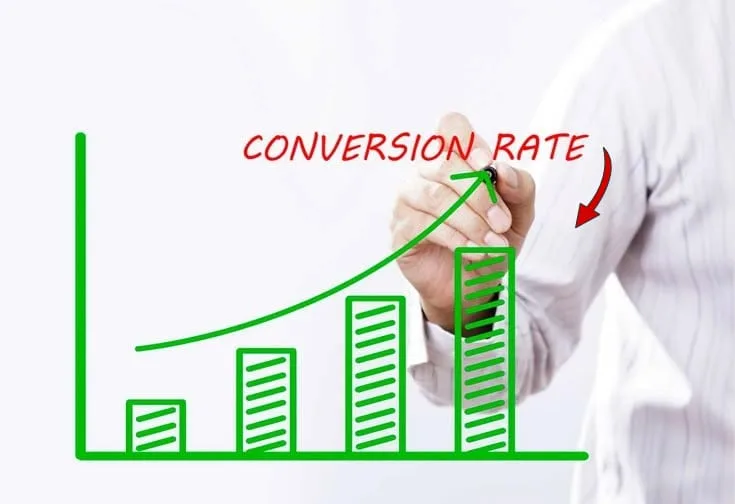
To calculate your conversion rate correctly, define 1 action. Count completed actions and eligible visitors. Then multiply the result by 100.
Use the formula:
Conversion Rate = Conversions / Visitors x 100
Example: 90 trial signups from 3,000 landing-page visitors equals a 3% conversion rate. Use the same calculation for purchases, quote requests, demo bookings, and checkout completions.
How to define the conversion event
To define the conversion event, choose the action that proves business progress. A product page should track purchases and add-to-cart clicks. A service page should track form submissions and calls. A SaaS page should track demo requests and free trials.
Avoid tracking every click as a main conversion. Too many goals create noise. Use 1 primary goal and 2 secondary goals for each key page.
How to compare conversion rates fairly
To compare conversion rates fairly, compare pages with the same goal and traffic type. A pricing page and a blog post serve different intent levels. A search visitor and a retargeting visitor show different readiness.
Segment results by 4 factors: traffic source, device type, page type, and audience stage. These segments show accurate conversion problems.
How to Build a CRO Strategy for Your Website
To build a CRO strategy for your website, audit data first. Identify friction second. Test changes third. Record learning fourth.
A clear sequence stops random edits and protects revenue.
Start with your highest-value pages. These pages often include homepages, service pages, landing pages, product pages, pricing pages, checkout pages, and contact pages. Small gains on these pages create visible business impact.
How to find friction points
To find friction points, review analytics, heatmaps, session recordings, form reports, and customer messages. Look for drop-offs, rage clicks, dead clicks, short scroll depth, and abandoned forms.
Name the problem in plain words. Example: mobile users leave the pricing page before reaching the CTA. Example: checkout users abandon payment after shipping costs appear. Example: lead-form users stop at the phone-number field.
How to form a CRO hypothesis
To form a CRO hypothesis, connect 1 user problem with 1 testable change. A strong hypothesis follows a clear format: changing X should improve Y because users need Z.
Example: shortening the contact form from 8 fields to 4 fields should increase submissions because visitors face less effort. Example: adding proof near the CTA should increase bookings because buyers need trust before contact.
How to run an A/B test
To run an A/B test, compare the current page against 1 changed version. Test 1 main change at a time, such as headline copy, CTA wording, form length, hero layout, or pricing proof.
Run the test until the sample gives a reliable signal. Low-traffic websites should fix obvious friction before formal testing. Obvious fixes include broken buttons, slow pages, unreadable text, and hidden forms.
Which Website Elements Should CRO Improve First?
CRO should improve the elements that control trust, clarity, speed, and action.
These elements create the shortest path between visitor intent and conversion.
Start with 7 elements: headlines, CTAs, forms, page speed, mobile layout, trust proof, and offer clarity. These areas affect nearly every website type.
Headlines and value proposition
Your headline should answer 3 questions fast: what you offer, who needs the offer, and what result the offer creates. Vague headlines lose visitors because readers need instant relevance.
Use specific claims. Replace "Grow faster" with "Increase qualified demo bookings for your SaaS team."
Replace "Better marketing" with "Turn ad traffic into booked sales calls."
Forms and checkout flows
Your form should ask for the minimum information needed for the next step. A newsletter form needs an email address. A quote form needs name, email, project type, and budget range. A B2B demo form needs company size and role.
Checkout flows need clear totals, payment options, shipping details, and error messages. Ecommerce brands should reduce hidden costs and unnecessary account creation.
Page speed and mobile UX
Fast pages protect conversions because visitors leave slow experiences. Google Core Web Vitals track loading performance, responsiveness, and visual stability. The key metrics include Largest Contentful Paint [LCP], Interaction to Next Paint [INP], and Cumulative Layout Shift [CLS].
Aim for LCP under 2.5 seconds, INP under 200 milliseconds, and CLS under 0.1. These targets support smoother browsing and stronger conversion paths.
What CRO Tools and Data Should You Use?
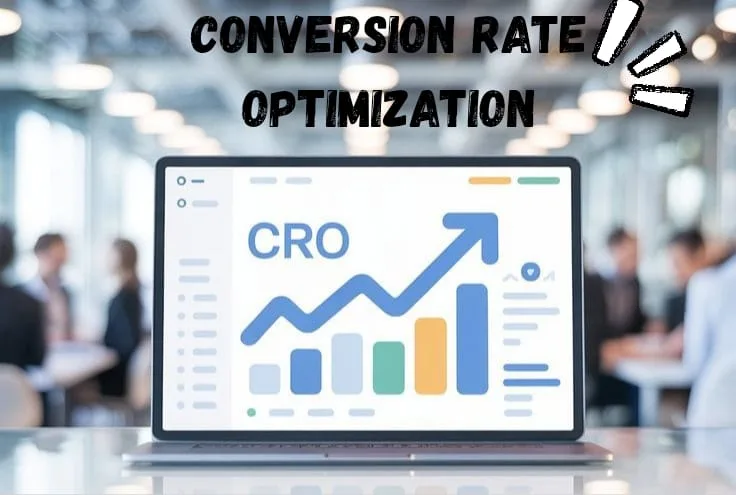
Use tools that show what visitors do, where visitors stop, and why visitors hesitate.
CRO needs evidence from 3 sources: analytics data, behavior data, and customer feedback.
Tools can include Google Analytics 4, Google Search Console, Google Tag Manager, Hotjar, Microsoft Clarity, and VWO. Other useful tools include Optimizely, HubSpot, Salesforce, Shopify, WooCommerce, and Klaviyo.
Each tool should answer a specific question.
Analytics and funnel reports
Analytics reports show traffic sources, conversion events, device data, page paths, and revenue data. Funnel reports show the exact step where users exit.
Track 5 metrics: conversion rate, form completion rate, checkout abandonment rate, cost per lead, and revenue per visitor. These metrics connect CRO work to financial outcomes.
Heatmaps and session recordings
Heatmaps show where visitors click, move, and scroll. Session recordings show real user journeys across pages. These tools reveal confusion that dashboards miss.
Use behavior data to find layout problems, ignored CTAs, distracting sections, broken elements, and mobile pain points. Then create a test around 1 clear problem.
Customer feedback and CRM data
Customer feedback explains objections. Use surveys, sales-call notes, support tickets, reviews, and chat transcripts. Common objections include price, delivery time, trust, feature gaps, and unclear process.
CRM data shows lead quality. A page with many weak leads needs better qualification. A page with fewer strong leads can still create better revenue.
How Does CRO Work With SEO, Paid Ads, and UX?
CRO works with SEO, paid ads, and UX by improving the page experience after the click.
Traffic channels need conversion-focused pages to create measurable revenue.
SEO brings intent-based visitors. Paid ads bring targeted visitors. UX helps visitors move without confusion. CRO ties all 3 channels to action.
CRO and SEO
CRO supports SEO by improving engagement, page usefulness, and lead quality. Search visitors need pages that answer intent quickly. Clear headings, helpful copy, fast loading, and strong internal links improve the journey.
Hoop publishes business growth guides that support SEO traffic. CRO then moves readers toward service pages, demos, or contact forms.
CRO and paid ads
CRO improves paid ads by raising landing-page performance. A stronger landing page lowers wasted spend and increases return on ad spend [ROAS]. Paid traffic needs message match between ad copy, page headline, offer, CTA, and proof.
Test 4 landing-page parts first: headline, offer, CTA, and form. These parts usually affect lead volume and lead quality fastest.
CRO and UX design
CRO and UX design share one goal: help users complete tasks with less friction. UX design focuses on ease and clarity. CRO adds measurement, experiments, and revenue goals.
Good UX uses readable text, simple navigation, clear layout, and mobile-friendly controls. Good CRO checks whether those design choices create action.
Quick CRO Action Plan for Busy Teams
Use the quick-reference table to plan the first 6 weeks of CRO work. The table keeps each task focused, measurable, and easy to assign.
| CRO Task | Timing | Method | Difficulty |
|---|---|---|---|
| Set primary conversion goals | Week 1 | Define 1 macro goal and 2 micro goals per page | Easy |
| Audit analytics setup | Week 1 | Check GA4 events, tags, forms, and funnels | Medium |
| Review high-value pages | Week 2 | Check headlines, CTAs, proof, forms, and mobile layout | Medium |
| Find friction patterns | Week 3 | Review heatmaps, recordings, surveys, and CRM notes | Medium |
| Fix obvious blockers | Week 4 | Repair broken buttons, slow pages, hidden forms, and unclear copy | Easy |
| Launch 1 A/B test | Week 5 | Test 1 headline, CTA, offer, or form change | Hard |
| Report business impact | Week 6 | Compare leads, sales, cost per lead, and revenue per visitor | Medium |
What CRO Mistakes Should You Avoid?
Avoid changes that lack data, goals, and measurement.
Random redesigns waste time because teams cannot explain which change caused the result.
Avoid these 8 mistakes:
- Changing multiple elements in 1 test.
- Tracking clicks without tracking sales or leads.
- Copying competitor layouts without audience research.
- Ignoring mobile users.
- Using vague CTAs like "Submit" and "Learn More."
- Asking for unnecessary form fields.
- Declaring winners with tiny samples.
- Ignoring sales-team feedback.
Strong CRO needs discipline. Your team should record the problem, hypothesis, test, result, and next action for every experiment.
How Can Hoop Interactive Help With CRO?
Hoop Interactive helps businesses improve conversions through marketing, funnels, tracking, landing pages, A/B testing, and UX audits.
The company fits CRO work because Hoop combines development and growth under one team.
That mix matters. Developers fix speed, forms, tracking, and technical issues. Marketers improve offers, ads, copy, and funnels. Designers improve layout, CTA hierarchy, and mobile flow. Analysts measure conversion rate, cost per lead, and revenue.
You can review Hoop'sreal case studies to see measurable growth. The examples connect development, marketing, and operations.
CRO works best when one team owns the full customer journey from first click to final sale.
What Should You Do Next After Learning CRO?
What Is CRO? Conversion Rate Optimization Explained gives you the foundation for turning website traffic into revenue. The next step starts with a focused audit of your highest-value pages, tracking setup, forms, CTAs, and mobile journey.
Book afree strategy call with Hoop Interactive. A growth team can find conversion leaks and build a plan.
“CRO doubles the result without doubling traffic.”
Key takeaways
- 01CRO gets more conversions from the traffic you already have
- 02It's driven by data and testing — not guesswork or button colors
- 03Fix friction in headlines, forms, checkout, speed, and mobile UX first
- 04It lowers acquisition cost and makes every channel more profitable
Written by
Sahar
Content Writer
Frequently Asked
Questions
Everything you need to know before booking a strategy call. Can't find your answer? Contact us directly.
Yes, CRO works for ecommerce websites, but CRO also works for service companies, SaaS platforms, local businesses, and B2B brands. Any website with a measurable action can improve conversions.
No, CRO does not replace SEO. SEO brings visitors from search. CRO turns those visitors into leads, sales, calls, trials, or subscribers.
A good conversion rate depends on your industry, offer, traffic source, and goal. Your best benchmark comes from your current rate. Aim to improve your baseline through testing.
CRO usually needs 4 to 6 weeks for the first useful cycle. Low-traffic websites should fix obvious problems first. High-traffic websites can test faster.
Yes, small businesses need CRO because every visitor matters. A better contact page, faster mobile page, and clearer CTA can increase leads without more ad spend.
Keep reading
All articles →
Are Google Ads Worth It? How to Know Before You Spend
Sep 28, 2026 · 10 min read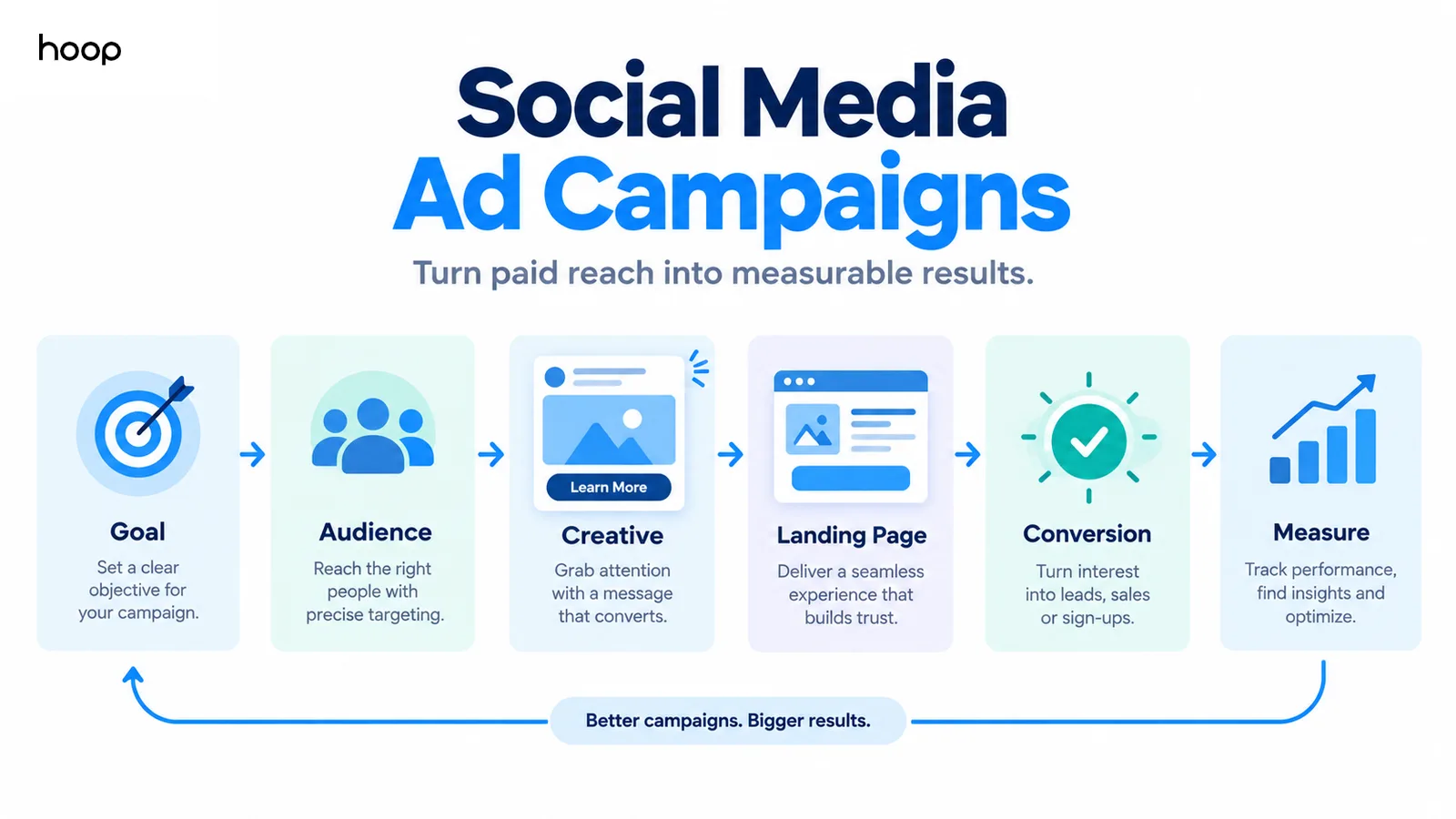
Social Media Ad Campaigns 2026: How to Plan, Launch, and Optimize
Sep 28, 2026 · 10 min read