How Much Does Google Ads Cost in 2026?
Google Ads has no fixed fee — you control daily and monthly spend and pay only per click. Cost per click depends on competition, keywords, and Quality Score; smart setup keeps spend efficient.
Sahar
Content Writer
Google Ads uses a pay-per-click (PPC) model. You pay only when someone clicks your advertisement. Google does not charge a fixed monthly fee. Instead, you decide how much money you want to spend each day or month.
Most businesses fall into one of these spending categories:
| Business Type | Average Monthly Budget |
|---|---|
| Local businesses | $500–$2,000 |
| Small ecommerce stores | $1,000–$5,000 |
| Mid-sized companies | $2,000–$10,000 |
| Large enterprises | $10,000–$100,000+ |
Many businesses also hire agencies to manage campaigns. Agency fees typically range from $300 to $5,000 per month, depending on campaign size and complexity.
The amount you spend should match your revenue goals. A company that earns $50 from each customer requires a different budget than a company that earns $5,000 from every sale.
Need this done right?
Hoop builds the strategy, design and development behind sites like this one — talk to us about yours.
Why Google Ads Costs Vary So Much
Google Ads costs vary because every advertiser competes in an auction. Several factors determine how much you pay:
- Industry competition
- Keyword demand
- Geographic targeting
- Quality Score
- Conversion rates
- Customer lifetime value
A lawyer and a coffee shop do not pay the same amount for advertising. Legal services often pay more than $50 per click because one client can generate thousands of dollars in revenue. A local café may pay less than $2 per click because the average order value remains much lower.
What Factors Affect Google Ads Pricing?
Several factors directly influence your Google Ads budget. Understanding these factors helps you create realistic spending expectations.
Industry Competition
Industry competition remains one of the biggest pricing factors.
Highly competitive industries include:
- Legal services
- Insurance companies
- Financial services
- Home improvement services
- Software companies
Businesses in these industries compete aggressively because each customer has a high value.
For example:
| Industry | Average CPC |
|---|---|
| Legal Services | $8–$50+ |
| Insurance | $10–$60+ |
| Financial Services | $5–$25 |
| Home Services | $4–$20 |
| Ecommerce | $1–$3 |
Competition increases costs because more advertisers bid on the same keywords.
Keyword Costs
Not all keywords cost the same.
Keywords with strong buying intent attract more advertisers. Search terms such as:
- personal injury lawyer
- business insurance
- accounting software
- enterprise CRM
often cost significantly more than informational keywords.
Businesses should focus on commercial keywords that produce conversions instead of chasing every search term.
Keyword research tools such as Google Keyword Planner can estimate click costs before you launch campaigns.
Target Location
Advertising costs vary by location.
Businesses that target large cities often pay more because competition remains higher.
For example:
- New York City
- Los Angeles
- Chicago
- London
- Sydney
A plumbing company in a small town may pay $5 per click. A plumbing company in Manhattan may pay more than $25 per click.
Location targeting allows businesses to control spending and improve return on investment.
Device Targeting
Desktop and mobile traffic can have different costs.
Many ecommerce companies see better conversion rates from mobile users. Business software companies often receive stronger conversion rates from desktop users.
You should review device performance regularly and adjust bids accordingly.
How Much Does Google Ads Cost Per Click in 2026?
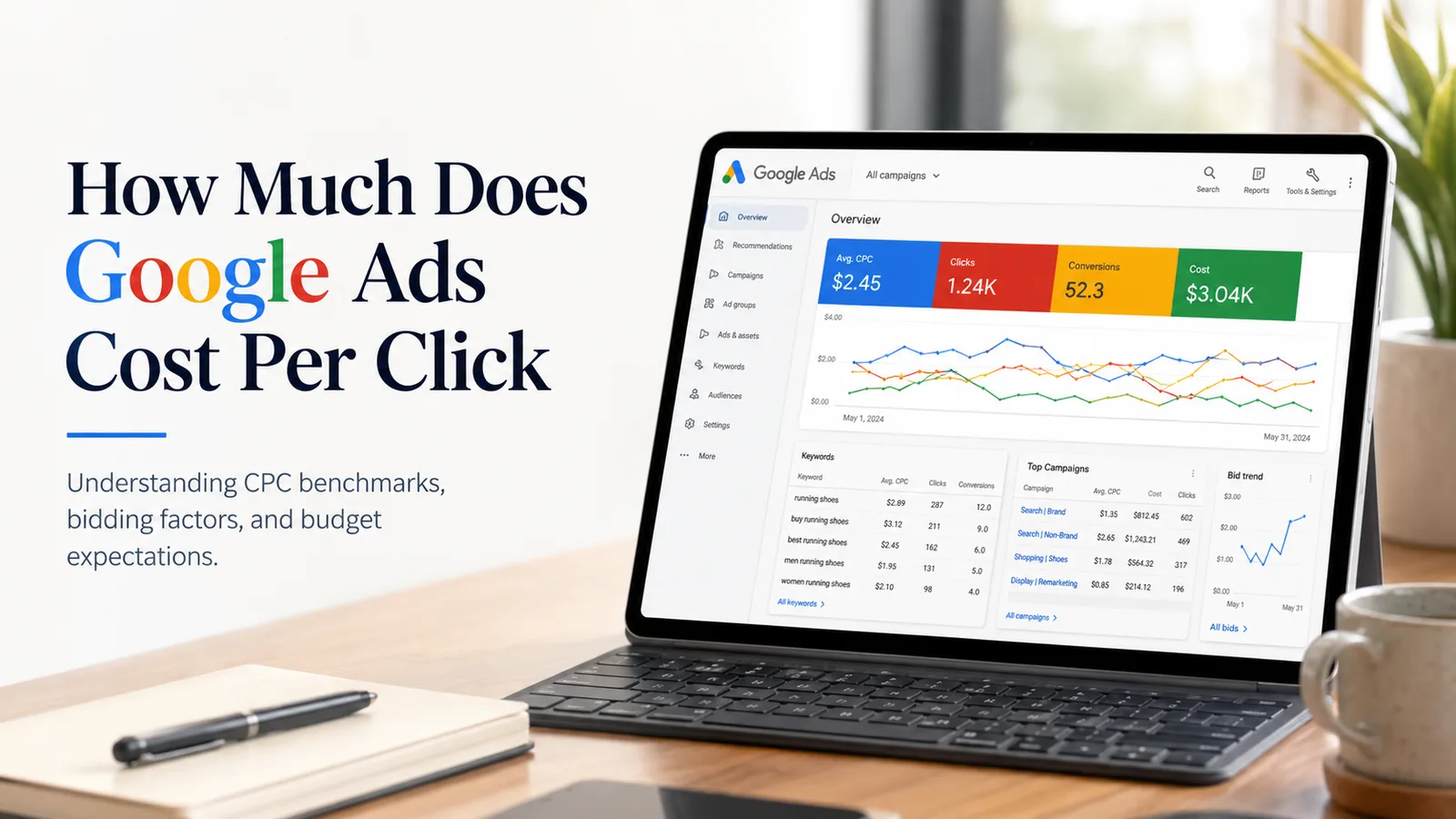
The average cost per click (CPC) across all industries falls between $2 and $5. However, averages rarely tell the full story.
Some businesses pay less than $1 per click, while others pay more than $100.
Average Google Ads CPC by Industry
| Industry | Average CPC |
|---|---|
| Ecommerce | $1–$3 |
| Healthcare | $2–$5 |
| Education | $2–$4 |
| Real Estate | $2–$6 |
| Home Services | $4–$20 |
| Financial Services | $5–$25 |
| Legal Services | $8–$50+ |
| Insurance | $10–$60+ |
Businesses should use these figures as benchmarks rather than guarantees.
Campaign performance depends on ad quality, landing pages, and targeting strategies.
Why Some Keywords Cost More Than Others
Google uses an auction system called Ad Rank.
Ad Rank depends on:
- Maximum bid
- Quality Score
- Ad relevance
- Landing page experience
- Expected click-through rate
Advertisers with better campaigns often pay less than competitors.
For example, a company with a Quality Score of 9 can outrank a competitor with a Quality Score of 5 even with a smaller bid.
This system rewards advertisers that provide useful experiences for users.
What Is Quality Score?
Quality Score measures the relevance and usefulness of your advertisements.
Google evaluates:
- Keyword relevance
- Advertisement copy
- Landing page quality
- Historical performance
Higher Quality Scores often reduce CPC and increase conversion rates.
Companies seeking advanced campaign management often rely on professional PPC marketing services to improve Quality Scores and reduce wasted spending.
How Much Does Google Ads Cost Per Month?
Monthly budgets depend on business goals.
Google allows advertisers to spend almost any amount.
The challenge involves determining how much budget produces profitable growth.
Monthly Budgets for Local Businesses
Local businesses often start with smaller budgets.
Examples include:
- Dentists
- Plumbers
- Restaurants
- Fitness studios
- Real estate agents
These businesses generally spend between $500 and $2,000 per month.
A local dentist spending $1,500 monthly can generate dozens of qualified leads if campaigns target the right keywords.
Monthly Budgets for Ecommerce Stores
Ecommerce businesses often require larger budgets because competition remains intense.
Typical budgets range between:
$1,000 and $10,000 per month.
Online retailers often increase budgets during major shopping seasons, including:
- Black Friday
- Cyber Monday
- Back-to-school promotions
- Holiday sales
Seasonal adjustments allow businesses to capture additional demand.
Monthly Budgets for B2B Companies
Business-to-business companies frequently invest larger budgets because customer values remain high.
Many B2B organizations spend:
$2,000 to $20,000 per month.
Software companies, consulting firms, and professional service providers often generate significant revenue from a single customer.
Higher budgets become sustainable when acquisition costs remain profitable.
How to Determine Your Ideal Google Ads Budget
Many businesses ask the wrong question.
Instead of asking, "How much should I spend?" ask, "How much can I spend profitably?"
Your budget should depend on:
- Revenue goals
- Conversion rates
- Customer value
- Profit margins
- Customer lifetime value
A profitable campaign can justify larger investments because every dollar spent generates additional revenue.
How to Calculate Your Google Ads Budget
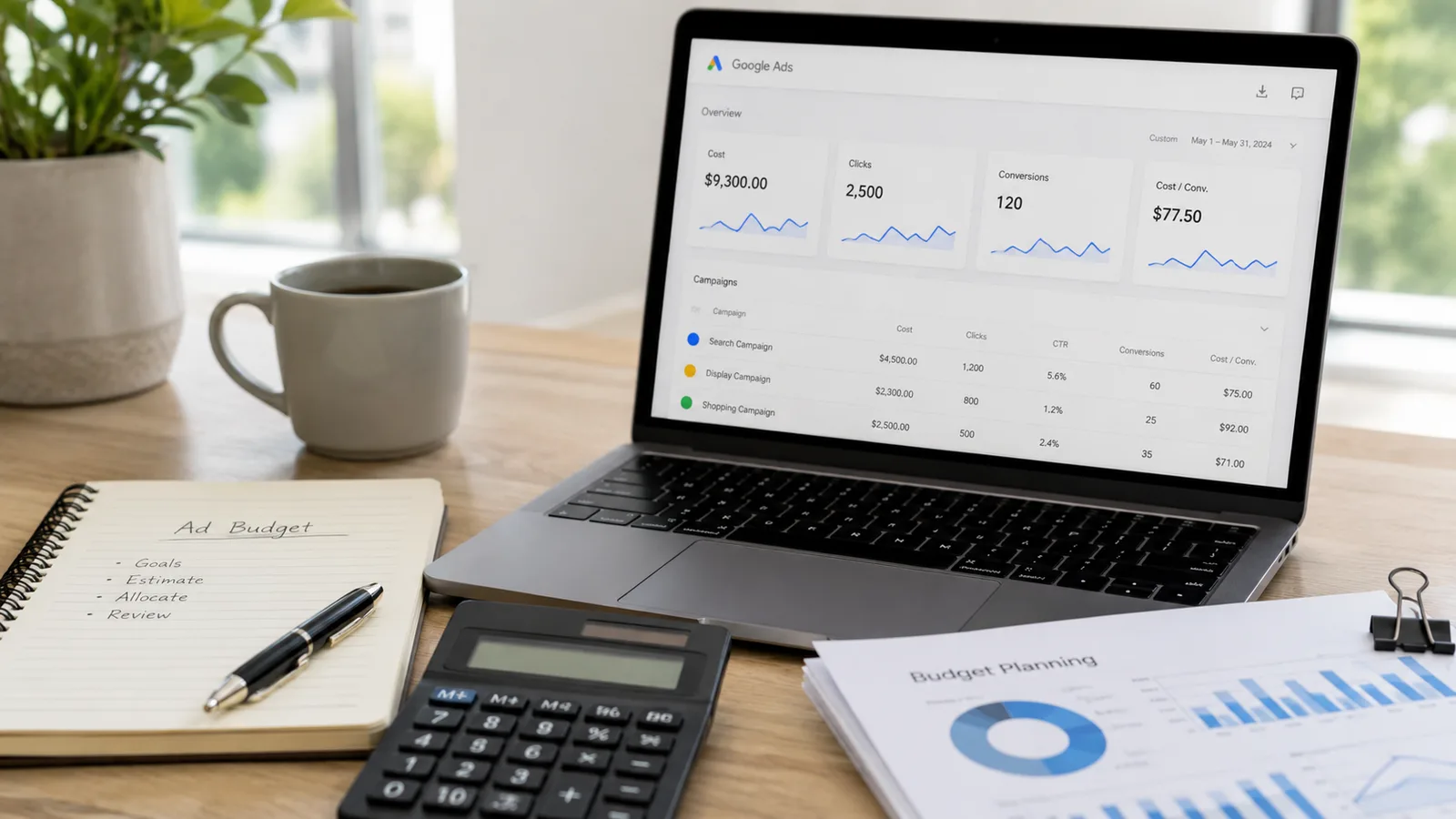
To calculate your Google Ads budget, start with your business goals instead of choosing a random monthly amount. Your budget should support your revenue targets and allow you to acquire customers profitably.
Calculate Your Budget for Lead Generation
Lead generation businesses can use a simple formula:
Monthly Budget = Desired Customers × Cost Per Acquisition (CPA)
For example, imagine your business wants to gain 20 new customers every month. If your average cost per acquisition is $100, you need a monthly budget of $2,000.
This method helps you understand exactly how much you can spend without hurting profitability. If one customer generates $2,000 in revenue, spending $100 to acquire that customer remains a healthy investment.
Calculate Your Budget for Ecommerce
Ecommerce businesses often rely on Return on Ad Spend (ROAS).
The formula looks like this:
Maximum Ad Spend = Revenue Goal ÷ Target ROAS
Suppose your online store wants to generate $20,000 in monthly revenue and your target ROAS is 4:1. In this case, you can spend up to $5,000 on advertising.
Businesses with high profit margins can increase budgets faster because they recover advertising costs more easily.
Use Conversion Rates to Estimate Spending
Another effective method involves conversion rates.
For example, if your website converts 5% of visitors into customers and you want 50 new customers each month, you need around 1,000 clicks. If your average CPC is $3, your estimated monthly budget becomes $3,000.
This calculation provides a realistic starting point before launching campaigns.
What Additional Costs Should You Expect?
Many businesses focus only on the price of clicks and forget about other expenses. Running successful campaigns usually requires additional investments.
Agency Management Fees
Many companies hire professionals to manage campaigns because Google Ads requires continuous optimization.
Most agencies charge either a flat monthly fee or a percentage of advertising spend. Depending on campaign complexity, management fees often range between $300 and $5,000 per month.
Some businesses combine paid advertising with broader digital marketing services to improve lead generation, content marketing, and customer retention.
Landing Page Costs
A great advertisement cannot succeed without a strong landing page. Businesses often spend money on copywriting, design, and conversion optimization to improve results.
Landing page projects usually cost between $200 and $3,000 depending on the level of customization.
Creative Production Costs
Display and video campaigns often require professional graphics, product photography, or video production.
Creative assets can become a significant expense for ecommerce brands that frequently launch new promotions and products.
Quick Reference Table
| Task | Timing | Method | Difficulty |
|---|---|---|---|
| Set campaign budgets | 30 minutes | Google Ads dashboard | Easy |
| Research keywords | 1 hour | Keyword Planner | Medium |
| Build campaigns | 2–4 hours | Search campaigns | Medium |
| Improve landing pages | Weekly | A/B testing | Hard |
| Review conversions | Weekly | Analytics reports | Medium |
Is Google Ads Worth the Cost in 2026?
Yes. Google Ads remains one of the most effective advertising platforms because it reaches users with clear purchase intent.
Unlike many advertising channels, Google Ads targets people who actively search for products and services.
Many businesses achieve the best results by combining Google Ads with SEO services, creating both immediate traffic and long-term organic growth.
When Google Ads Delivers Strong Results
Google Ads performs exceptionally well for local businesses, ecommerce stores, healthcare providers, and business-to-business companies.
A local plumber can generate emergency service calls within hours, while a software company can attract high-value leads through targeted search campaigns.
When Google Ads Becomes Expensive
Google Ads becomes expensive when advertisers fail to optimize campaigns.
Businesses often waste money by targeting broad keywords, ignoring search terms, and sending traffic to weak landing pages. Increasing budgets without improving campaign quality usually leads to higher costs and lower returns.
How to Reduce Your Google Ads Costs
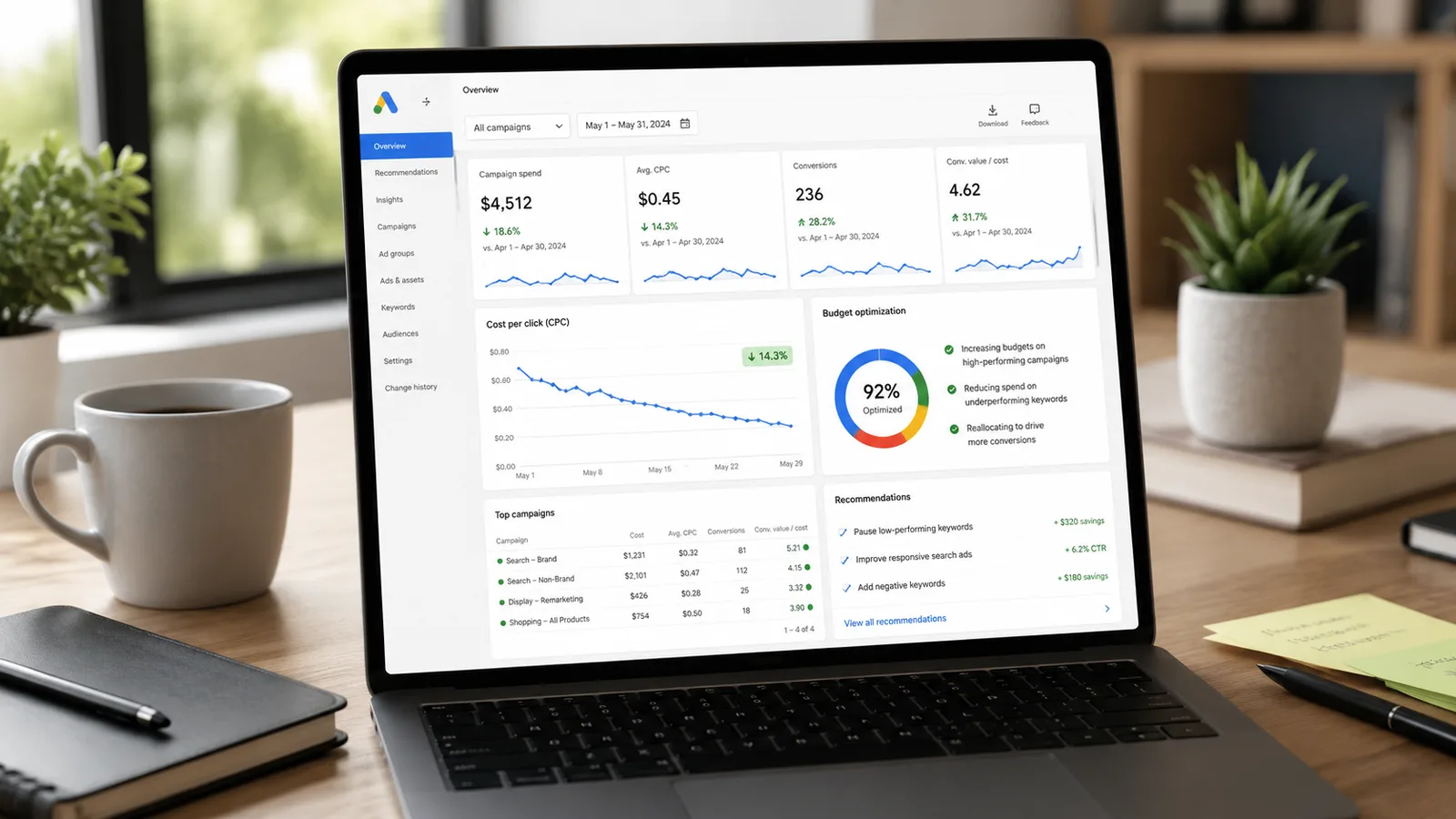
Reducing costs does not mean lowering your budget. It means spending your budget more efficiently.
Improve Quality Score
Quality Score directly affects how much you pay per click. Businesses with relevant advertisements and strong landing pages often achieve lower CPCs than competitors.
Even a small improvement in Quality Score can save thousands of dollars every year.
Use Negative Keywords
Negative keywords stop advertisements from appearing for irrelevant searches.
For example, a software company that sells premium products may want to exclude searches that include words such as "free" or "download."
This strategy improves targeting and reduces wasted spending.
Optimize Landing Pages
Landing pages have a direct impact on conversions. A page with a clear headline, fast loading speed, and strong call to action can significantly improve campaign performance.
Businesses that continuously test and improve landing pages usually achieve better returns from the same advertising budget.
Monitor Campaign Performance Regularly
Successful advertisers review performance every week. They track conversion rates, click costs, and audience behavior to identify opportunities for improvement.
For additional guidance on campaign setup and optimization, businesses can also review resources from the Google Ads Help Center.
Google Ads Cost by Campaign Type
The type of campaign you run also affects your advertising costs. Search campaigns, display campaigns, and video campaigns all have different pricing structures and goals.
Search Campaign Costs
Search campaigns usually have the highest cost per click because they target users with strong buying intent. These advertisements appear when people search for products or services on Google.
Most businesses pay between $2 and $5 per click, although highly competitive industries can exceed $50 per click.
Search campaigns work particularly well for local service businesses, ecommerce stores, professional service firms, and B2B companies.
Display Campaign Costs
Display advertisements appear on websites that are part of the Google Display Network.
Display campaigns generally cost less than search campaigns because users are not actively searching for products.
The average cost per click usually ranges between $0.50 and $2.
Display campaigns work best for brand awareness, remarketing campaigns, and product launches.
Video Campaign Costs
Video campaigns primarily run on YouTube and charge advertisers based on views and interactions.
Most businesses pay between $0.10 and $0.30 per view.
Video campaigns are useful for building brand awareness and introducing products to new audiences.
Performance Max Campaign Costs
Performance Max campaigns use artificial intelligence to show advertisements across multiple Google properties, including Search, YouTube, Gmail, and Display.
Costs vary significantly because Google's automation system adjusts bids according to conversion goals.
Many businesses have adopted Performance Max campaigns in 2026 because the system can improve efficiency and identify new audiences.
Common Google Ads Budget Mistakes
Many businesses increase their advertising costs by making avoidable mistakes.
Setting Unrealistic Expectations
Some advertisers expect immediate results after launching campaigns.
Google Ads requires testing and optimization. Most campaigns need several weeks to collect enough data for meaningful improvements.
Ignoring Conversion Tracking
Without conversion tracking, businesses cannot determine whether advertising spend generates revenue.
Every campaign should track:
- Leads
- Phone calls
- Purchases
- Form submissions
This information helps businesses make informed budgeting decisions.
Sending Traffic to Poor Websites
A slow website or confusing landing page can waste advertising dollars.
Businesses should improve page speed, simplify navigation, and create clear calls to action before increasing advertising budgets.
How to Scale Your Google Ads Budget Profitably
Many businesses struggle to know when to increase their budgets.
Increase budgets only after campaigns consistently generate profitable conversions.
Increase Spending Gradually
A sudden increase in spending can disrupt campaign performance.
Most advertisers achieve better results by increasing budgets by 10% to 20% at a time.
This approach allows Google's algorithms to adjust without creating unnecessary volatility.
Invest More in Winning Campaigns
Not every campaign performs equally.
Businesses should identify campaigns with the strongest conversion rates and allocate additional budget to those campaigns.
Expand Into New Keywords
Businesses can scale growth by targeting additional high-intent keywords.
Examples include:
- Service-specific keywords
- Geographic keywords
- Product-specific keywords
Expanding strategically often produces better results than increasing bids on existing keywords.
Should You Hire a Google Ads Agency?
Many businesses eventually reach a point where professional management becomes valuable.
A Google Ads agency can assist with campaign setup, keyword research, bid management, conversion tracking, and landing page optimization.
Businesses that lack internal expertise often save money by working with specialists because better optimization reduces wasted spending.
Professional support also allows business owners to focus on sales, operations, and customer service instead of managing campaigns every day.
Conclusion
There is no universal Google Ads budget. The right investment depends on your industry, customer value, and business goals. Companies that monitor conversions, refine targeting, and improve campaign quality often achieve better results without dramatically increasing spending.
If you want to reduce wasted ad spend and build campaigns that generate measurable growth, explore Hoop Interactive'sPPC marketing services and work with specialists who create data-driven advertising strategies designed for long-term success.
Meta Title
How Much Does Google Ads Cost in 2026? Budget Guide
“Google does not charge a fixed monthly fee — you decide how much to spend each day or month.”
Key takeaways
- 01It's pay-per-click — you set the budget and pay only for clicks
- 02Cost per click depends on competition, keyword, and Quality Score
- 03A higher Quality Score can lower your costs — relevance pays off
- 04Budget to your goals and cut waste to protect ROI
Written by
Sahar
Content Writer
Frequently Asked
Questions
Everything you need to know before booking a strategy call. Can't find your answer? Contact us directly.
No. Google allows businesses to start with almost any budget.
Yes. Many local businesses generate profitable leads with a monthly budget of $500.
Most startups spend between $1,000 and $5,000 per month, depending on competition and growth goals.
No. Agency fees are usually separate from your Google Ads budget.
Yes. Small businesses often achieve excellent results when campaigns focus on the right keywords and audiences.